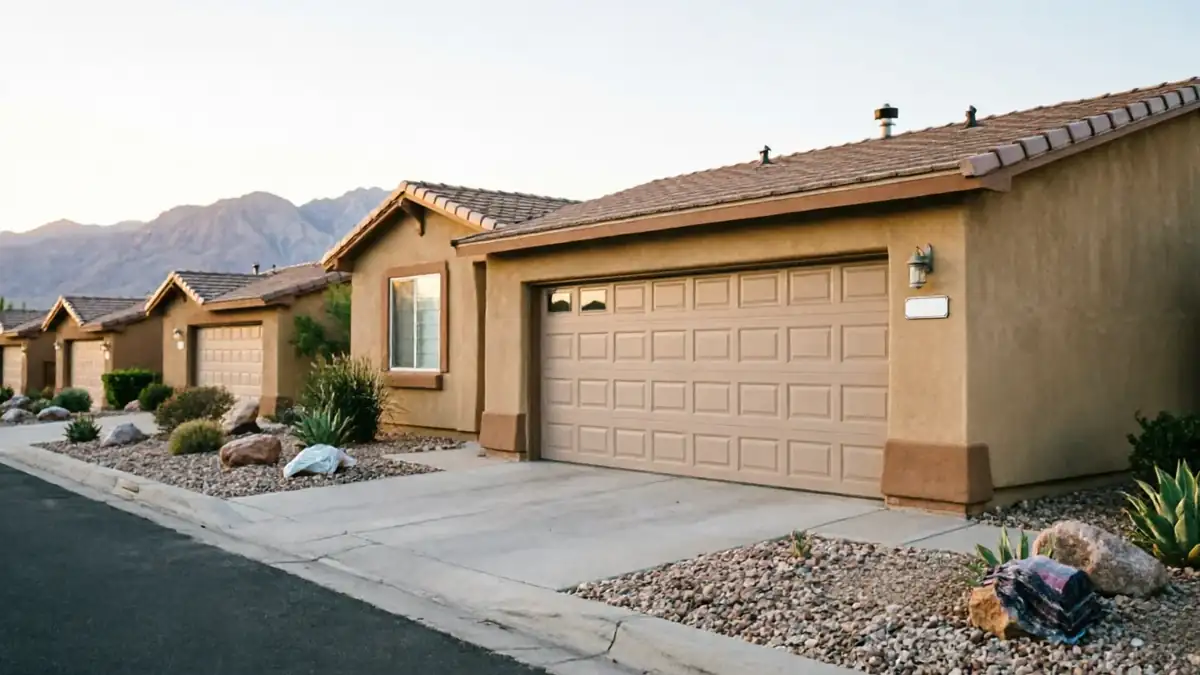
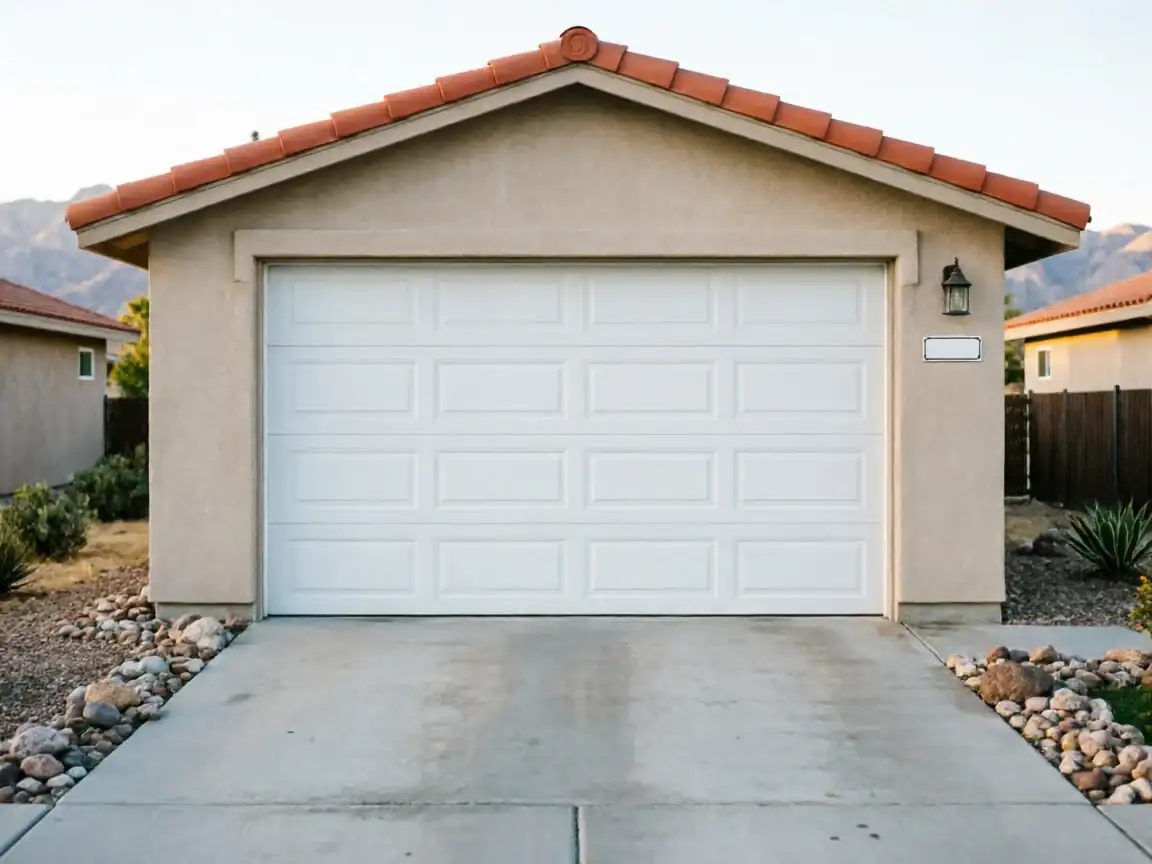
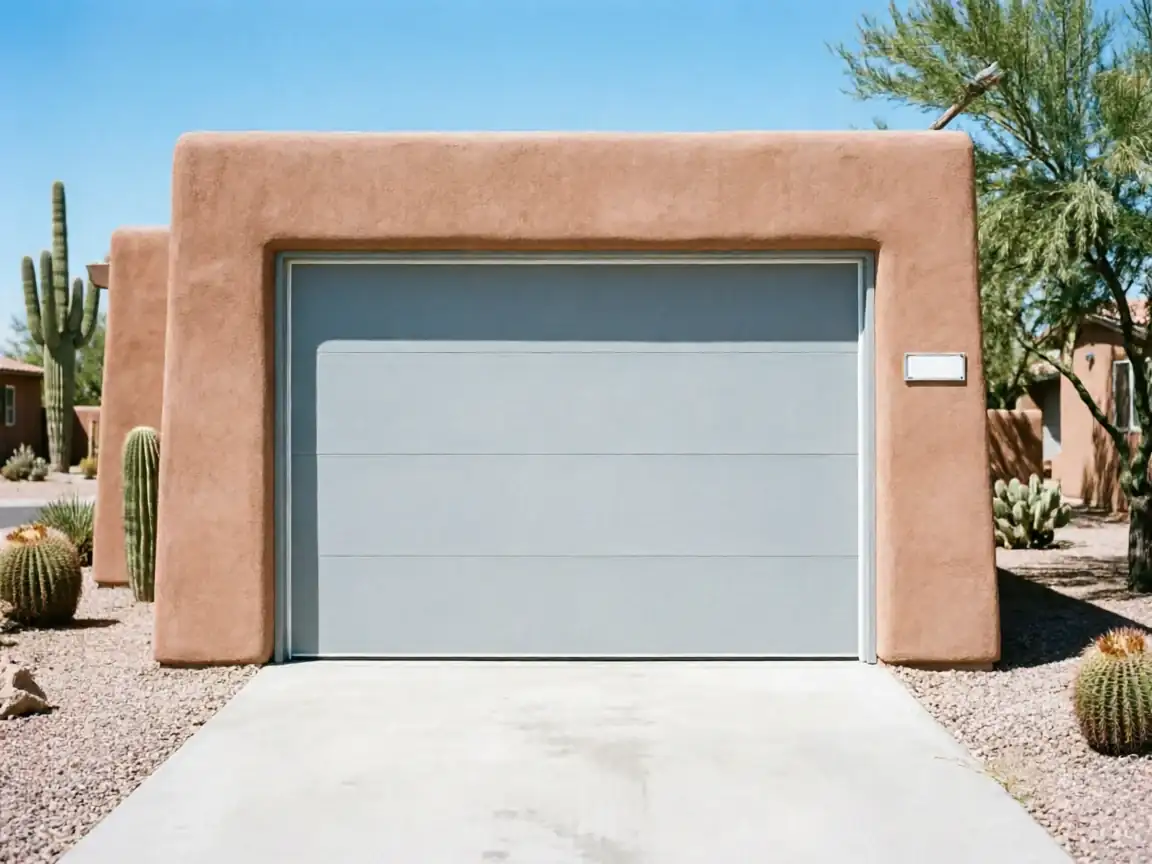
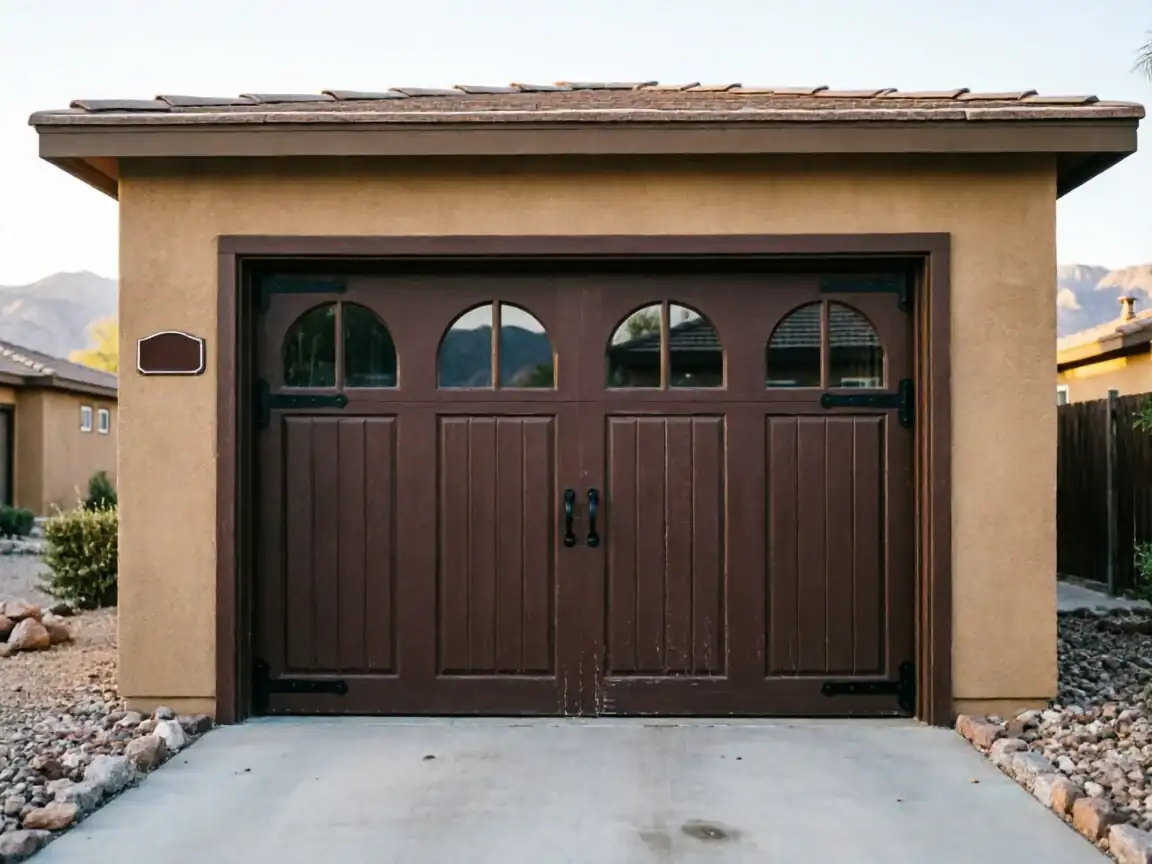
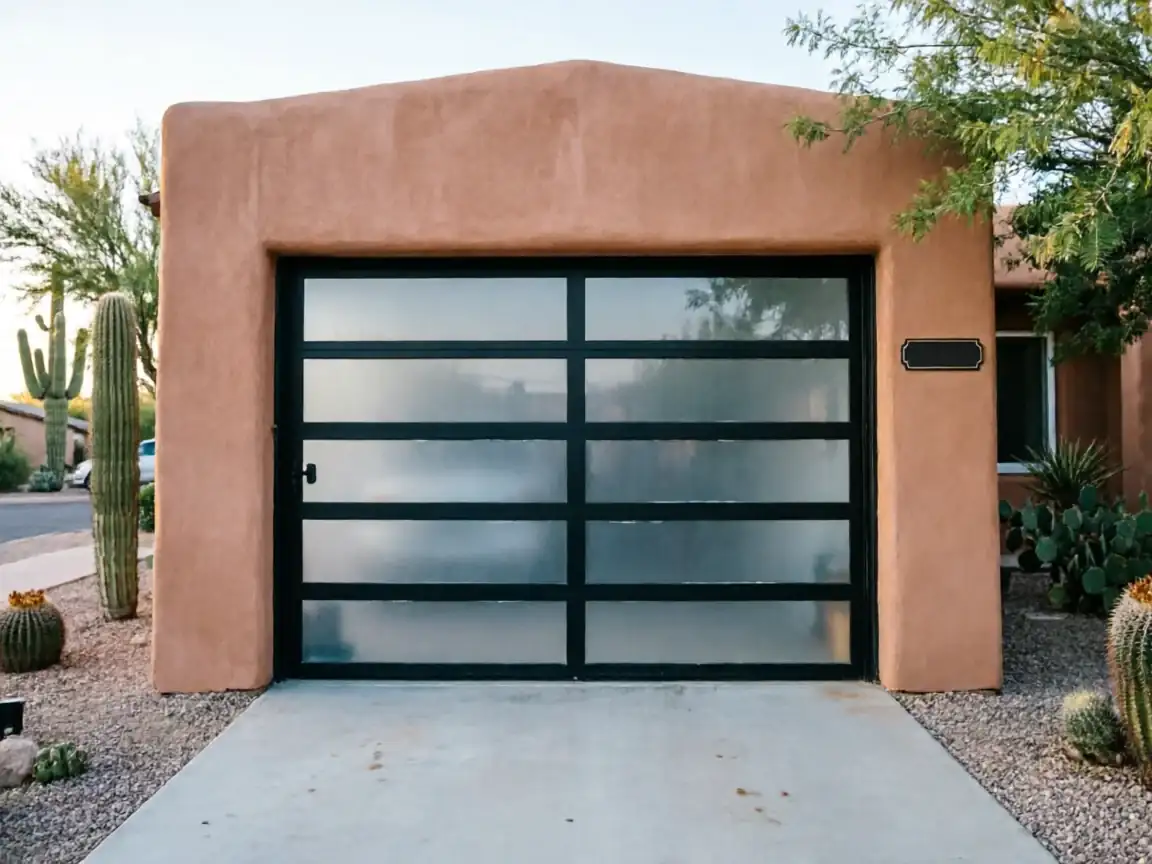
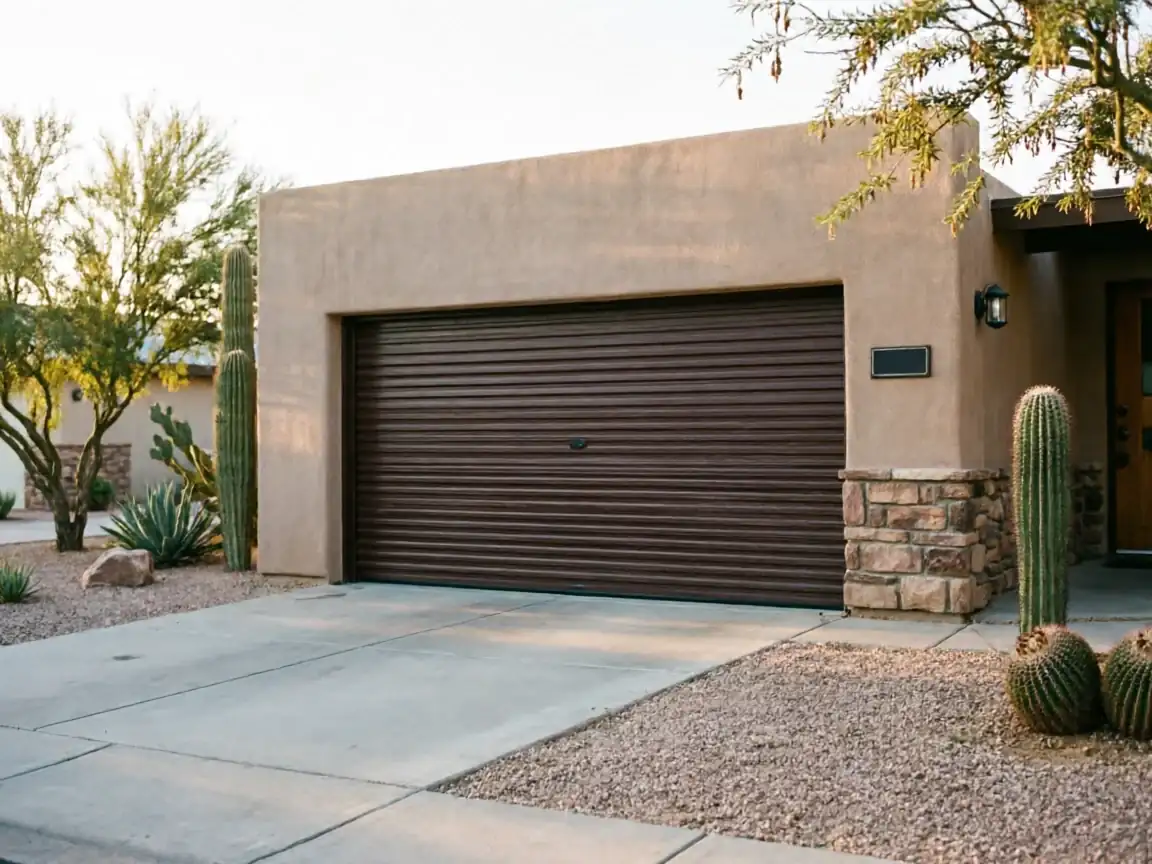
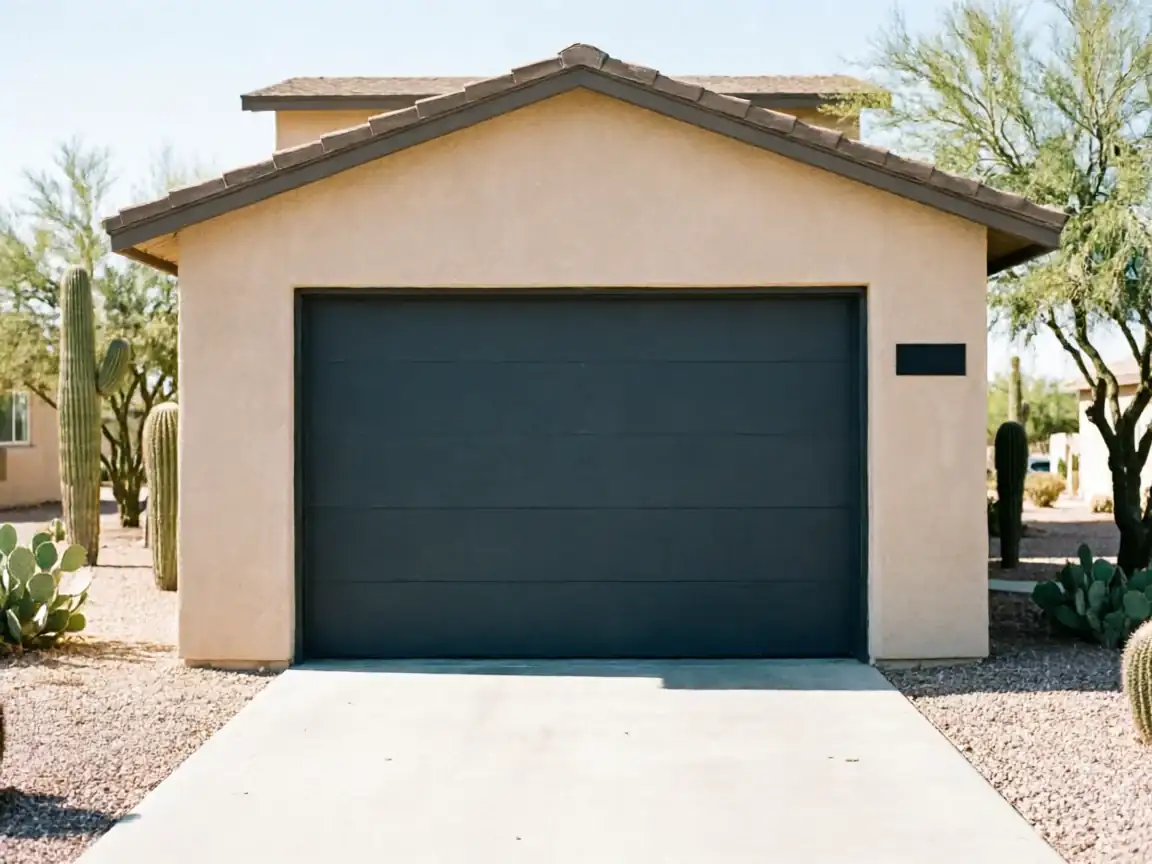
Thousand Palms doesn't match the rest of the service area as closely as you'd think. Across the wider area the median home was built in 1987, but the houses here cluster closer to 1984 - a few years earlier, which puts a chunk of this neighborhood right at the front edge of that build wave rather than the tail end of it. There are about 2,700 households in Thousand Palms itself, a small slice of the roughly 71,342 households we cover from Palm Desert, and most of what's here went up in that same late-1970s-to-1990s stretch that defined 14 named communities across the valley. The difference of two or three years in median build date sounds small until you're standing in front of an opener rail or a spring configuration that was already being phased out by the time neighboring tracts went up. That's the detail that matters more than the decade label. A 1984 slab-on-grade house with the original steel sectional door is going to have different hinge spacing, different track width, and sometimes a different spring mount than something finished out in 1991, even a few miles away. We look at the actual door and header, not the year on the permit, but knowing the local build pattern tells us what to bring on the truck before we knock.
How Soon We Can Come Out
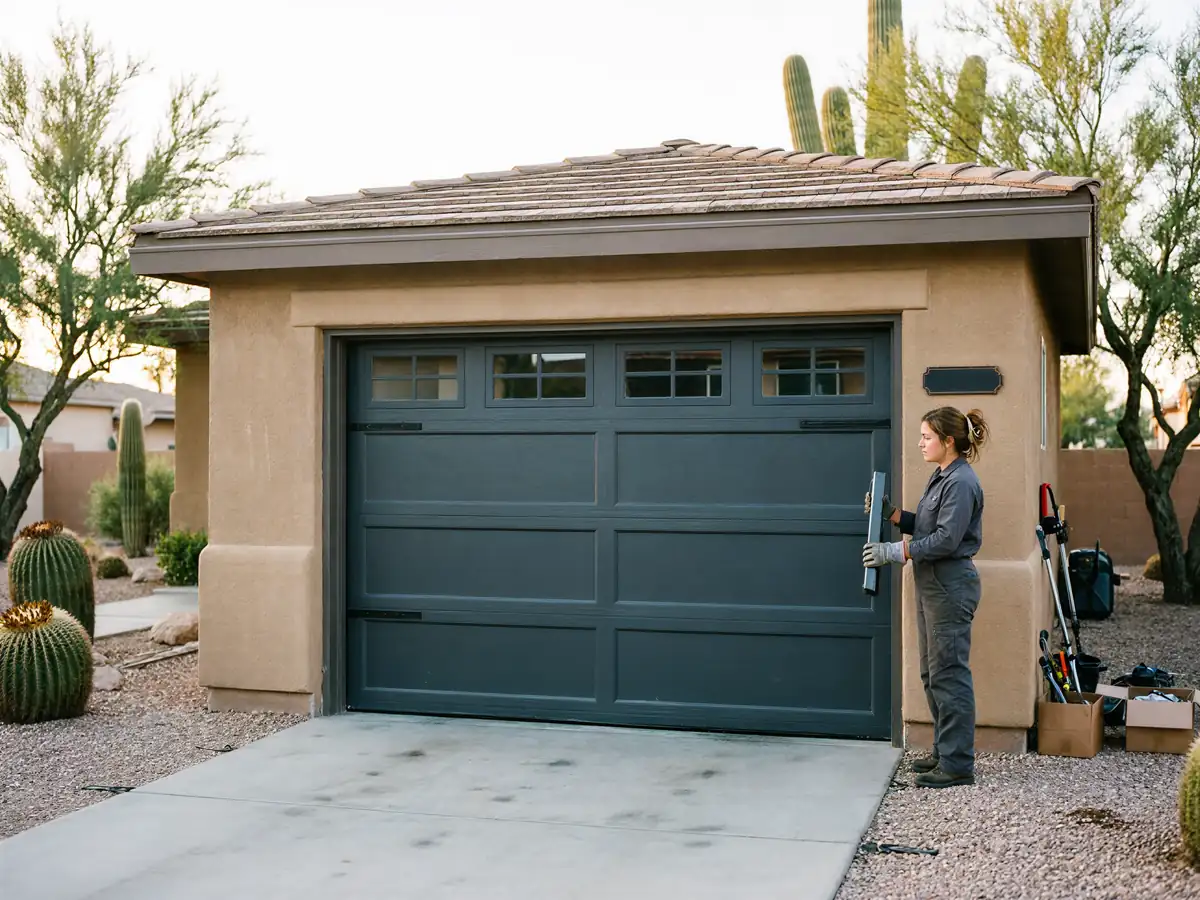
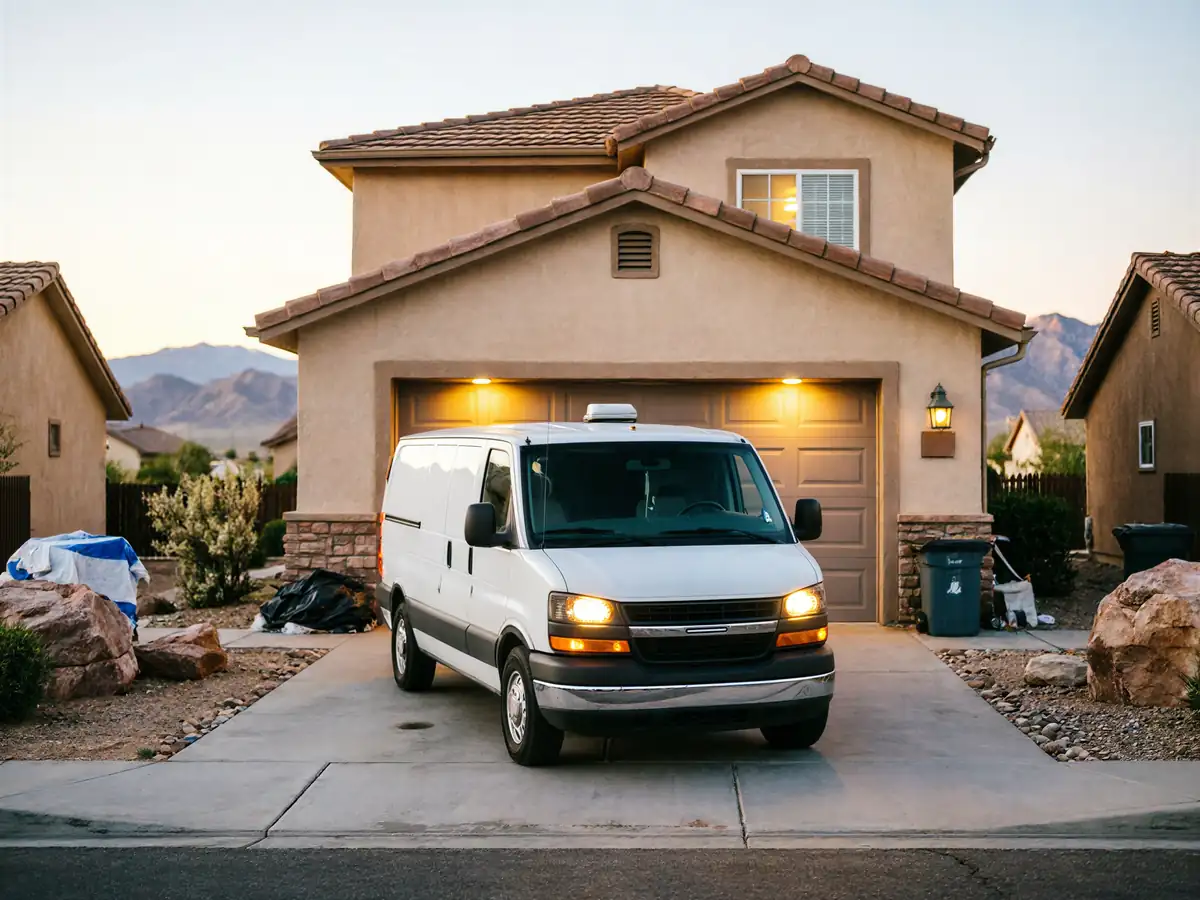
We run out of Palm Desert, about 5 miles from Thousand Palms, so we're not sitting on a truck parked around the corner. We don't quote a fixed response window for this area because traffic on the route and the day's call volume both move that number, and we'd rather tell you that up front than promise something we can't hold to every time. What we can tell you is that Thousand Palms is close enough that it's a normal stop on our route, not a special trip, and we price the call the same way we would a job five miles the other direction. If your door is stuck open or a spring has let go and the car's trapped, say so when you call - jobs get triaged by what's actually broken, not just by order received.
What the Housing Means for Your Door
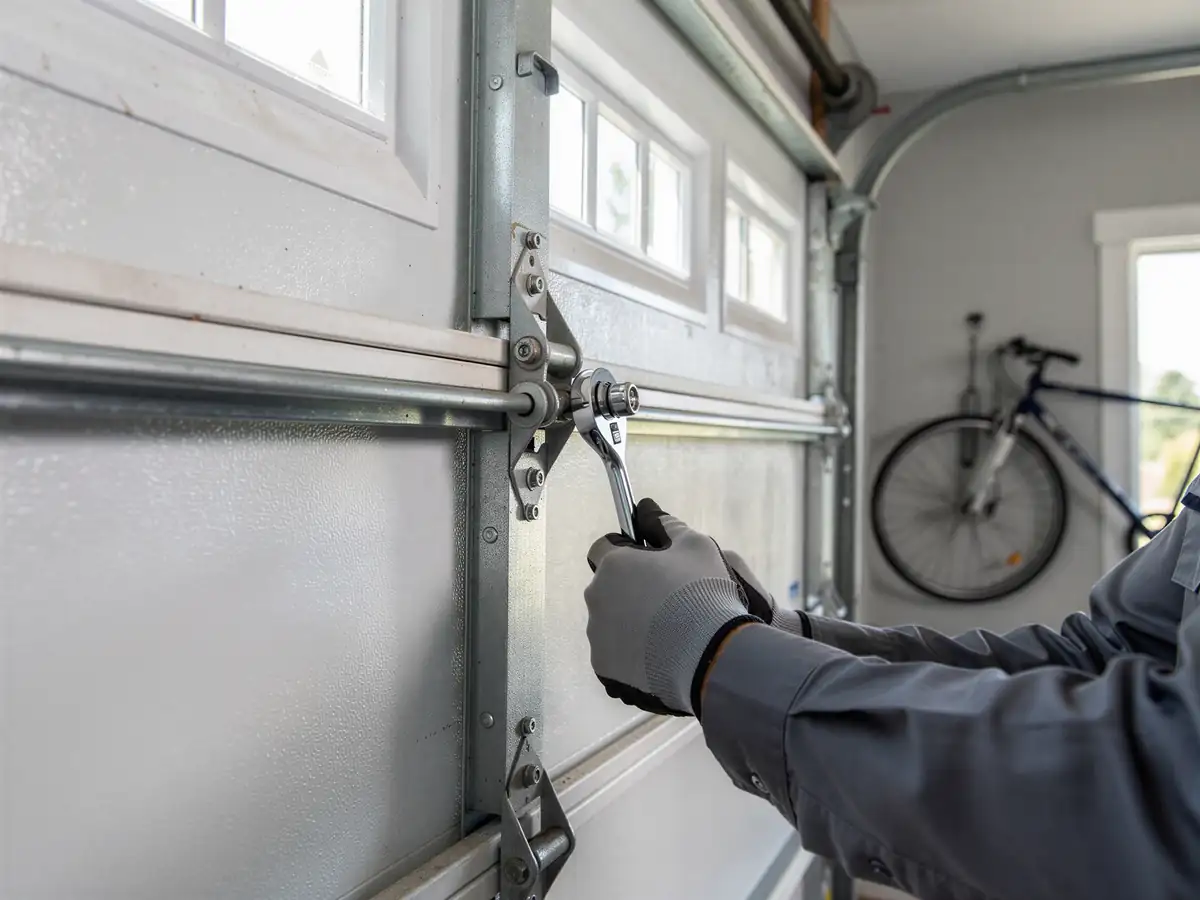
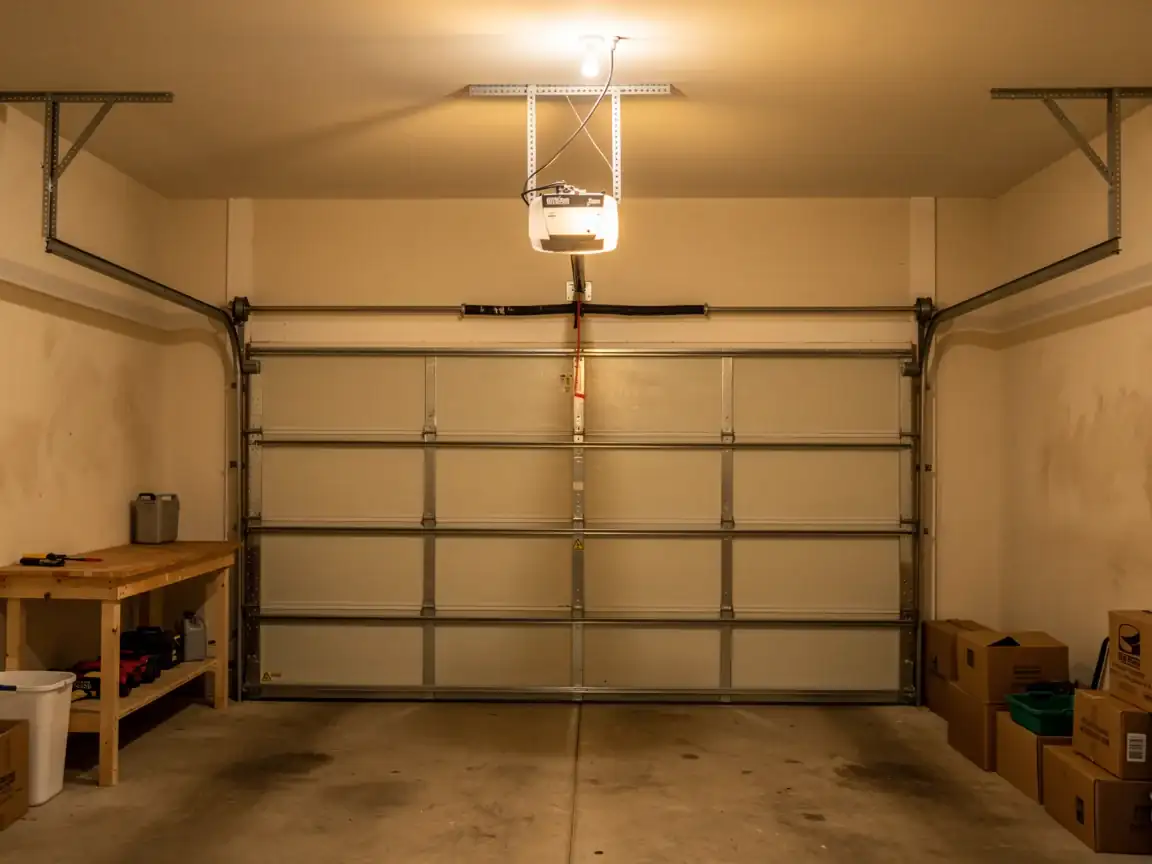
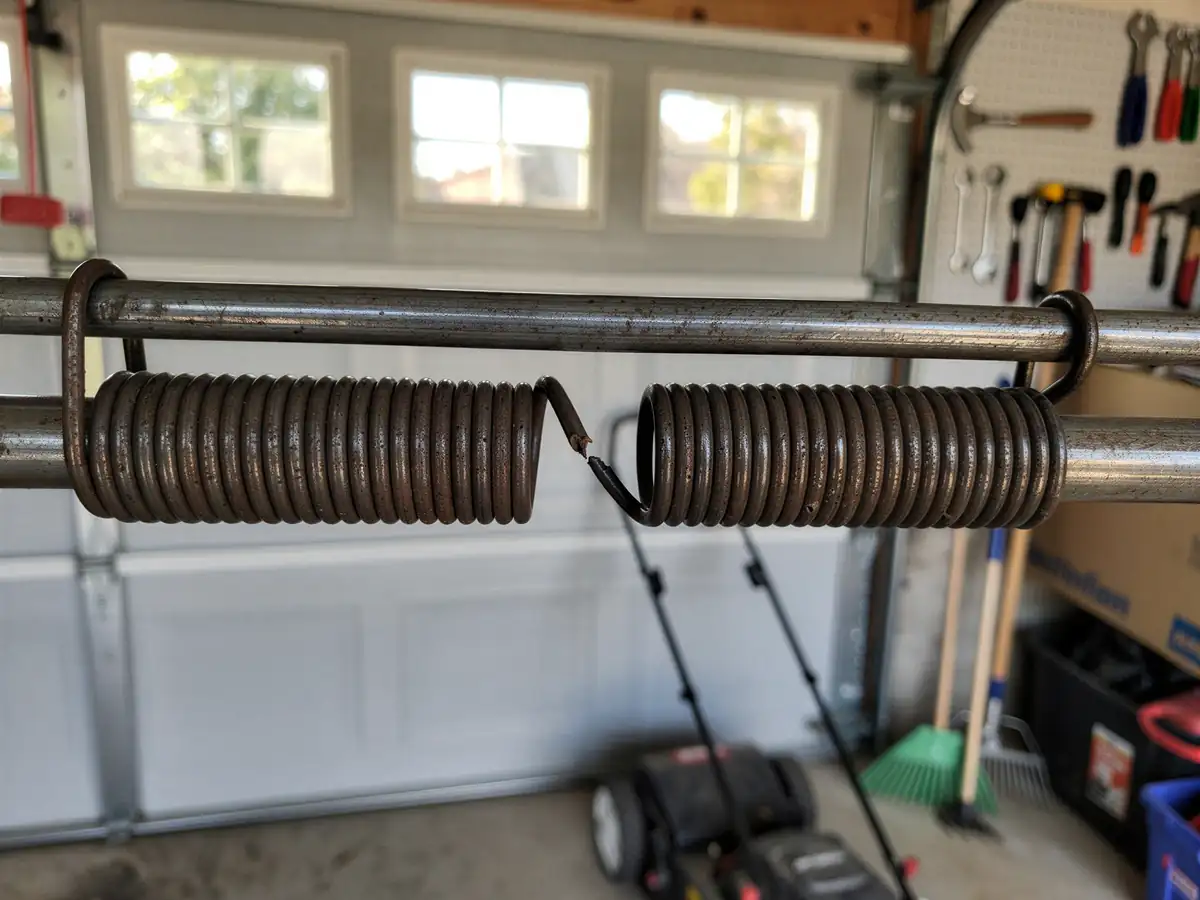
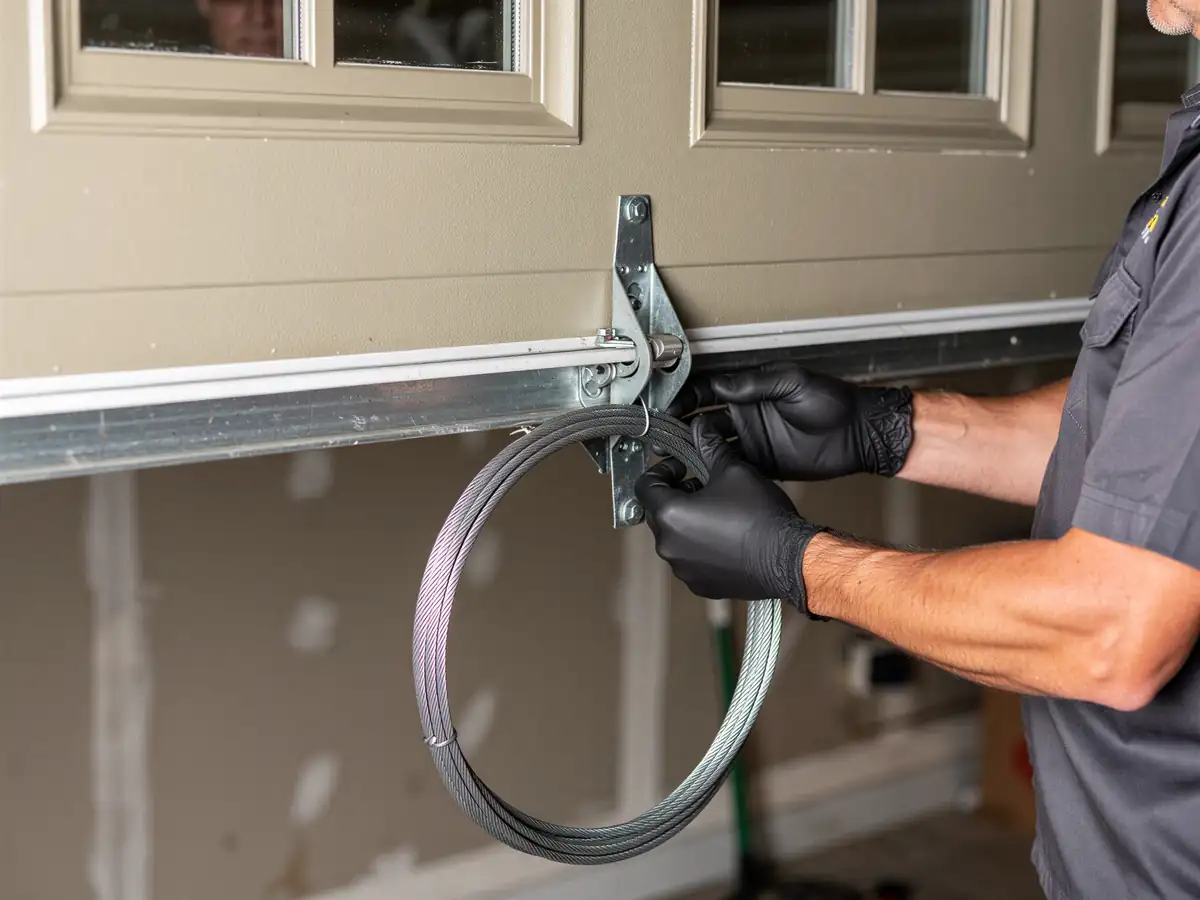
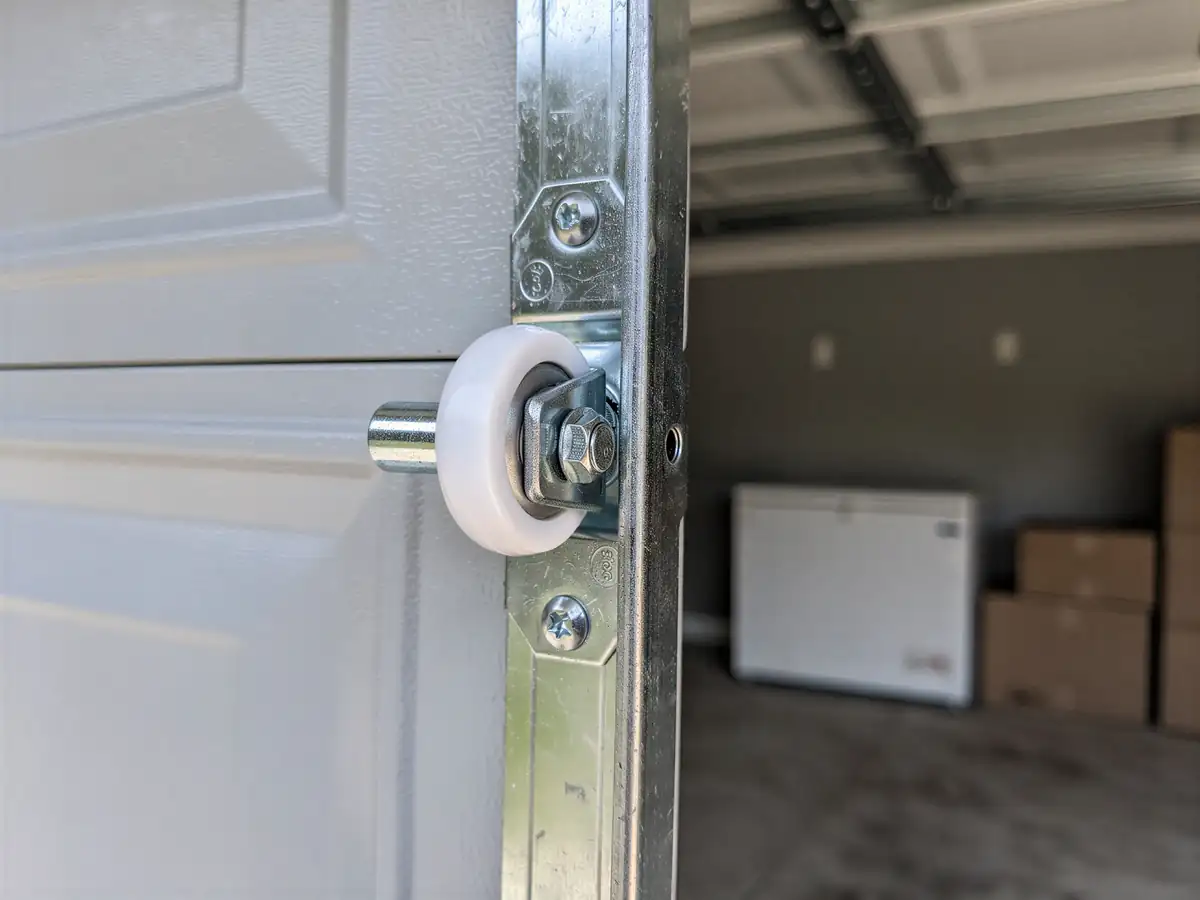
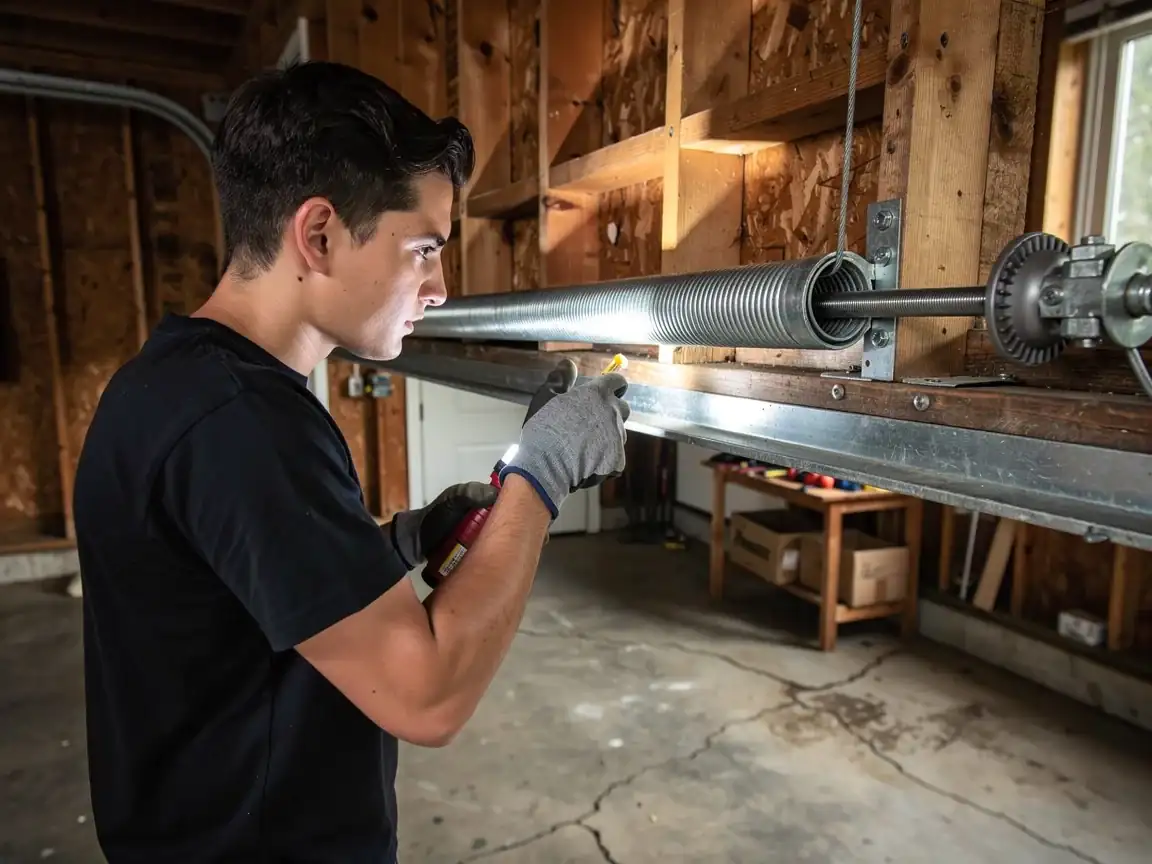
Doors installed around 1984 in this area tend to run one of two ways: an early steel sectional on a torsion spring mounted on a header bracket, or in some of the older garages, an extension spring setup running along the horizontal tracks with no safety cable. Neither is unusual for the build era, but the extension-spring version is the one we flag every time we see it, because without a containment cable a broken spring can send the coil across the garage. Panels from this period are also often a single layer of steel with foam backing added later, if at all, which matters here because F3's severe heat band pushes garage interior temperatures high enough to stress nylon rollers and dry out lubrication faster than it would in a milder climate. We see more cracked rollers and seized hinges on original 1980s doors in this area than on anything installed in the last ten years, simply from sun load on an attached garage wall. None of that means the door needs replacing - a spring, cable, and roller service often gets another decade out of original hardware. It just means the inspection has to go past 'does it open and close.'
What We Will Not Take On
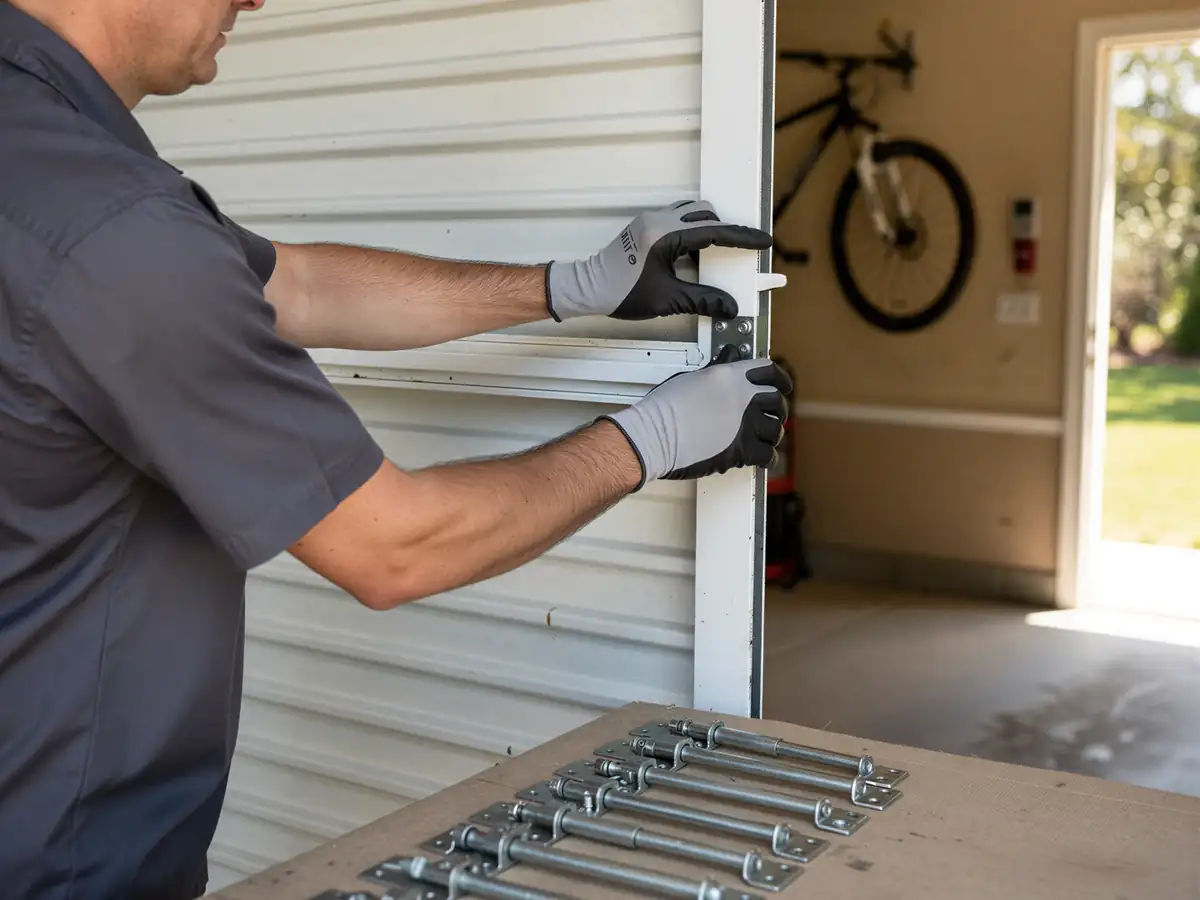
We don't convert garages into living space, and we don't take on structural header or framing repair - if the opening itself is out of square or the header's been compromised, that's a contractor's job before it's a door job. We also won't force a same-day fix on a torsion spring system that needs a part we don't carry on the truck; custom-width springs for older, non-standard openings sometimes have to be ordered, and we'd rather tell you that at the estimate than string you along. If a door in this area is original to a 1984 build and the track, drum, and bottom brackets are all worn past safe adjustment, we'll say so plainly: at that point a full hardware replacement costs less over time than chasing failures one part at a time, and we won't talk you into another patch repair just to make the visit billable.
How it works
From “it’s stuck” to “it’s fixed”
01
Tell us what’s wrong
Describe the symptom - won’t open, loud bang, opener runs but the door won’t move.
02
On-site diagnosis
A technician tests the door under power and by hand and finds what actually failed.
03
Clear, up-front plan
You get the fix that’s needed and what drives the cost - before any work starts.
04
Repaired & tested
The repair is done, the door is set true and tested, and the work area left clean.
Not sure which repair your door needs in Palm Desert, CA? Describe what it’s doing - every job starts with a diagnosis.
No. We run out of Palm Desert, about 5 miles away, and Thousand Palms is a regular stop on our route rather than a separate branch. There's no local depot, so we don't quote a guaranteed arrival window - just a normal service call like any other stop nearby.
Why does my 1980s garage door act up more in summer?
The service area sits in a severe heat climate band, and original steel doors from this build era often have thin or no insulation backing. Sun load on an attached garage wall dries out roller lubrication and stresses nylon rollers faster than it would in a milder climate, which is why summer is when a lot of these doors start sticking or grinding.
Is my extension-spring door unsafe?
Not automatically, but if it's original to a 1980s build and has no containment cable running through the spring, that's worth fixing. Without the cable, a broken spring can send the coil across the garage. We can add containment cables or convert to torsion hardware depending on what the header will support.
Should I replace or repair a door built around 1984?
Depends on what's actually worn. A spring, cable, and roller service can often get another decade out of original hardware. But if the track, drum, and bottom brackets are all worn past safe adjustment, replacement usually costs less long-term than repeated patch repairs - we'll tell you straight which situation you're in.
Ready to get your garage door sorted?
Tell us what it’s doing and where you are in Palm Desert - we’ll take it from there.