What You Are Seeing
You hear it before you see it
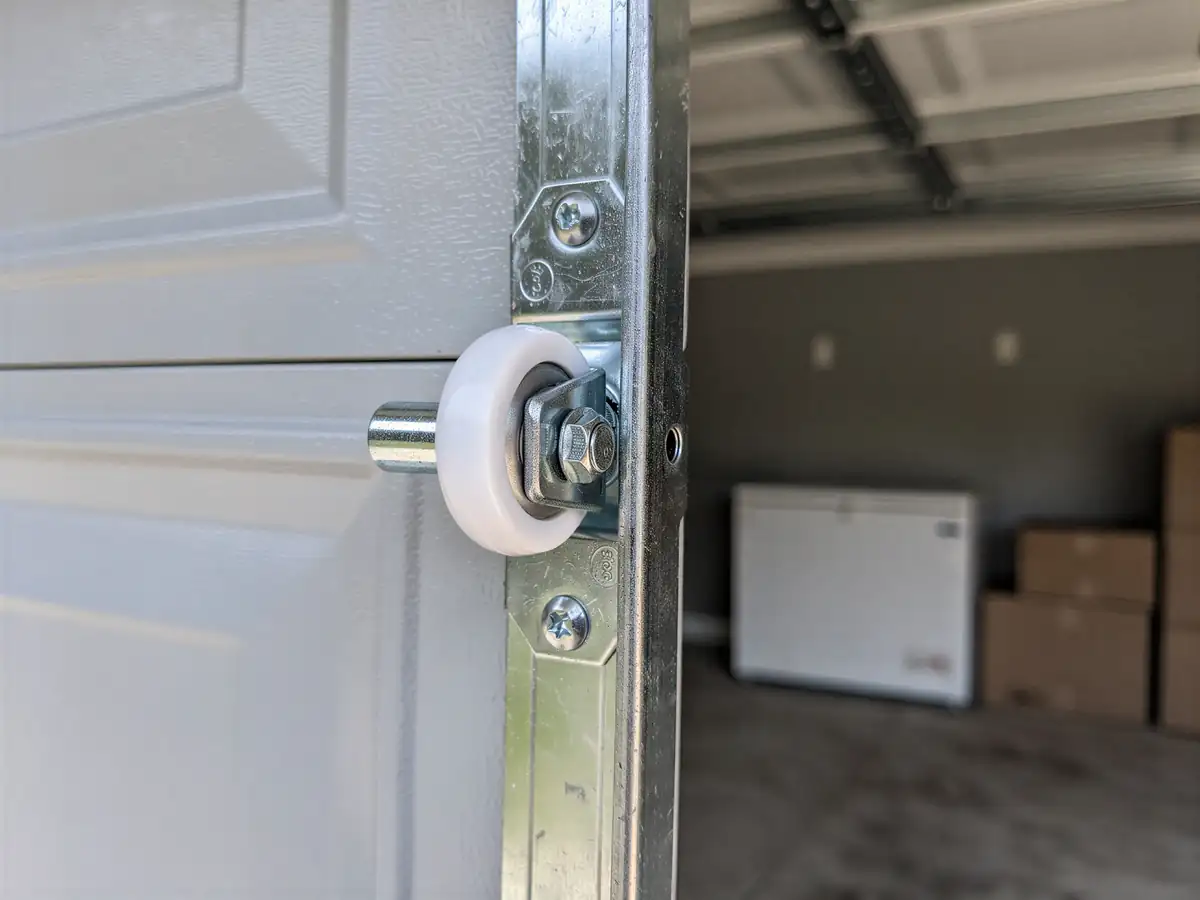
A grinding or popping sound as the door travels, worse at the top or bottom of the run. Look at the rollers themselves - the little wheels riding in the track - and you'll often find flat spots, hairline cracks in the nylon, or a stem that's bent instead of straight. On older doors you might still have steel rollers with no bearing at all, which is why the noise shows up years before anything actually fails.
Most of the housing stock across this service area went up between 1977 and 1999
With a median build year around 1987, and that's across 14 named communities with a similar mix of 1980s and 90s tract construction. Doors from that era were built with roller hardware that was fine for the original install but has had three or four decades of thermal cycling since. The rollers don't fail all at once - they wear a little every summer, and by the time you hear the grind, several of the eight to ten rollers on the door are already past useful life.
A door that sticks partway up
Or that jumps slightly in the track on its way down, is usually a roller problem rather than a spring or opener problem - though the three can mask each other, which is part of why a phone diagnosis only gets you so far.
How We Fix It
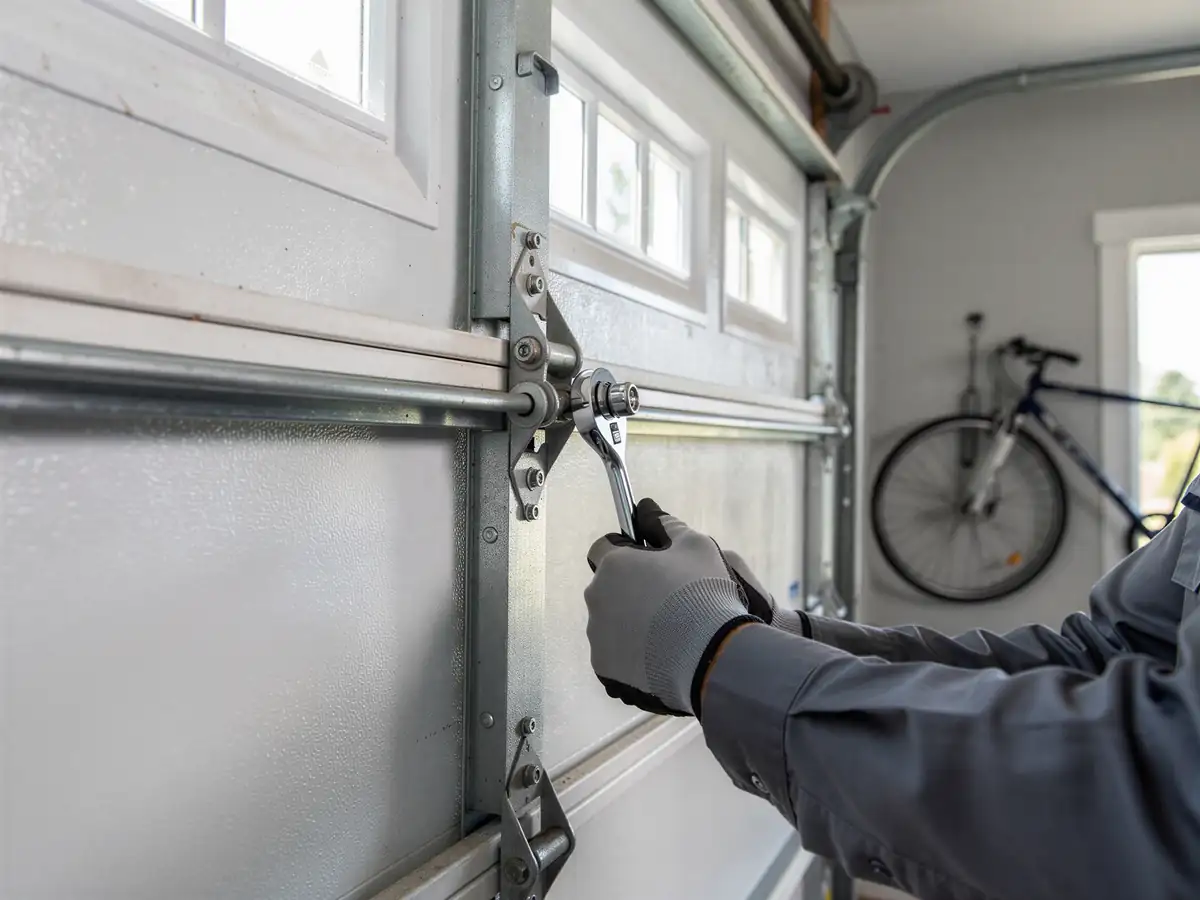
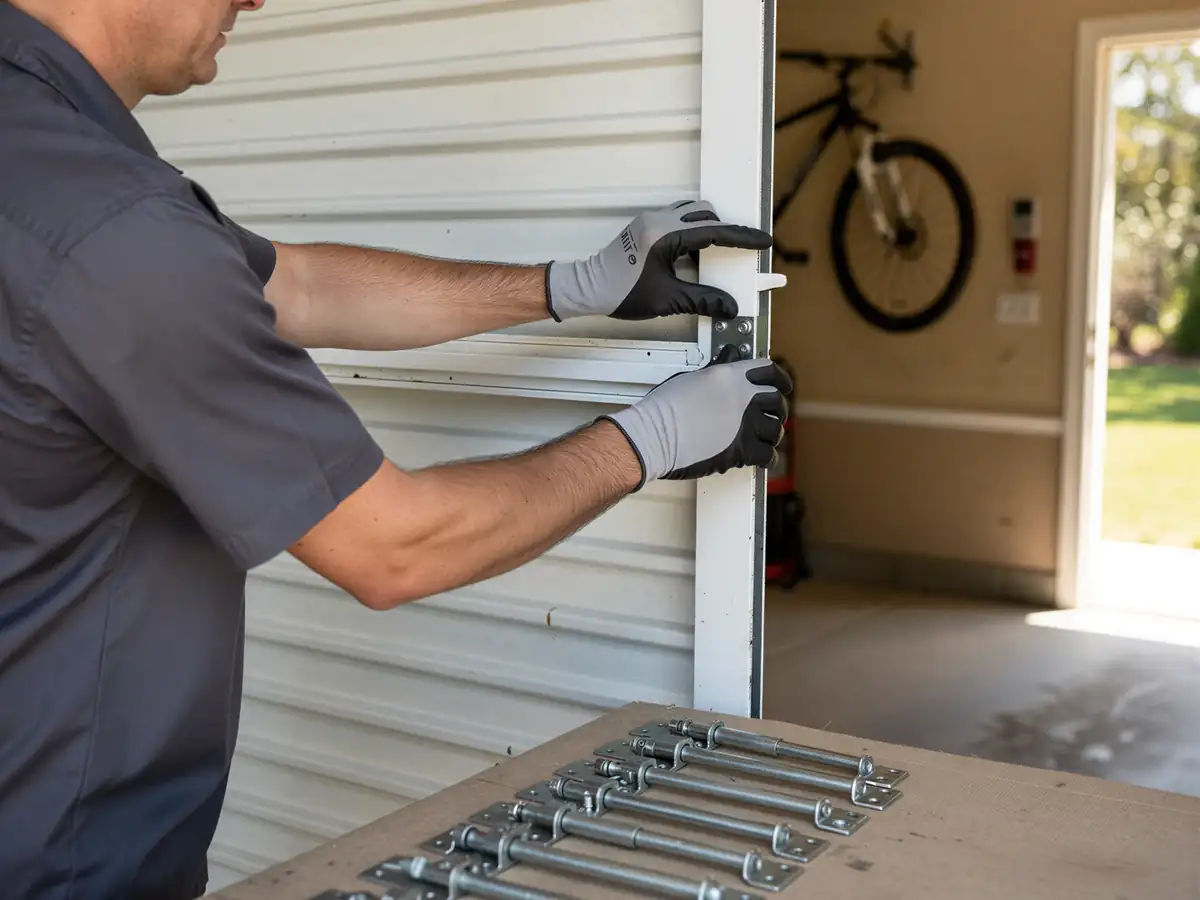
Roller replacement is a full-roller job, not a one-off swap, because rollers on the same door wear at close to the same rate - replacing just the noisy one leaves you back at this point in a year. We pull the old rollers, inspect the track for the wear grooves and rust that heavy grinding leaves behind, and set new nylon rollers with sealed bearings so the stem doesn't bind in the track the way the original steel or unsealed rollers do.
While the door is apart we check the track alignment and the hinges the rollers ride in, since a bent hinge will chew through a new roller just as fast as it chewed through the old one. If a hinge is bent we replace it at the same time rather than bolt a new roller onto a problem that will reappear in a few months.
One honest limitation: if the track itself is bent or the door has sagged out of square, roller replacement alone won't quiet the door down. That's a track or panel repair, and we'll tell you plainly if that's what we're looking at before we start swapping parts, instead of running up a bill on rollers that were never the real issue.
Why It Happens Here
This area sits in a severe-heat climate band, and that matters more for rollers than people expect. Nylon rollers expand and contract with the metal track every day the surface temperature swings, and in a severe-heat zone that swing is bigger and more frequent than in milder climates. The constant expansion and contraction is what cracks the nylon and dries out the bearing grease faster than the roller's rated life would suggest.
Combine that with a service area where most garages were built in the 1977-1999 window - meaning the original roller hardware is now three to four decades old in a huge share of homes across these 14 communities - and roller failure becomes one of the most common calls we get, not an unusual one. It's a predictable wear pattern tied to the age of the housing stock and the climate it sits in, not a random mechanical fluke.
What Can Go Wrong
Left alone, a worn roller doesn't just get noisier
It starts riding crooked in the track, which puts side load on the hinge and eventually on the cable drum. We've seen a door kept running on bad rollers long enough that the extra drag strains the opener motor, turning a roller job into an opener job. Rollers that have cracked all the way through can also let the door drop slightly off-track, which is a safety issue if anyone is standing under or near the door when it happens.
With 37,321 owner-occupied houses across this service area
Most built in that same 1977-1999 stretch, a worn roller is rarely a one-door problem - if one door in a neighborhood from that build era is grinding, others nearby usually aren't far behind. Catching it at the roller stage, before it drags a hinge or cable into the repair, is the difference between a straightforward swap and a bigger bill.
- 37,321 owner-occupied