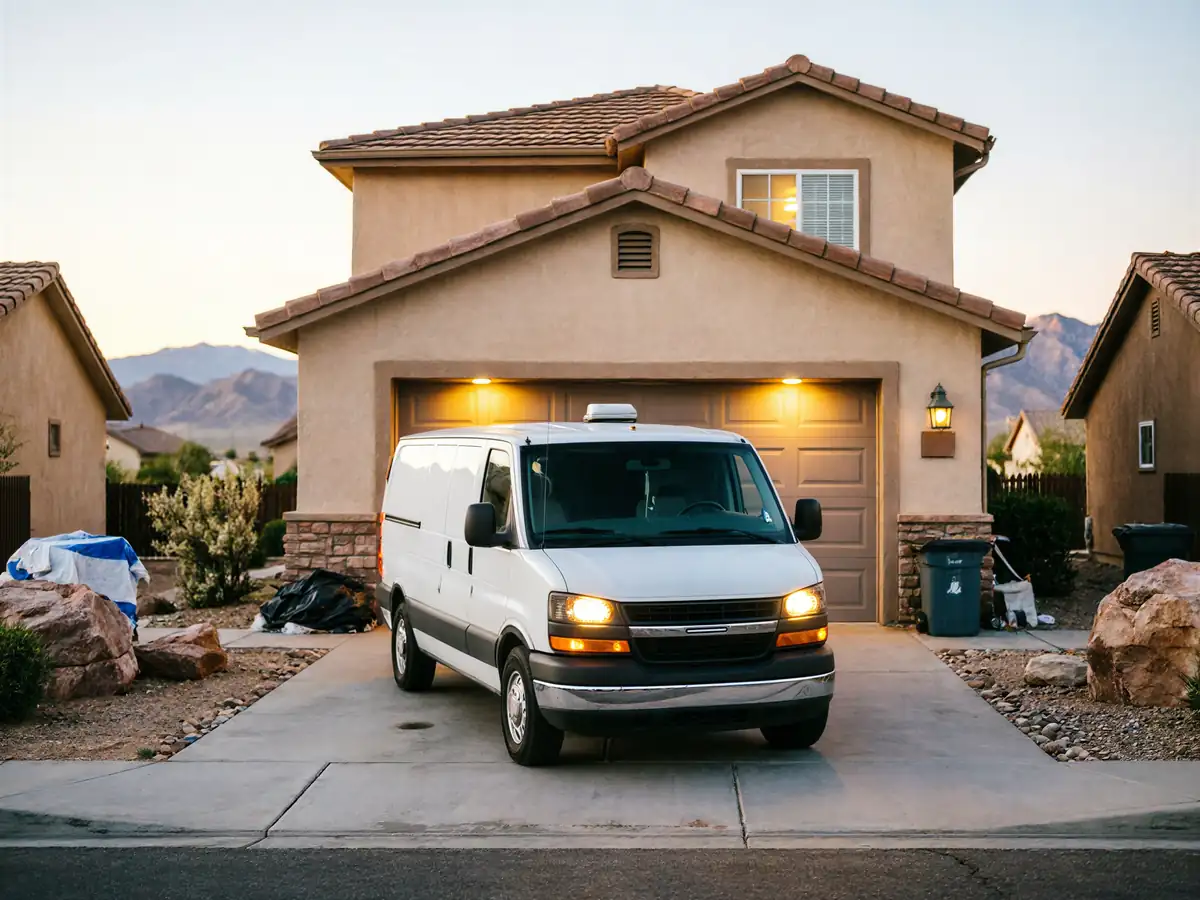
Palm Desert homes built 1977-1999 carry original hardware aging into desert heat. Here's which garage door noises are normal wear and which mean a part is about to fail.
Most houses in Palm Desert went up between 1977 and 1999, with the median landing around 1987. That means a huge share of the doors on their original openers and torsion springs are now thirty-plus years old, and a lot of the hardware behind them has never been swapped. Across the fourteen named areas that make up this stretch of the valley, the story is the same: 1980s and 90s construction, original tracks, original rollers, original everything in a lot of garages. A noise that would be background hum on a five-year-old door is often the first sign of fatigue on a door this age. The spring has done its job for three decades. The nylon roller has hardened and cracked. The opener gear has worn down a tooth at a time. None of that announces itself with a dramatic failure first - it announces itself with a sound, usually weeks or months before the part actually quits. Catching the sound early is the difference between a $200 call and a torsion spring snapping with the door half-open, cable slack, and a panel bent on the way down.
What Local Conditions Do
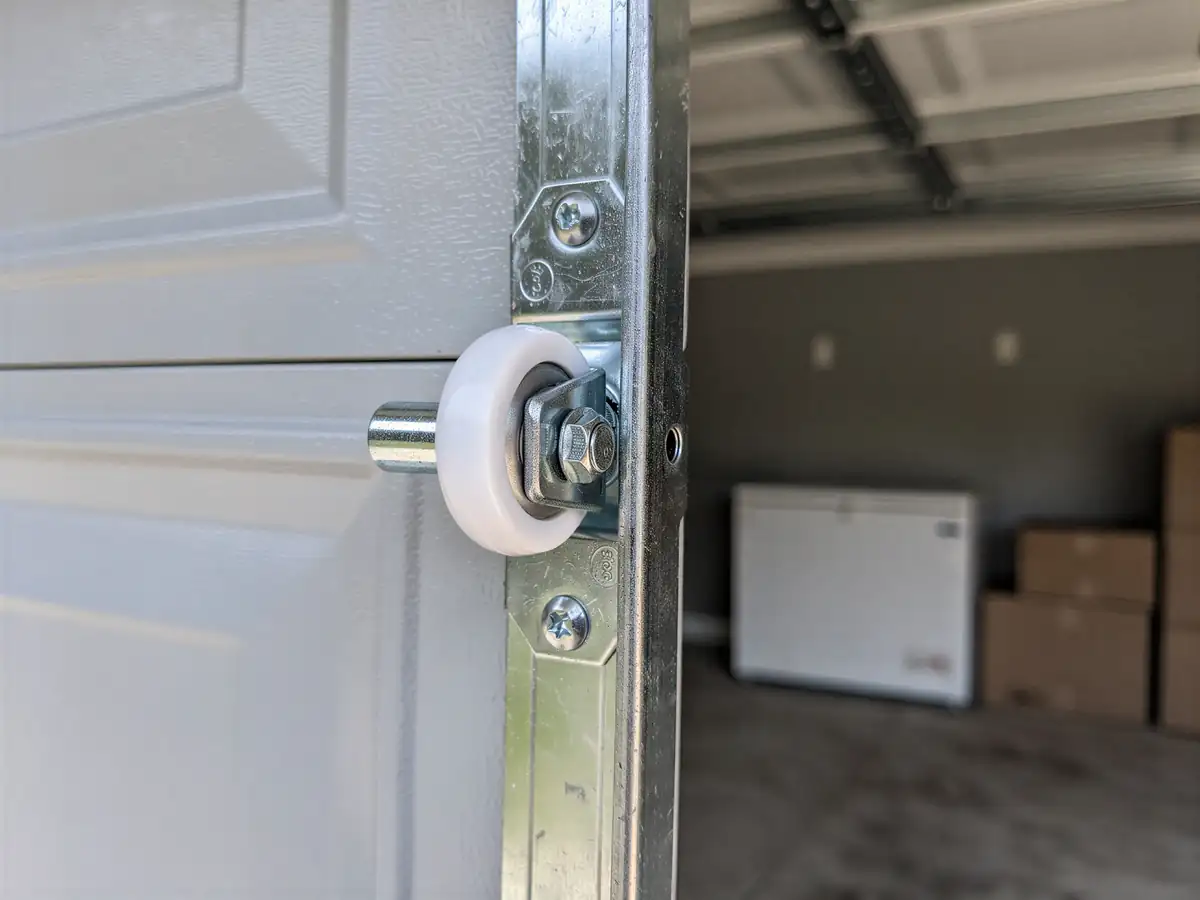
This area sits in a severe-heat climate band, and heat is hard on garage hardware in ways cold climates don't deal with. Steel expands and contracts through daily swings that other regions don't see, which loosens bolts on track brackets and hinges over the years. Lubricant that would last a season elsewhere cooks off faster here, so rollers and hinges run dry sooner and start announcing it with a squeal or a grind. Nylon rollers - common in 1980s and 90s builds - get brittle under sustained heat exposure and start to flat-spot, which you hear as a rhythmic thump once per rotation. None of this is unique to one house; it's what thirty-plus summers do to original hardware across the older sections of Palm Desert. A door that sounds fine in January can sound rough by August for exactly this reason.
What to Look At First
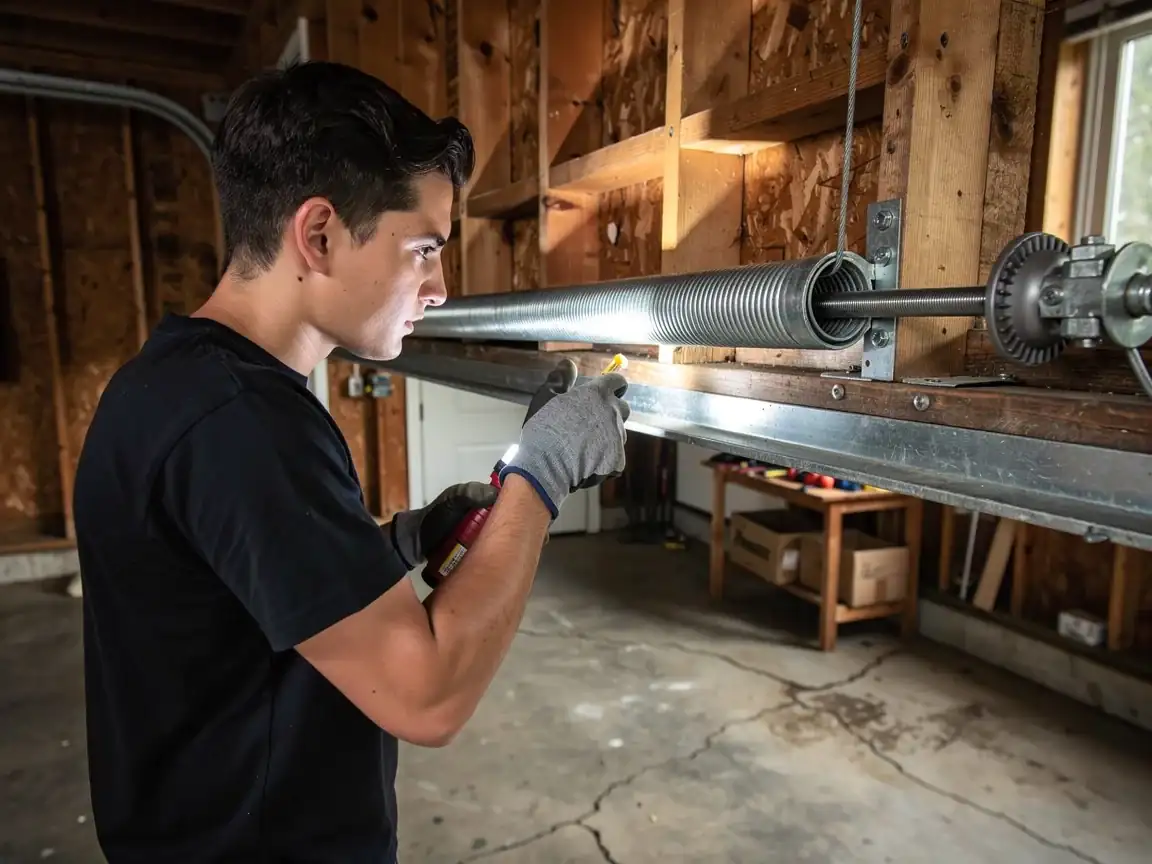
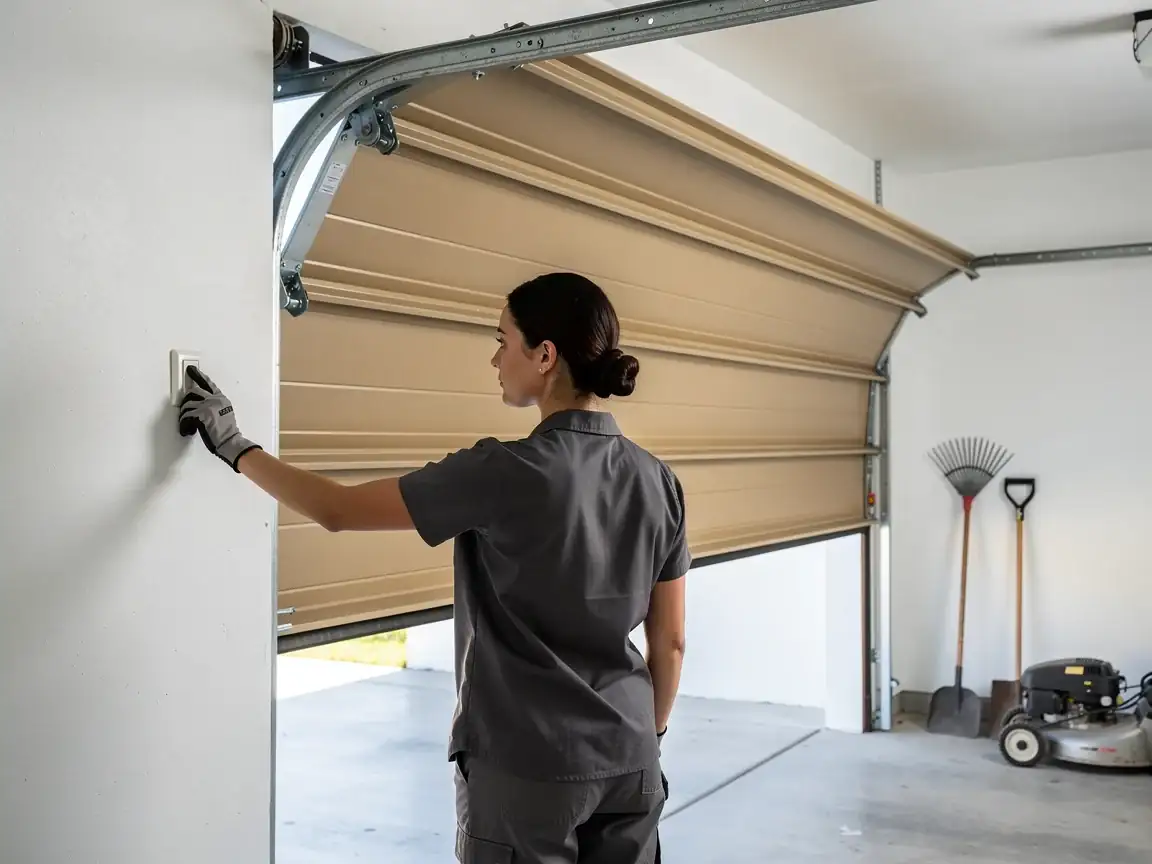
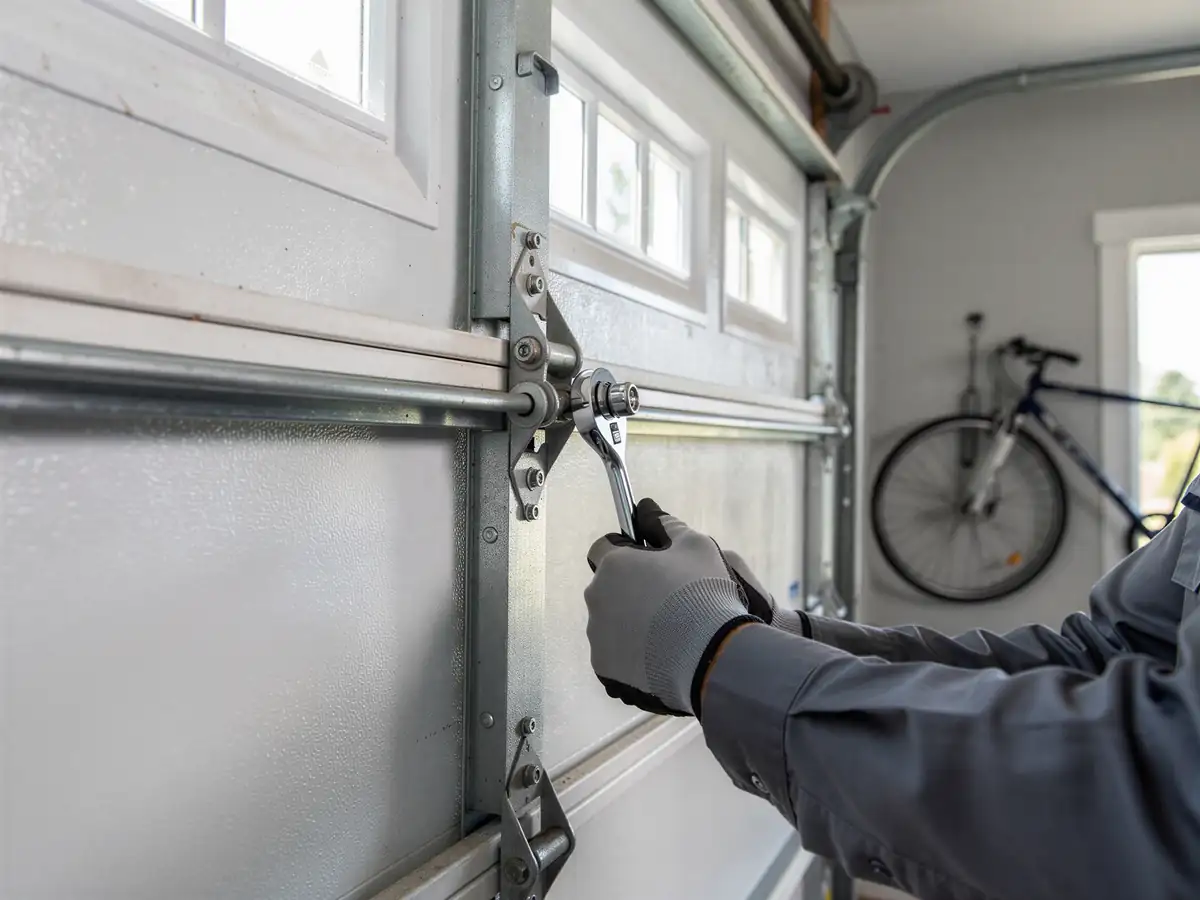
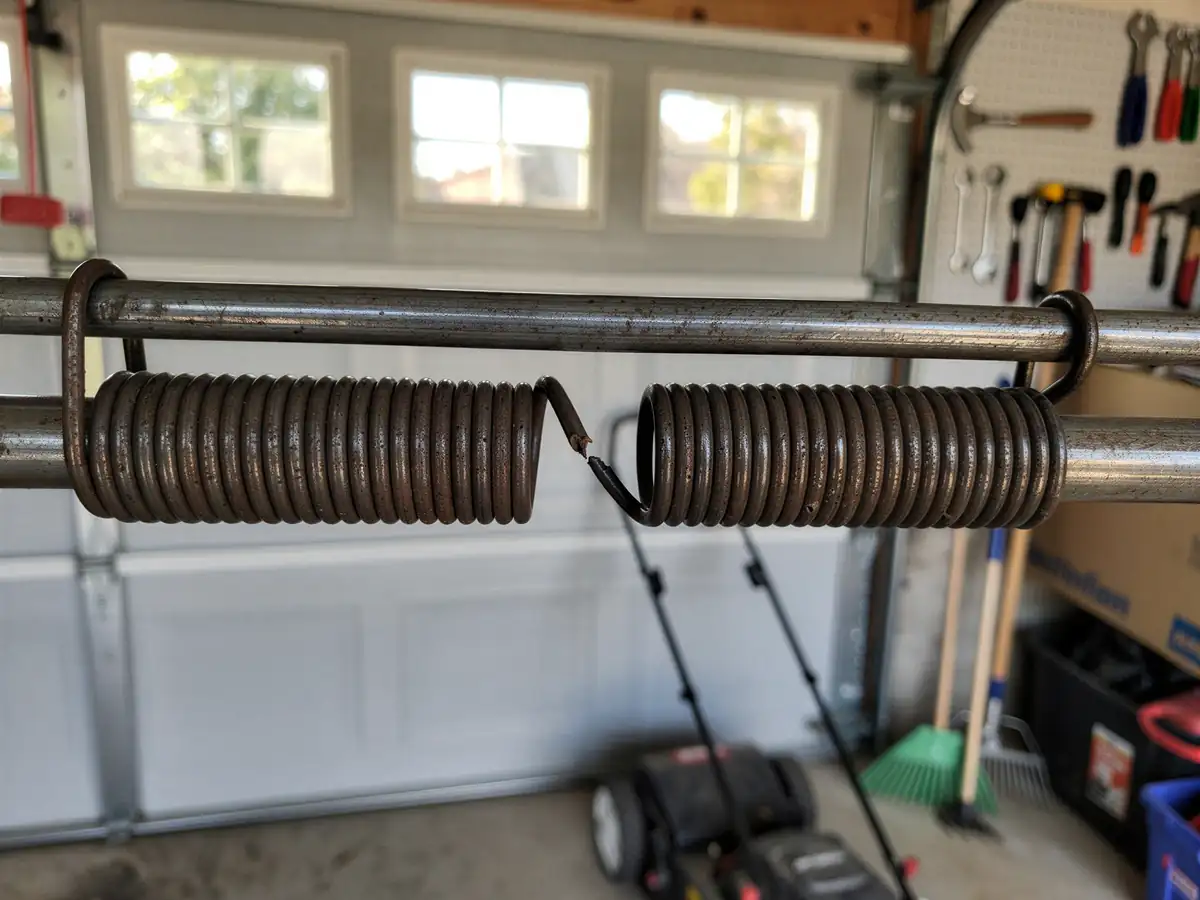
Start with where the sound happens, not just what it sounds like. A grinding or squealing noise concentrated near the top corners of the door, where the rollers ride the curve into the horizontal track, usually points to a roller that's worn flat on one side - common on original hardware from the 1977-1999 construction wave. A rhythmic thump every few feet as the door travels is often the same issue repeating down the track. A loud bang or a popping sound, especially on a door that then feels hard to lift by hand, points at the torsion spring - and on a double door this age, that's a two-person, two-wrench job, not a DIY afternoon. A grinding sound from the opener head itself, paired with the door moving slower than it used to, usually means the drive gear is worn down. Write down where the sound happens and when - opening, closing, both - before you call. It cuts diagnosis time in half.
When to Call Someone
Call before the door stops working, not after. If a double-door torsion spring on original hardware finally lets go, it doesn't creak a warning - it snaps, and a door that size without spring tension is heavier than it looks, hard on cables, hard on whoever's standing near it. If you hear metal-on-metal grinding that's gotten louder over a couple of weeks, that part is already failing, not just noisy. If the door reverses on its own partway through closing, that's usually a safety sensor or a track alignment issue, and it's worth a look before it becomes a door that won't close at all. One honest limit: if your opener or spring setup is original to a house built in the late 1970s or early 80s, some replacement parts for that exact unit may no longer be stocked, and a straight repair isn't always possible - sometimes the fix is a new opener rather than a patched-up thirty-five-year-old one.
How it works
From “it’s stuck” to “it’s fixed”
01
Tell us what’s wrong
Describe the symptom - won’t open, loud bang, opener runs but the door won’t move.
02
On-site diagnosis
A technician tests the door under power and by hand and finds what actually failed.
03
Clear, up-front plan
You get the fix that’s needed and what drives the cost - before any work starts.
04
Repaired & tested
The repair is done, the door is set true and tested, and the work area left clean.
Not sure which repair your door needs in Palm Desert, CA? Describe what it’s doing - every job starts with a diagnosis.
My garage door squeals every time it opens - is that urgent?
Not usually urgent, but it's not nothing either. On houses from the 1980s and 90s building wave common in Palm Desert, that squeal is often a dry hinge or a roller going brittle from years of desert heat. It won't strand the door today, but it's the kind of noise that gets worse fast once summer temperatures hit, so it's worth checking within a couple of weeks.
What does a loud bang from the garage mean?
On an older door, a sudden bang - especially if the door now feels heavy to lift by hand - usually means a torsion spring has broken. This is common on original hardware from homes built before 2000 that's never been replaced. Don't try to open the door manually past that point; call someone before using it again.
Why does my door sound worse in summer than winter?
This area sits in a severe-heat climate band, and that heat dries out lubricant and makes aging nylon rollers brittle faster than in milder climates. A door that was quiet in January can develop a grind or thump by August purely from heat exposure on parts that were already wearing down.
Is it worth repairing a door this old or should I replace it?
It depends on what's failing. A spring or roller on an otherwise sound door is almost always worth fixing. But if the opener itself is original to a house from the late 1970s or 80s, parts for that exact model may not be available anymore, and replacing the opener can end up being the more practical call.
Ready to get your garage door sorted?
Tell us what it’s doing and where you are in Palm Desert - we’ll take it from there.