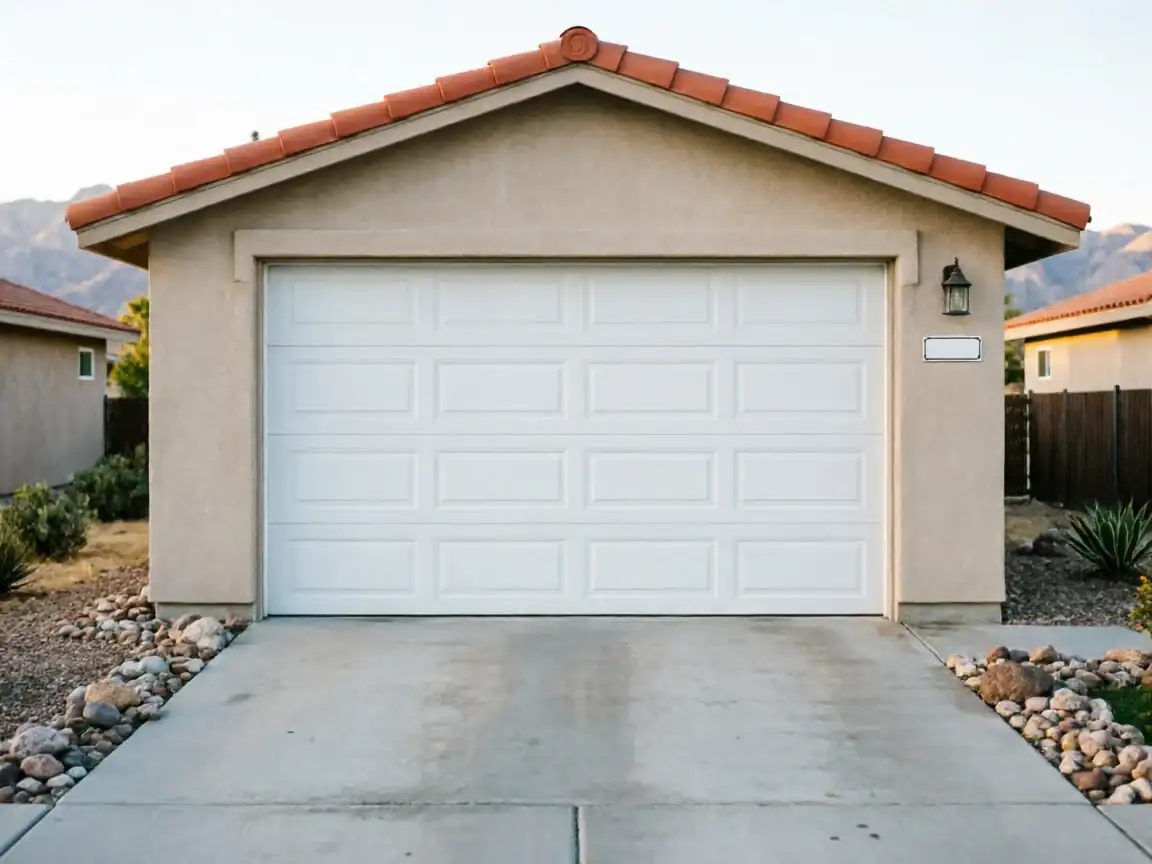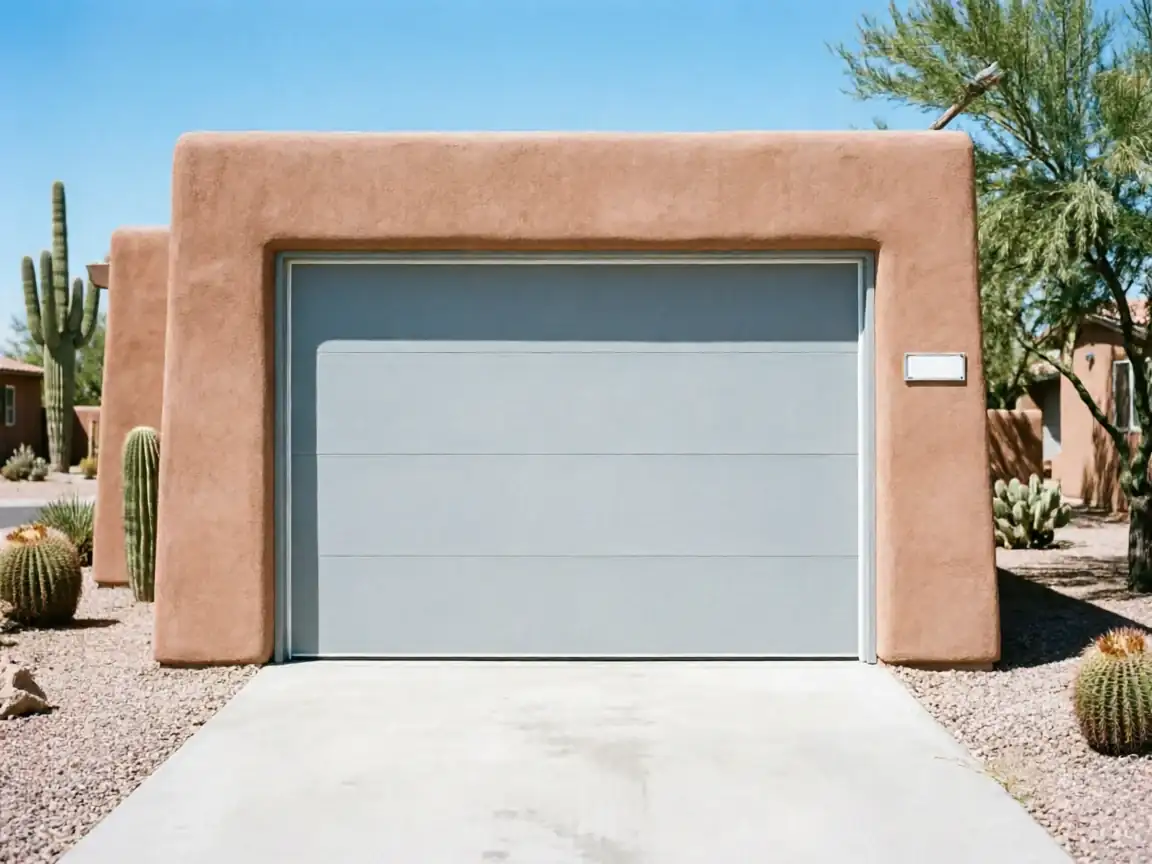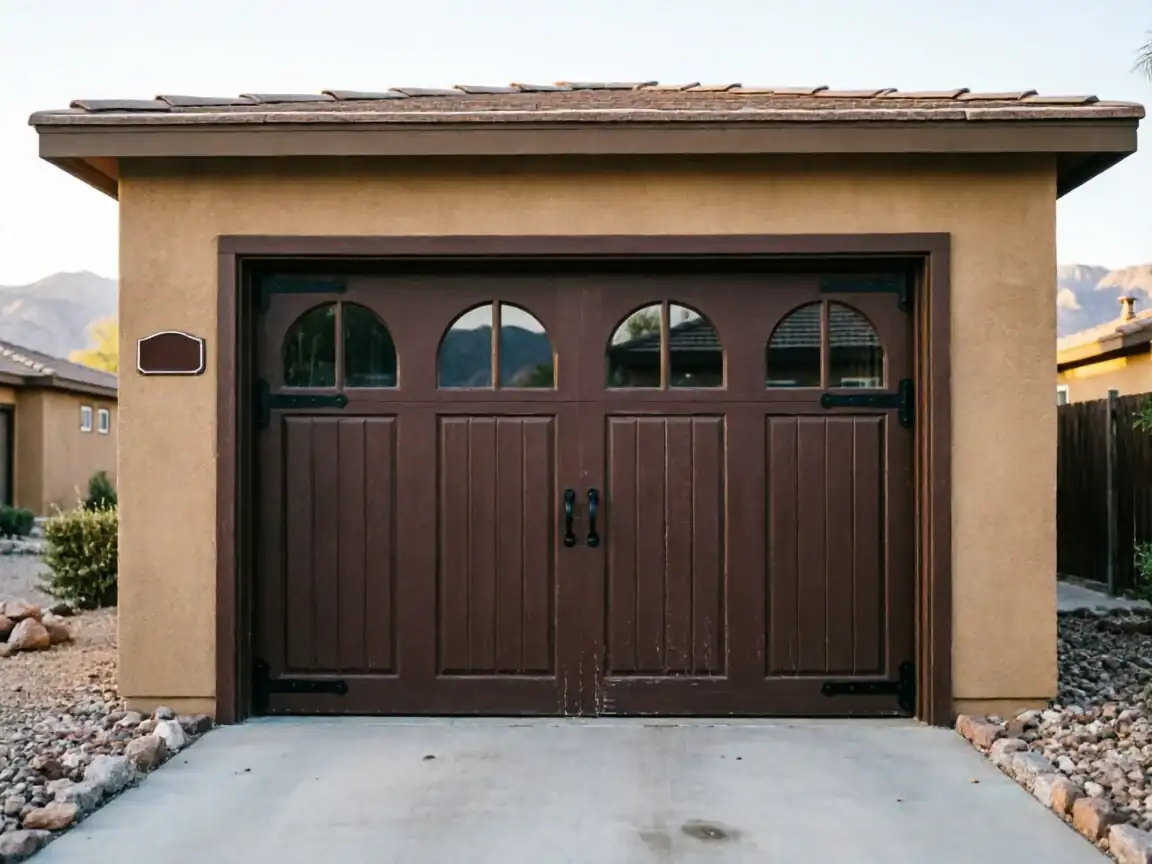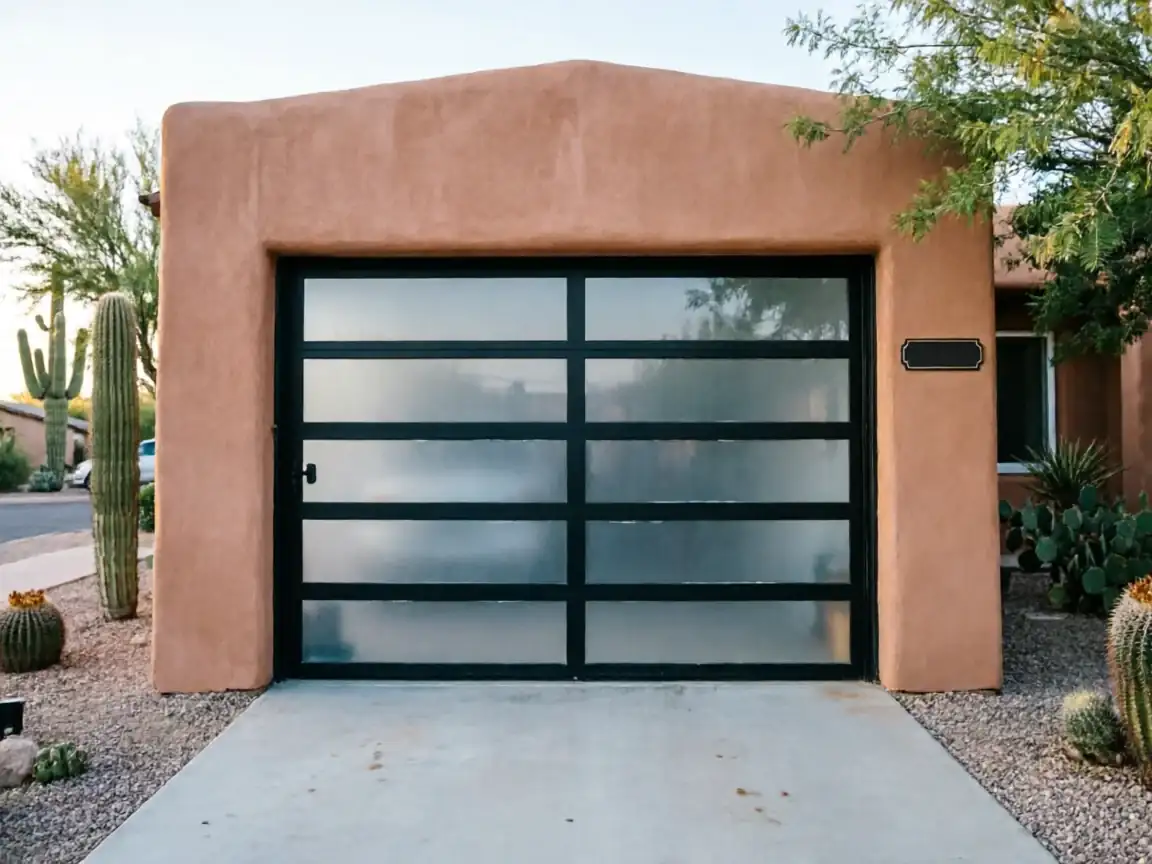
What You Are Seeing
The door won't budge, or it moves a few inches and stops
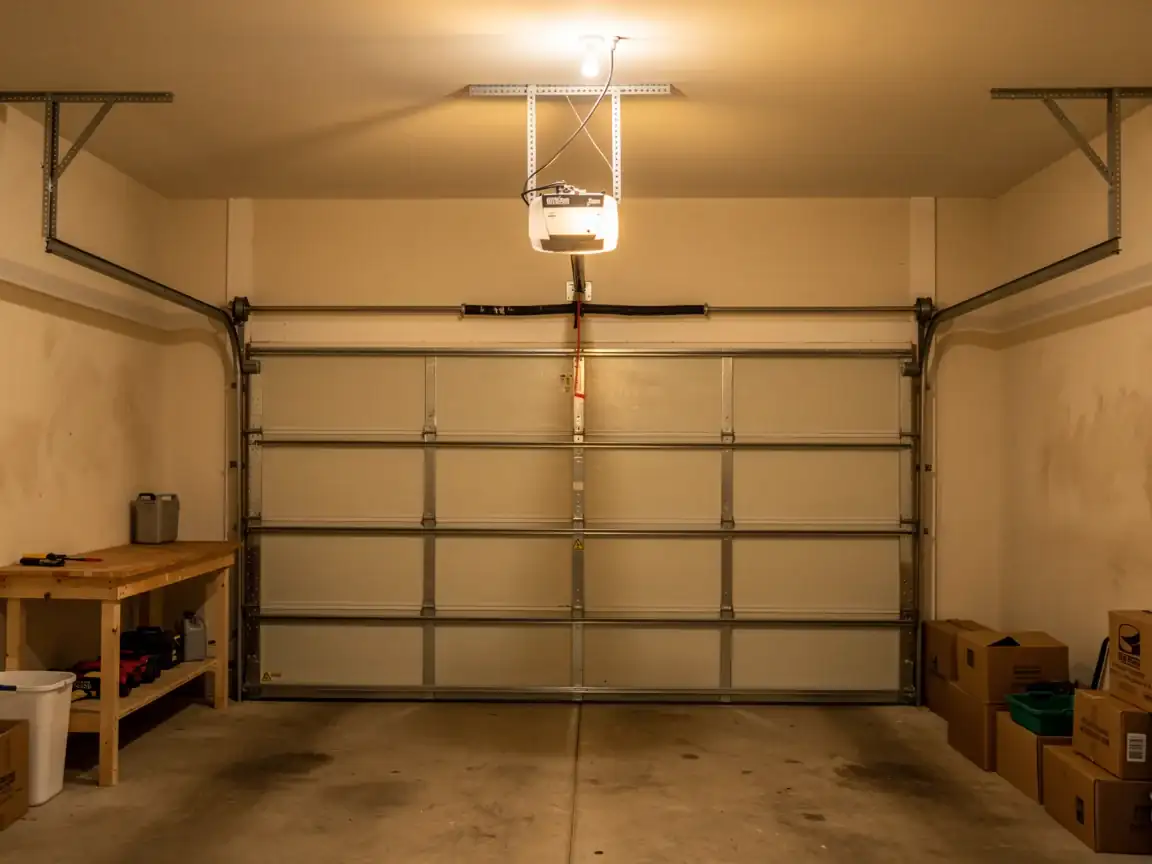
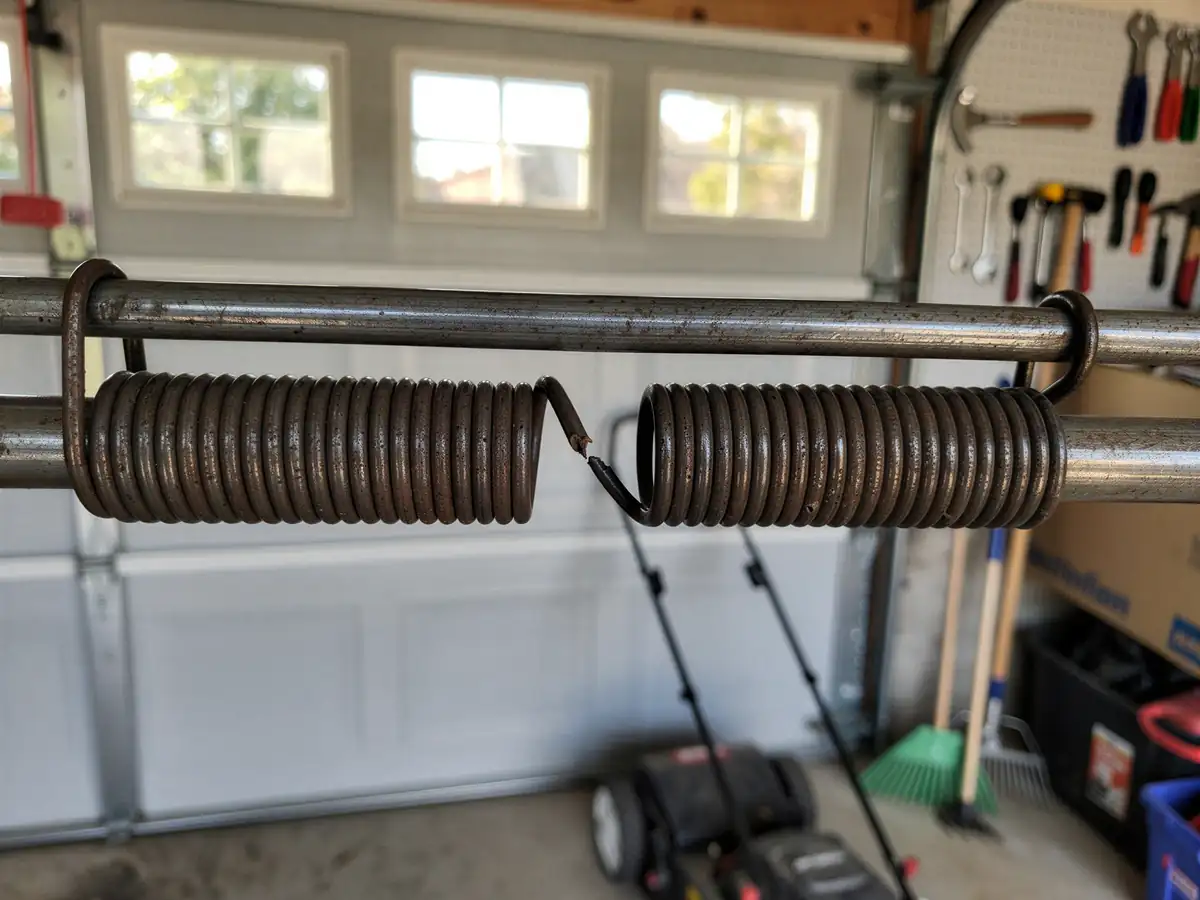
Maybe you heard a bang from the garage - a loud pop that sounded like a gunshot - and now the door sits crooked in the opening, one side higher than the other. That's a torsion spring letting go. Sometimes it's quieter: the opener strains, the chain or belt makes a grinding noise, and the door creeps up slower than it used to before it reverses itself back down. That's a spring losing tension rather than snapping outright, and it's usually the warning sign before the loud version happens.
A lot of the houses we get called to in this part of the valley went up between 1977 and 1999
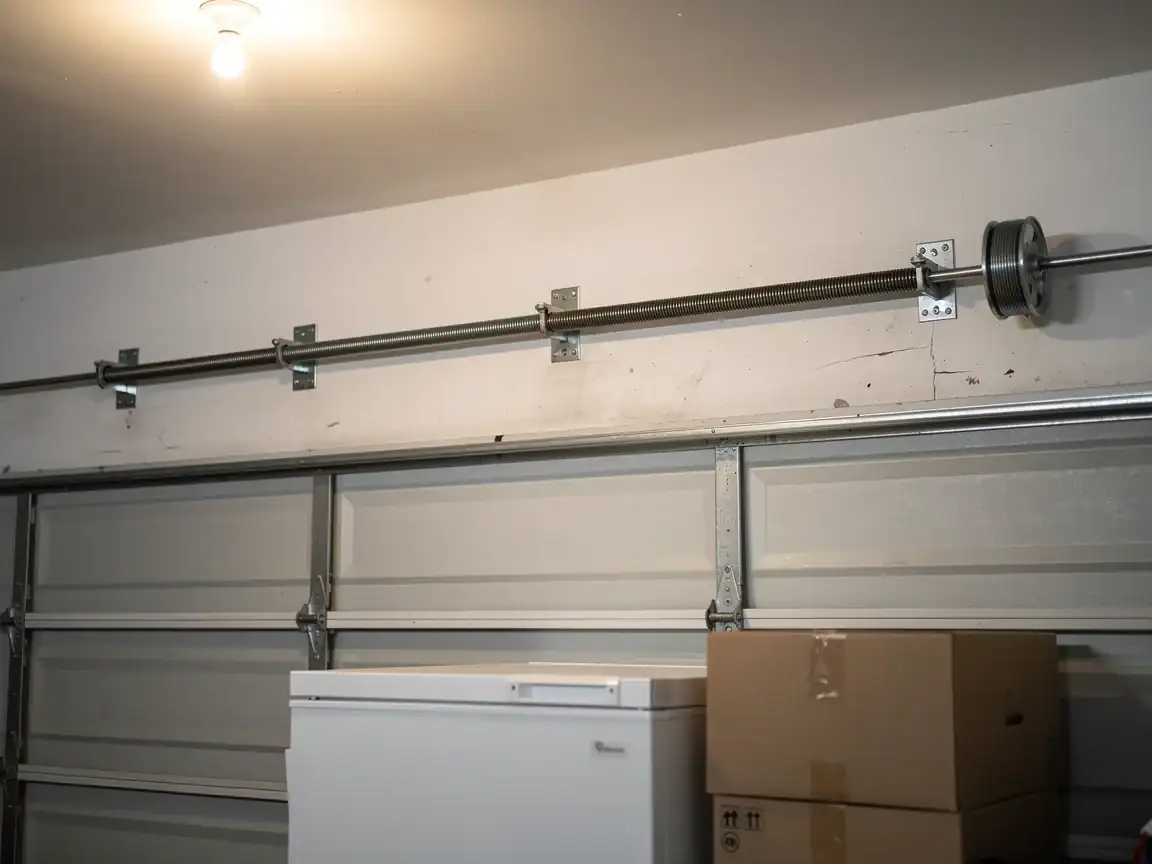
With most of that stock dating to the late 1980s. Across the fourteen named areas we work, that means a huge number of garages still run the original torsion spring that came with the house - steel that's been winding and unwinding through desert summers for three, four decades. Springs are rated for a cycle count, not a calendar date, but age and heat both shorten that count. If your door is original to a house from that era, a snapped spring isn't bad luck. It's the hardware reaching the end of what it was built to do.
How We Fix It
We don't patch a torsion spring - we replace it, and we replace both springs on a double door even if only one broke. Springs on the same bar wear at close to the same rate, so leaving the second one in just means a second call in a few months, usually at a worse time.
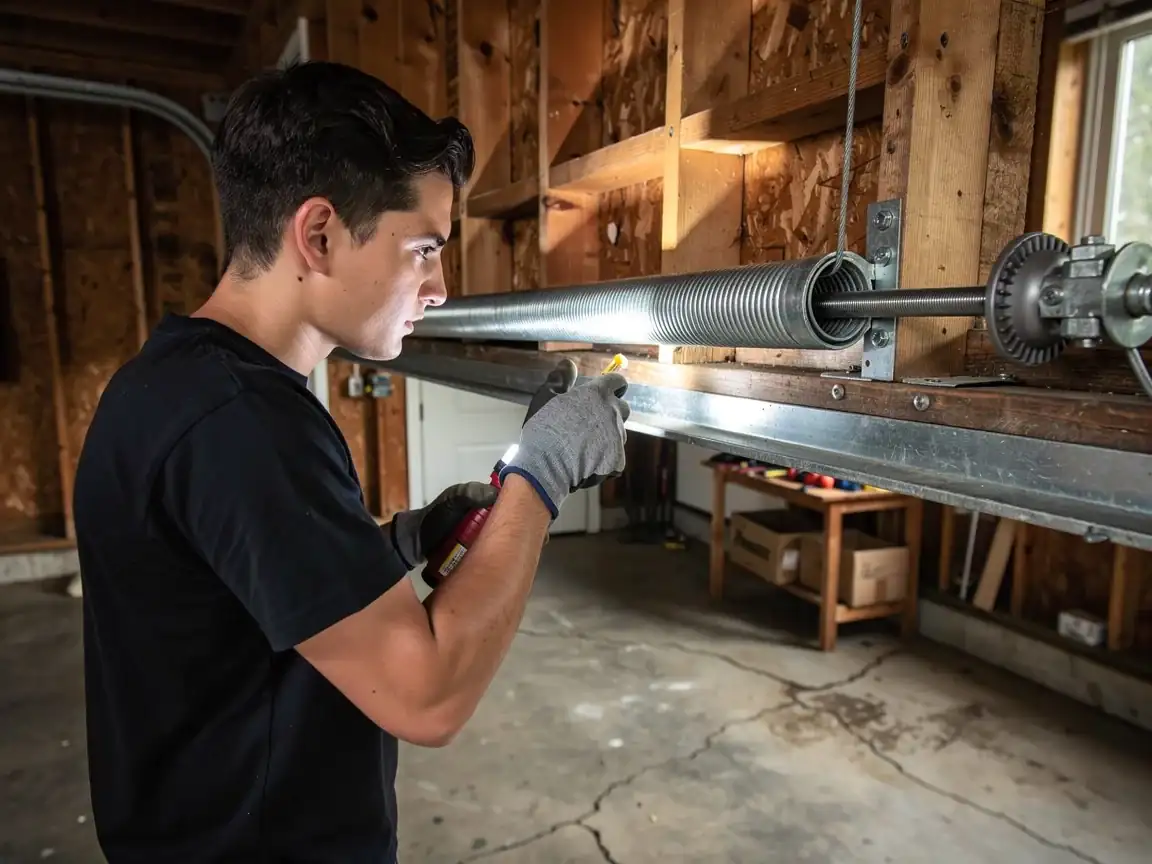
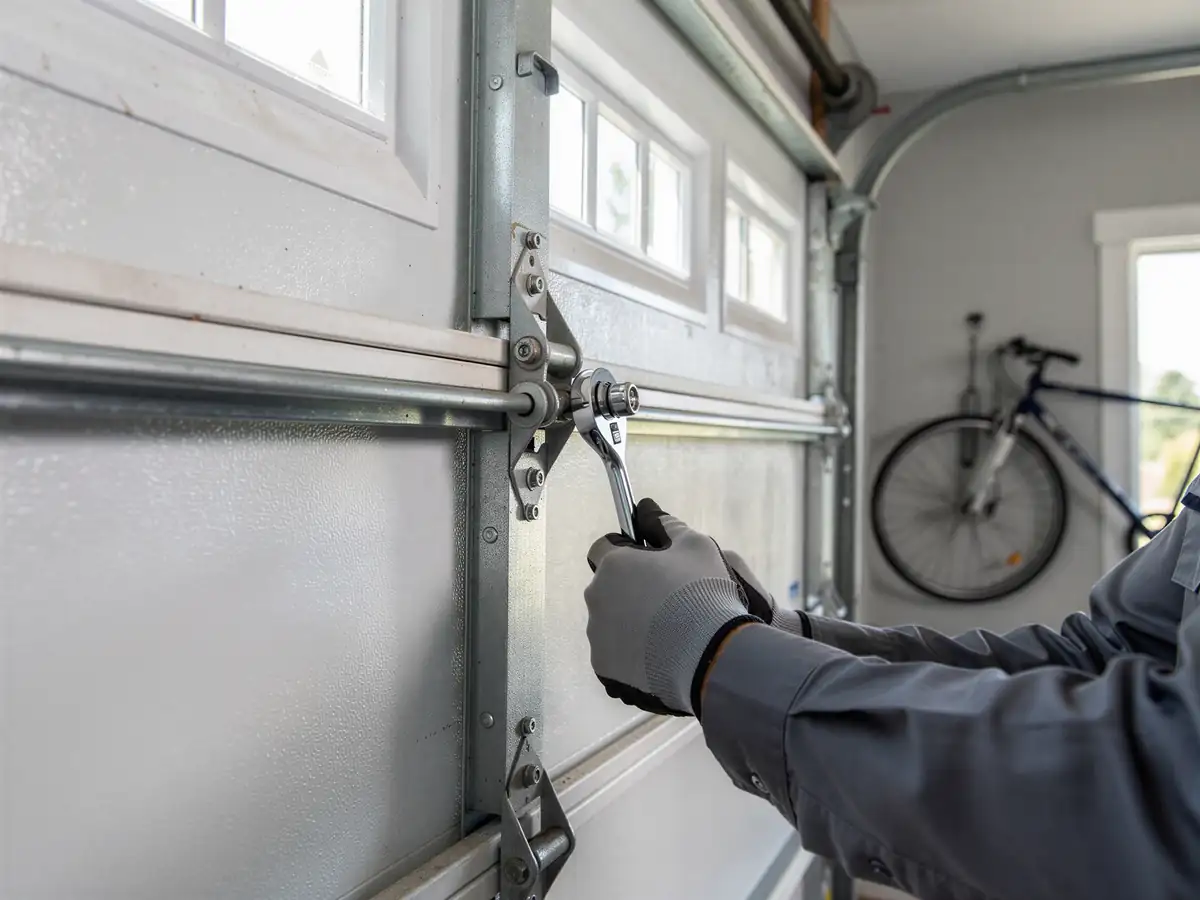
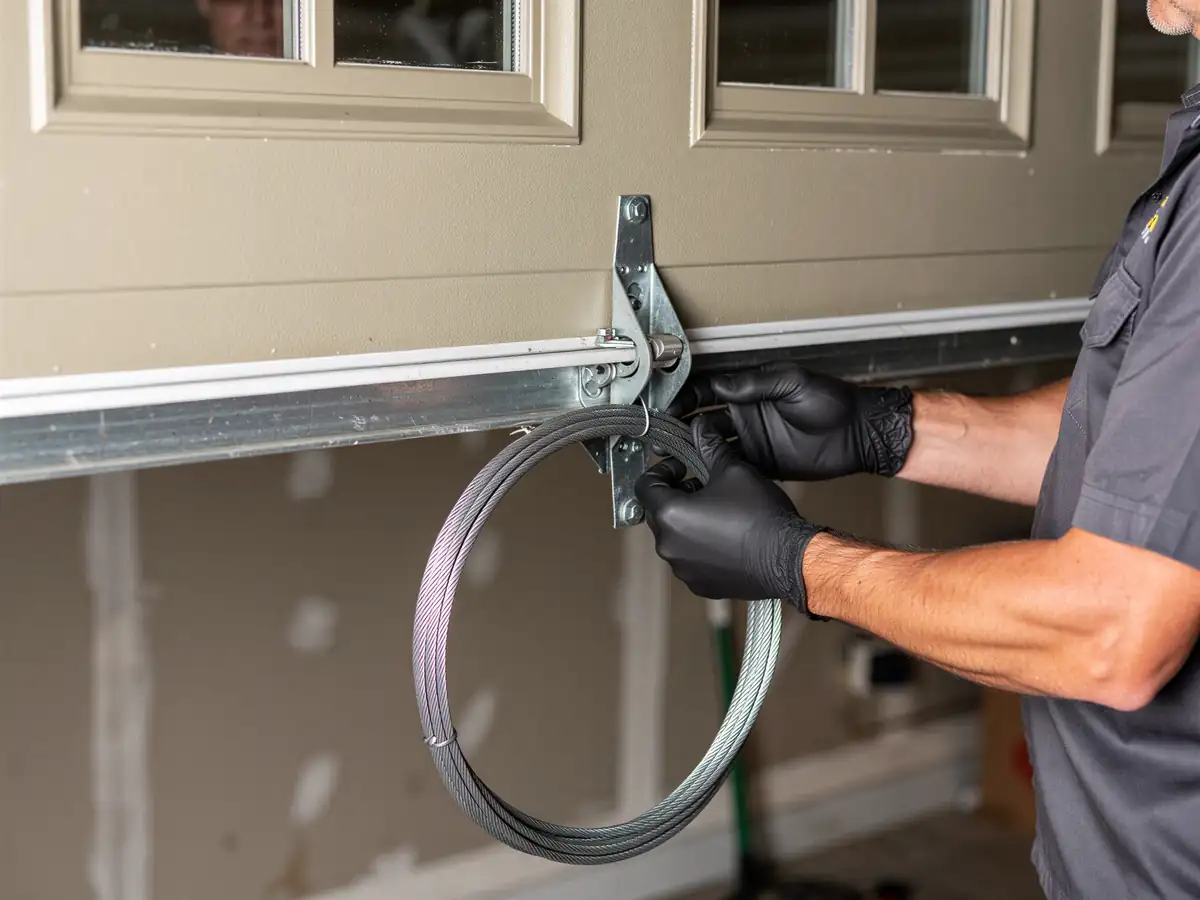
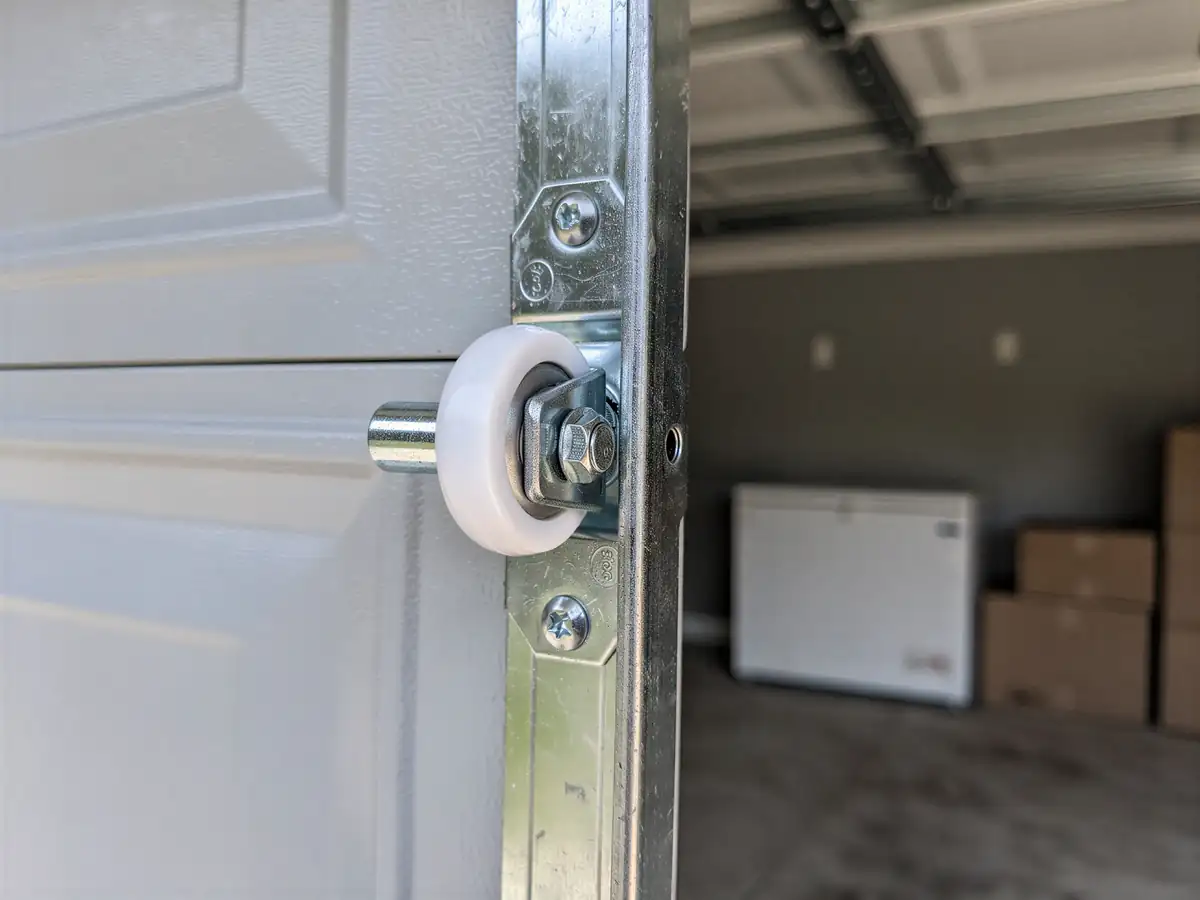
The job starts with unloading the old spring safely, which means winding bars and clamps, not a screwdriver and hope. We check the drums, the cables, and the bearing plates while the door is open, because a spring rarely fails alone - if a cable frayed against a worn drum, replacing the spring and leaving the cable is a callback waiting to happen. We match the new spring to the door's weight and the track's wind direction, not a generic size off the shelf.
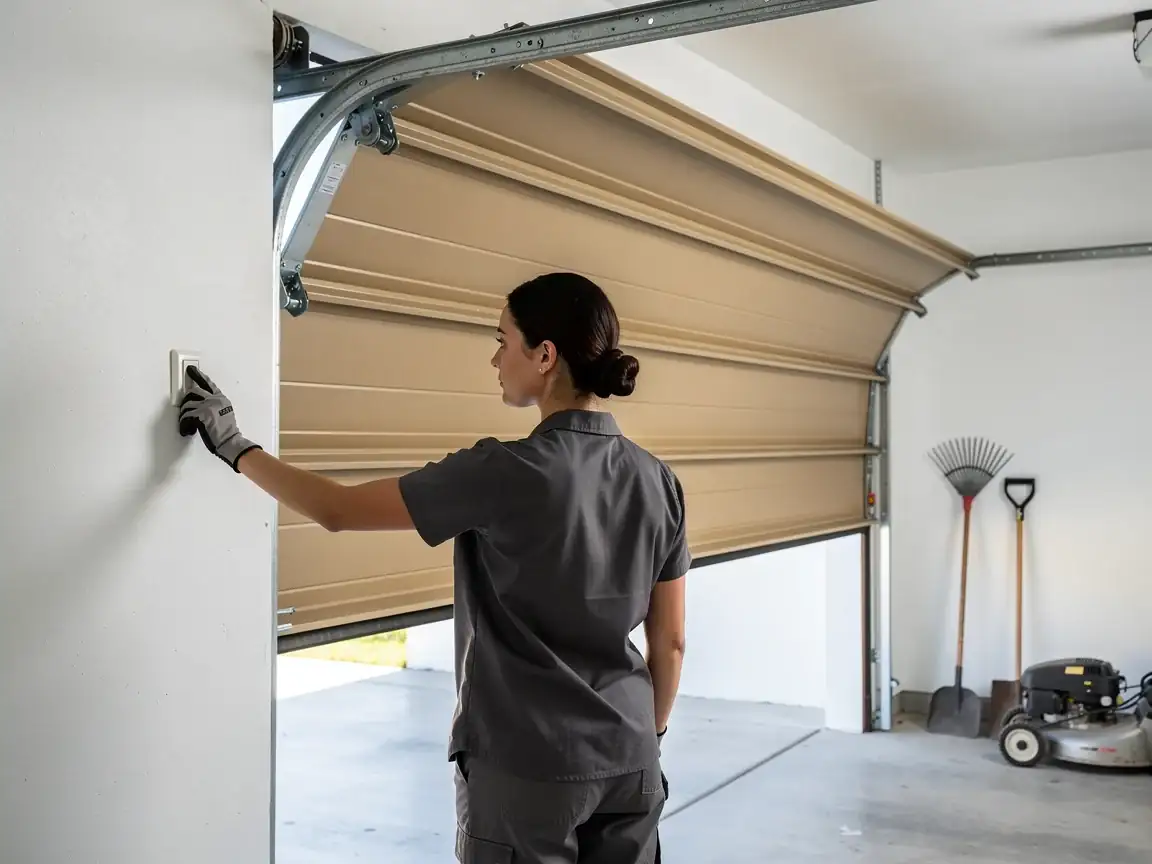
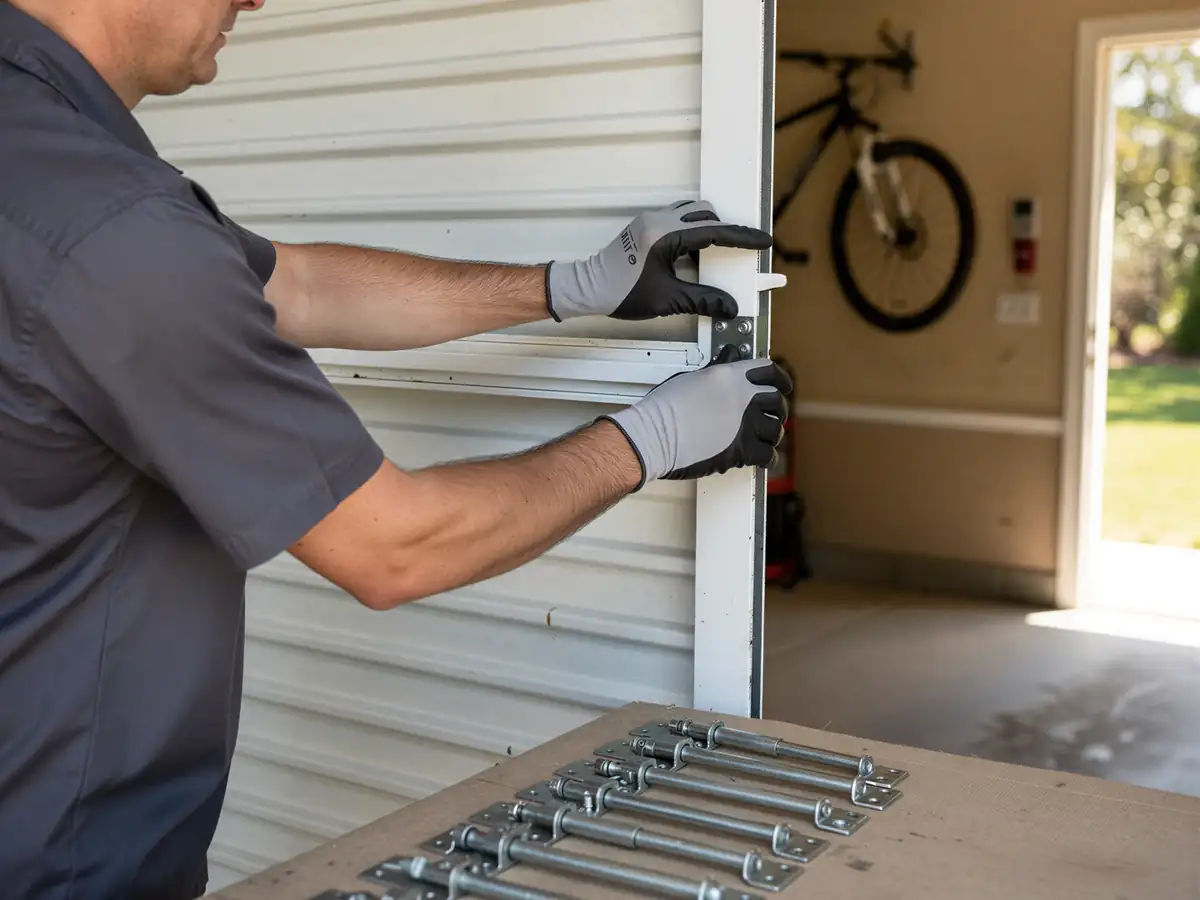
Once it's wound, we balance the door: lift it by hand to waist height and it should hold there on its own. If it drifts up or drops, the spring tension isn't right yet, and we adjust until it holds. Then we run the opener through a few full cycles and check the force settings, since a new spring changes how hard the opener has to pull and most units need the limits reset.
Why It Happens Here
Palm Desert sits in a severe heat band, and that matters more for springs than most owners expect. Torsion springs are coated steel under constant load, and sustained high heat accelerates the breakdown of that coating and the metal's fatigue rate underneath it. A spring that might run another five years in a cooler climate can go in three here, especially one that's already a few decades old.
Pair that with the housing stock. Most of the garages across this service area - the mix of neighborhoods stretching from here out toward Indian Wells, Rancho Mirage, Bermuda Dunes, and the rest of the fourteen areas we cover - were built in that same 1977-to-1999 window, with the bulk clustered in the 1980s and 90s. That means thousands of garages running factory springs rated for a build era that predates today's heavier insulated doors and quieter belt-drive openers. A heavier door on an old spring works that spring harder every single cycle.
At a median household income of $67,558 across roughly 71,000 households in this stretch of the valley, most of the owners we talk to want one correct repair, not a cheap fix that fails again by August. That's the job we do.
What Can Go Wrong
A torsion spring is under enough stored tension to break a bone or worse if it lets go while someone's working on it unwound
We say that plainly because YouTube makes it look simple, and it isn't - winding bars slipping out of a cone is the most common way people get hurt on this job.
There's also a parts-matching problem specific to older doors
A lot of the 1980s and 90s builder-grade doors in this area used spring and drum sizes that aren't common stock anymore. If your door is original to the house, we sometimes have to special-order the exact wire size and wind length rather than grab something off the truck, and that can add a day or two to the job. We'd rather tell you that up front than install a close-enough spring that throws the balance off.
One limitation worth naming
If the door itself is original to a 1980s build and the panels are warped, rusted, or the track is bent from years of an unbalanced spring straining against it, a new spring won't fix those problems. At that point we'll tell you straight whether you're better off replacing the door instead of pouring more into it.