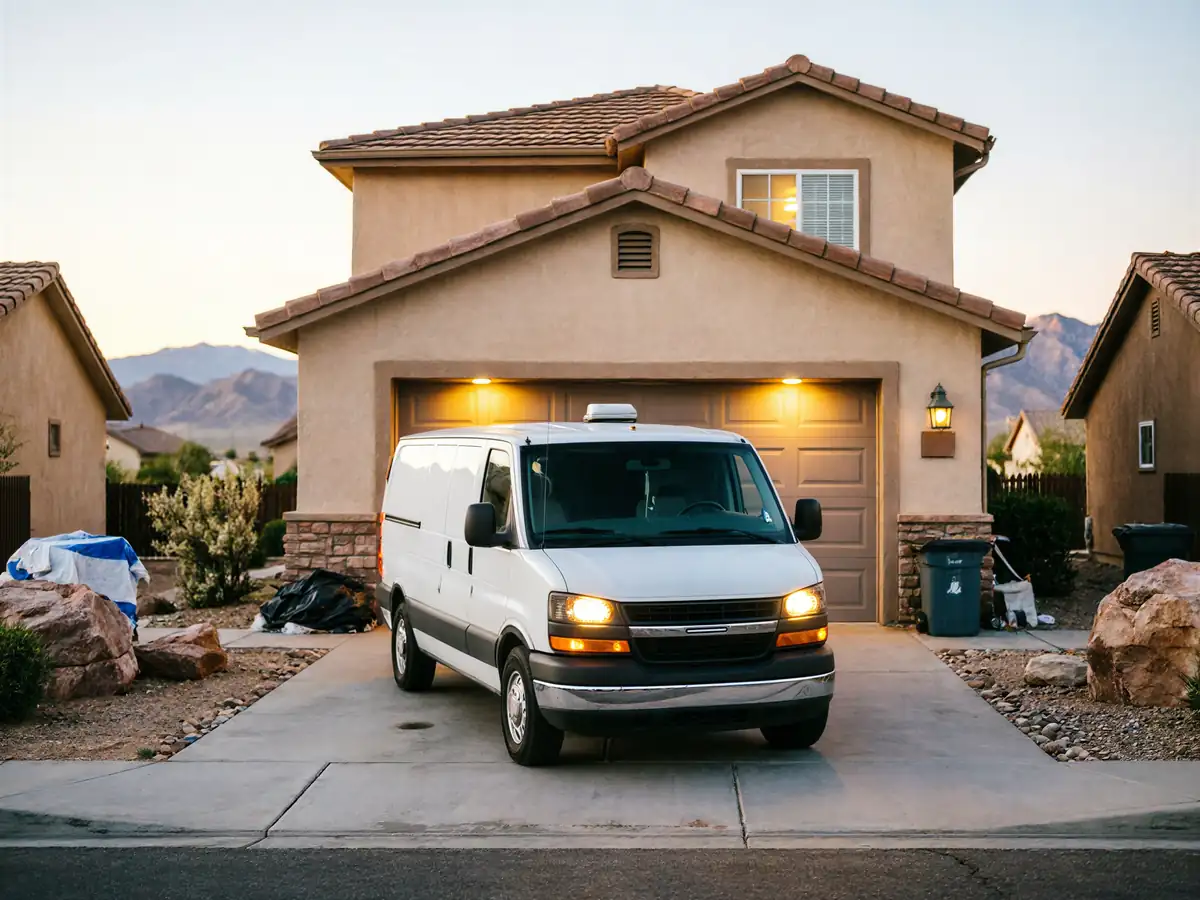
Palm Desert homes mostly went up between 1977 and 1999, and the severe-heat climate band here wears out torsion springs differently than cold-climate towns. Here's what actually matters.
Most of the garage doors we open in this town went in somewhere between 1977 and 1999, with the bulk clustered around 1987. That's not a coincidence - it's when this part of the valley got built out, and it means a lot of original torsion hardware is still hanging on tracks that have outlived their intended service life. Across the 14 communities we cover, from Indian Wells three miles out to Oasis twenty miles east, the housing stock runs the same 1980s-and-90s vintage. That matters because the spring steel, the galvanized coating, the plastic idler pulleys - all of it was built to a spec from that era, not to today's standards. With 37,321 owner-occupied houses in the service area, a large share of them are sitting right at the point where a factory spring has either already failed or is close to it. This isn't a town where you can assume "newer construction" buys you a pass on inspection. The build date on the permit card tells you more than the paint job does.
What Local Conditions Do
This area sits in a severe-heat climate band, and that's the stressor that actually kills springs here, not a cold snap. Torsion springs lose tension through heat cycling - they expand and contract every day the garage hits triple digits, and that repeated stress fatigues the steel faster than a temperate climate ever would. Grease and lubricant also break down quicker in sustained heat, which means rollers and hinges dry out and bind sooner than the manual says they should. Here's the honest limitation: a lot of national garage-door advice talks about "when a spring goes in cold weather," snapping shut on a freezing morning. That's not really the failure pattern we see. In a severe-heat market like this, springs more often go mid-afternoon in July, after months of thermal cycling, not because of a cold snap. If you're reading maintenance advice written for a colder climate, some of it just doesn't apply to a door baking in a Palm Desert garage all summer.
What to Look At First
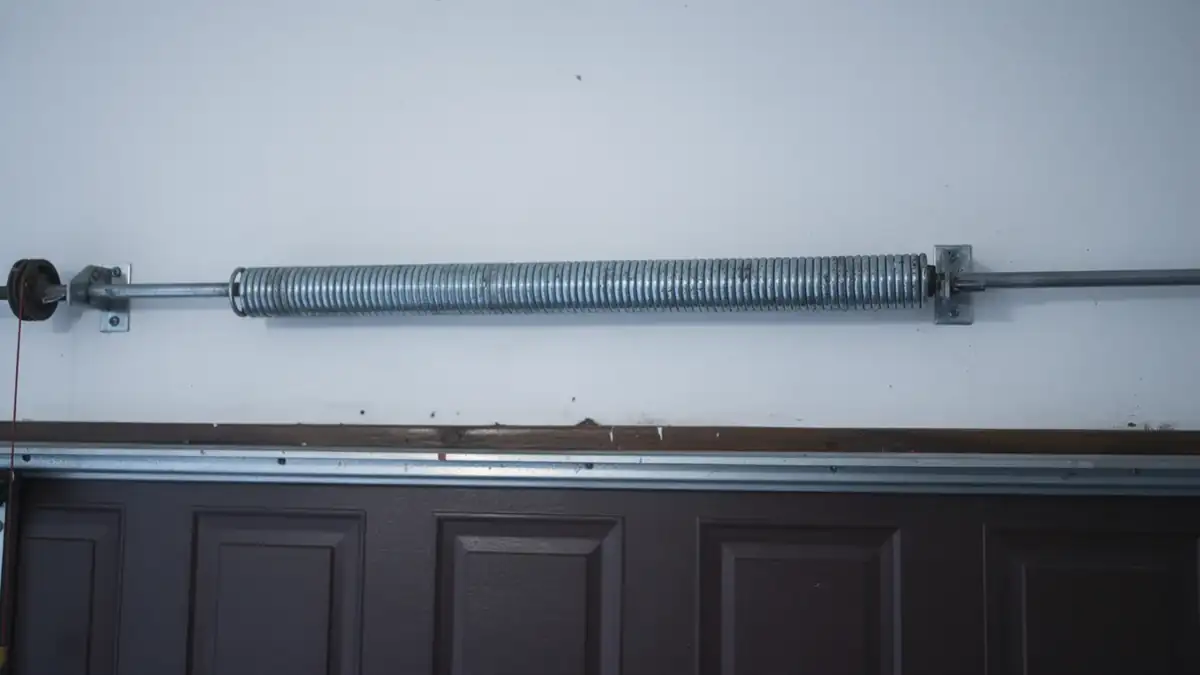
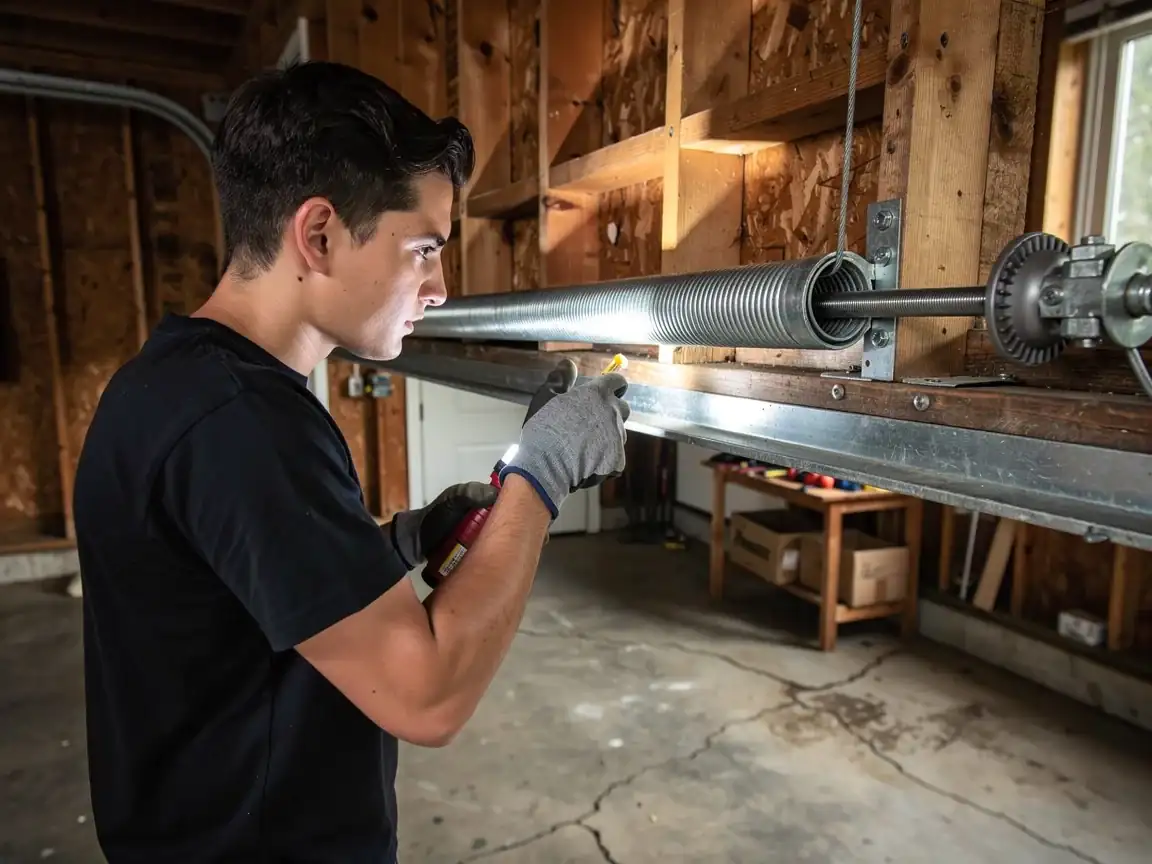
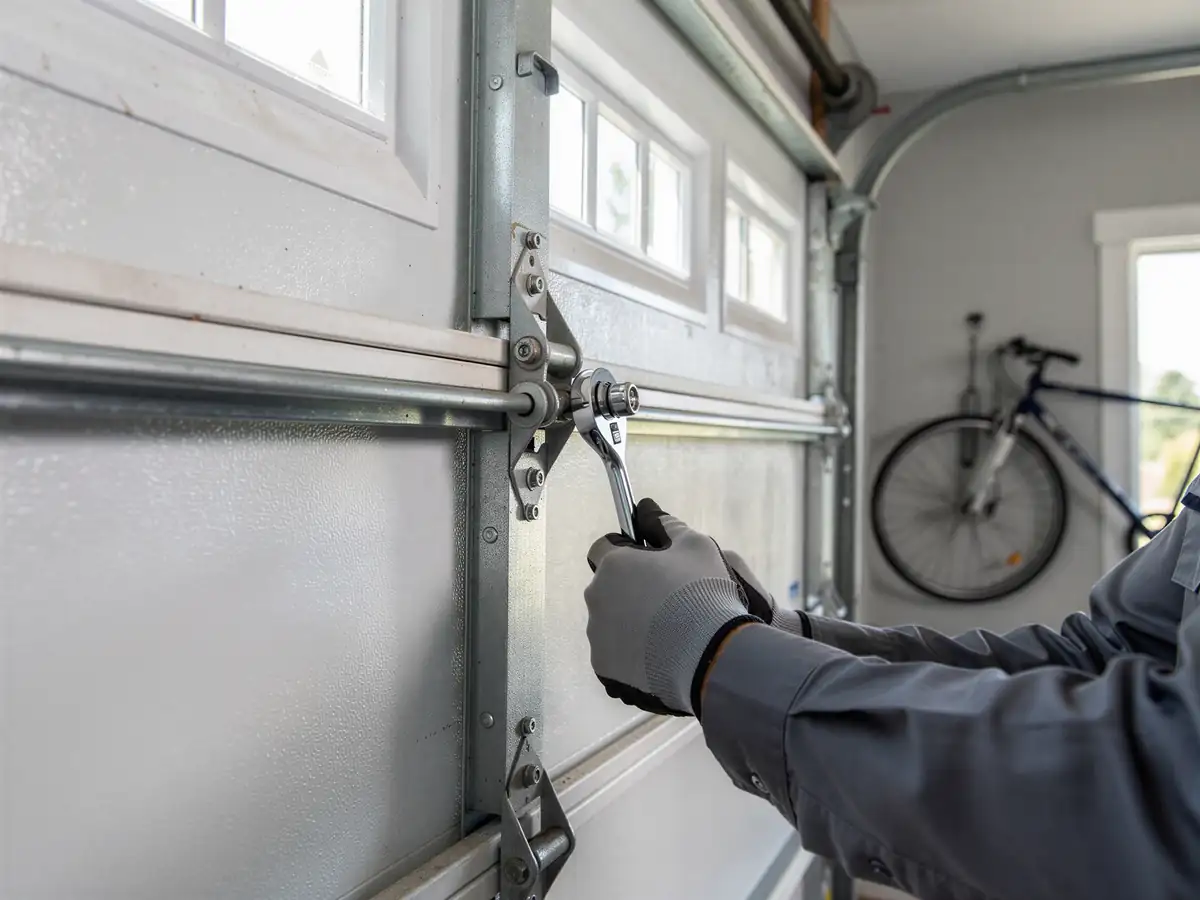
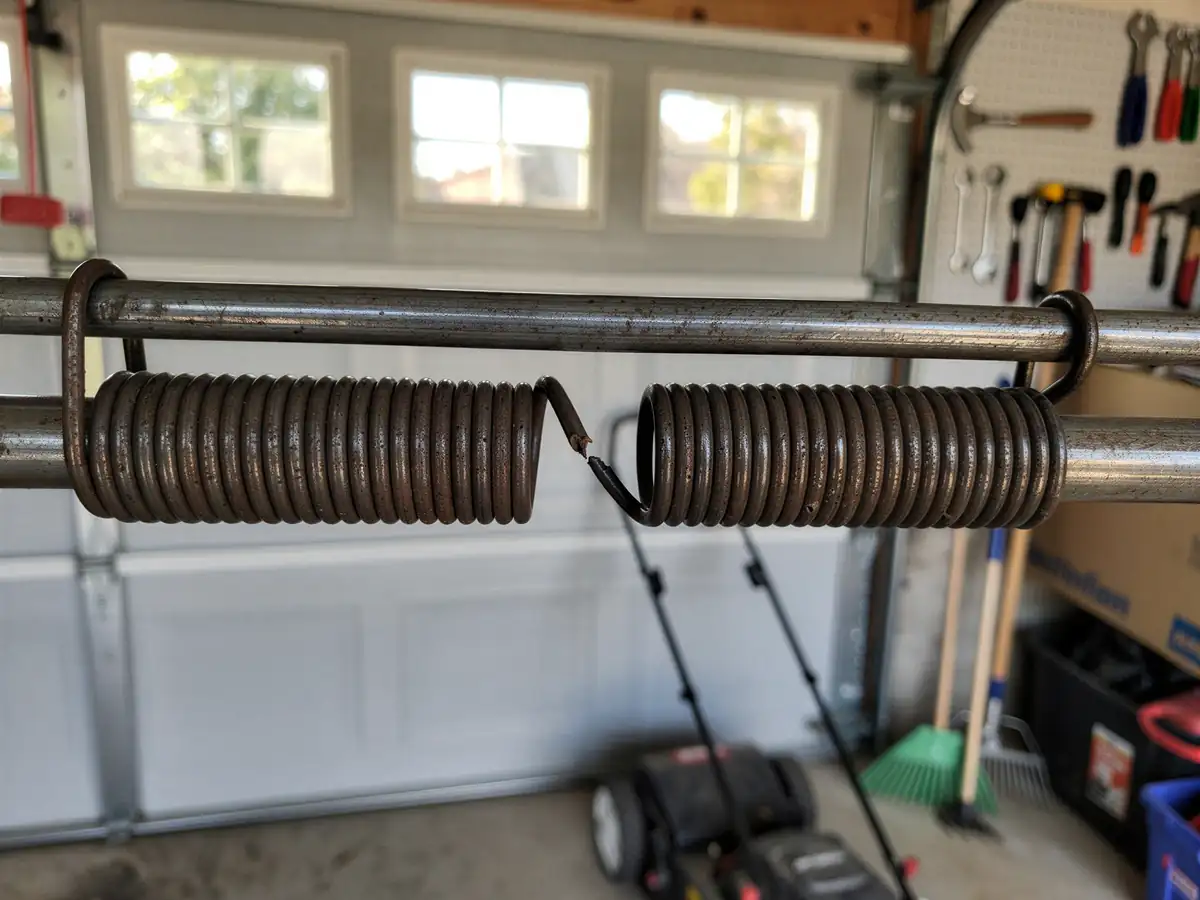
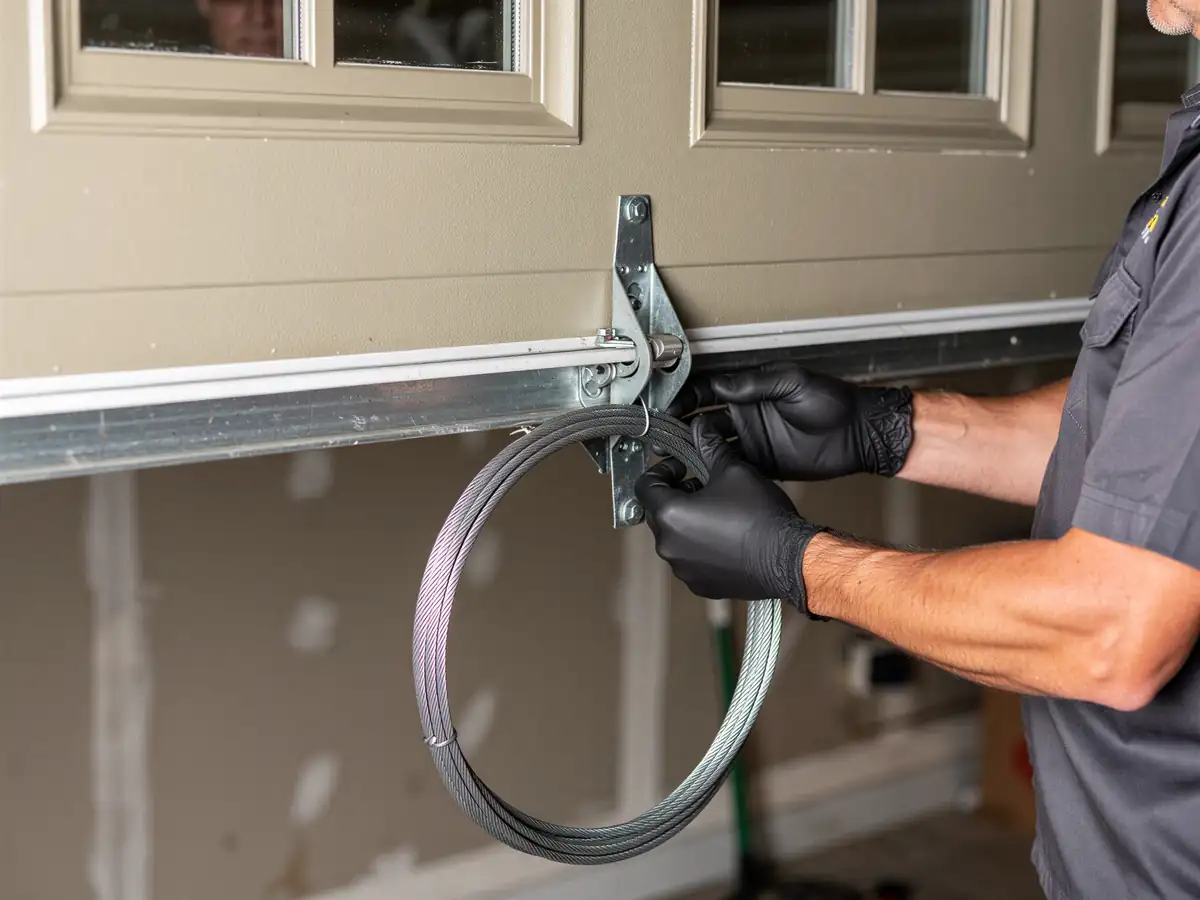
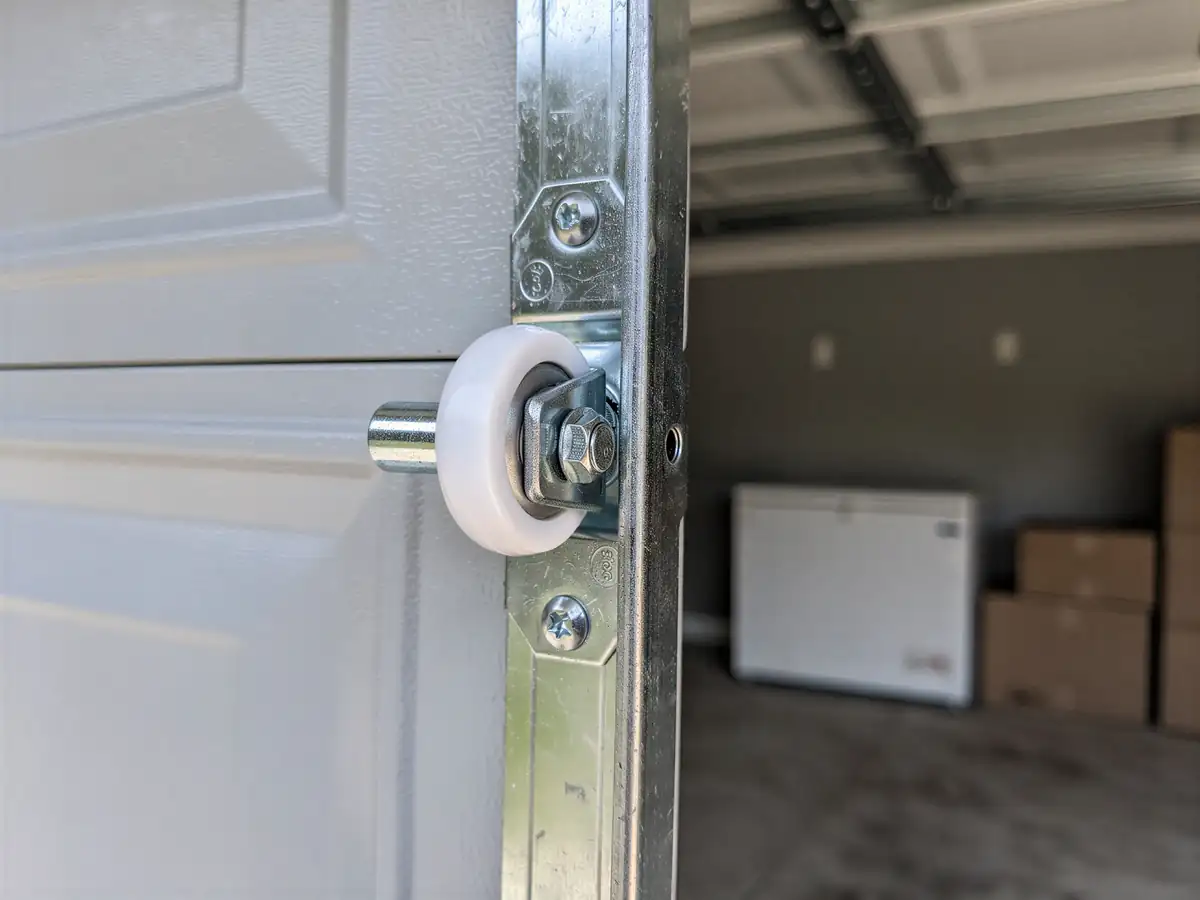
Start with the spring itself. On a door from the 1977-1999 build window, look for a gap in the coil when the door is down - that's a broken torsion spring, and the door will feel twice as heavy to lift by hand. Next, check the cable drums at each end of the torsion bar; the cables fray at the drum groove first, and on original 1980s hardware those drums are often the same ones from install day. Look at the rollers - stiff or glazed-looking rollers mean the lubricant gave out, which happens faster here than in a market without a severe-heat rating. Check the bottom bracket and the weatherstrip at the floor; on an older slab, settling can throw the door slightly out of square, and a misaligned track puts uneven load on the spring. None of this requires taking anything apart. A five-minute walk-around before you touch the opener tells you most of what you need to know about whether this is a quick fix or something bigger.
When to Call Someone
Call before you touch anything if the spring is visibly separated - a torsion spring under tension is not a DIY job, full stop, regardless of how handy you are. If the door won't lift more than a foot or two by hand with the opener disconnected, that's a spring or cable problem, not an opener problem, and forcing the opener motor to compensate just burns out the gears. If you hear a bang from the garage followed by the door refusing to open, that's almost always the spring letting go under heat-cycle fatigue rather than any single dramatic event. With median household income here at $67,558, the cost of a single spring repair versus replacing the whole system factors differently than in a wealthier market, and it's worth asking for both numbers before you decide. One thing we won't do is sell you a full system replacement when a spring and a cable kit will get another several years out of hardware that's otherwise sound - on a lot of these 1980s doors, the track and drums are still fine even when the spring isn't.
How it works
From “it’s stuck” to “it’s fixed”
01
Tell us what’s wrong
Describe the symptom - won’t open, loud bang, opener runs but the door won’t move.
02
On-site diagnosis
A technician tests the door under power and by hand and finds what actually failed.
03
Clear, up-front plan
You get the fix that’s needed and what drives the cost - before any work starts.
04
Repaired & tested
The repair is done, the door is set true and tested, and the work area left clean.
Not sure which repair your door needs in Palm Desert, CA? Describe what it’s doing - every job starts with a diagnosis.
Why do garage door springs fail so often in Palm Desert?
It comes down to the climate, not the brand of spring. This area carries a severe-heat classification, and torsion springs lose tension faster under repeated thermal cycling than they would in a milder climate. Combine that with a lot of local housing built between 1977 and 1999, and you've got original hardware that's been through decades of summer heat cycles.
Is my garage door too old to repair instead of replace?
Not necessarily. A lot of the doors we see here date to the 1980s and 90s, and the track and frame on those are often still structurally fine even when the spring or cables have failed. We'll tell you honestly when a repair makes sense versus when the whole system is worn past the point it's worth patching.
Does the heat here affect the opener too, or just the spring?
Both, but differently. The spring takes direct mechanical fatigue from heat cycling. The opener suffers more from heat-softened grease and wiring that gets brittle over years in a hot garage. On older installs from the 1980s and 90s, we see both issues show up around the same time.
Ready to get your garage door sorted?
Tell us what it’s doing and where you are in Palm Desert - we’ll take it from there.