Why It Happens Here
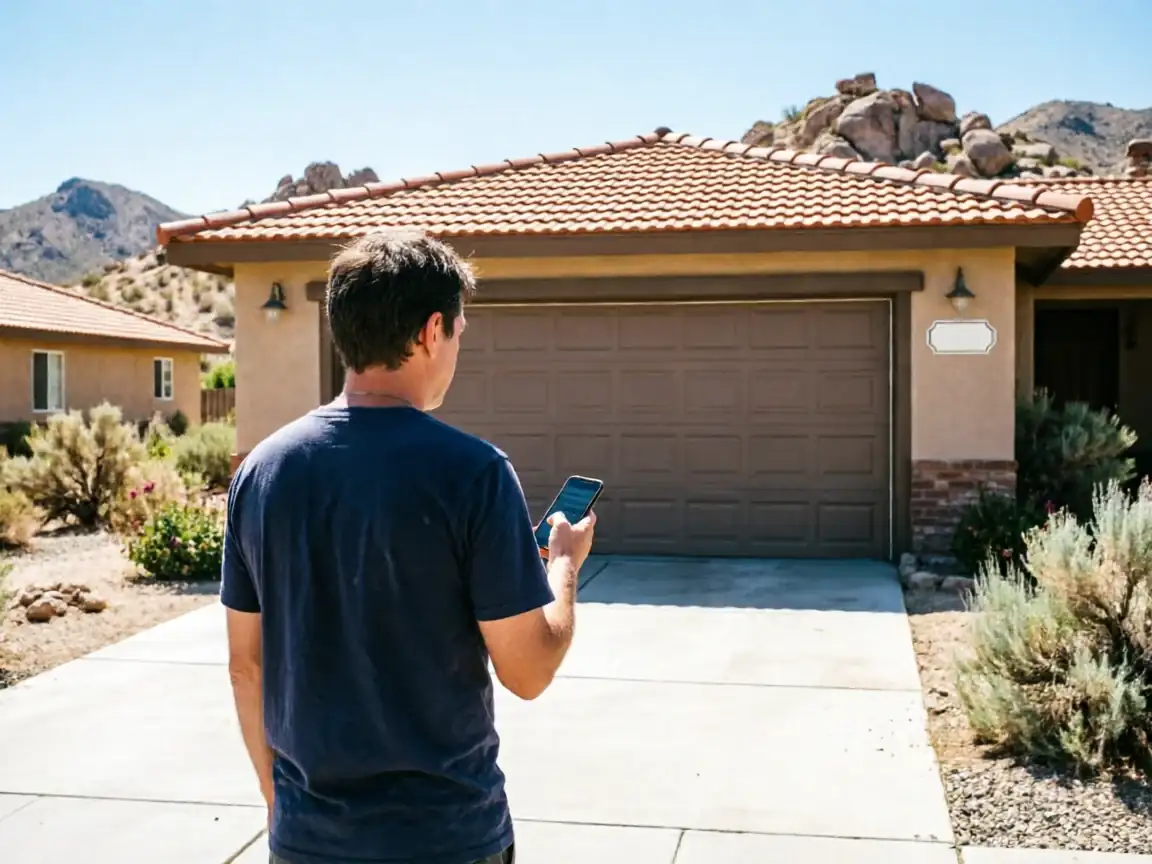
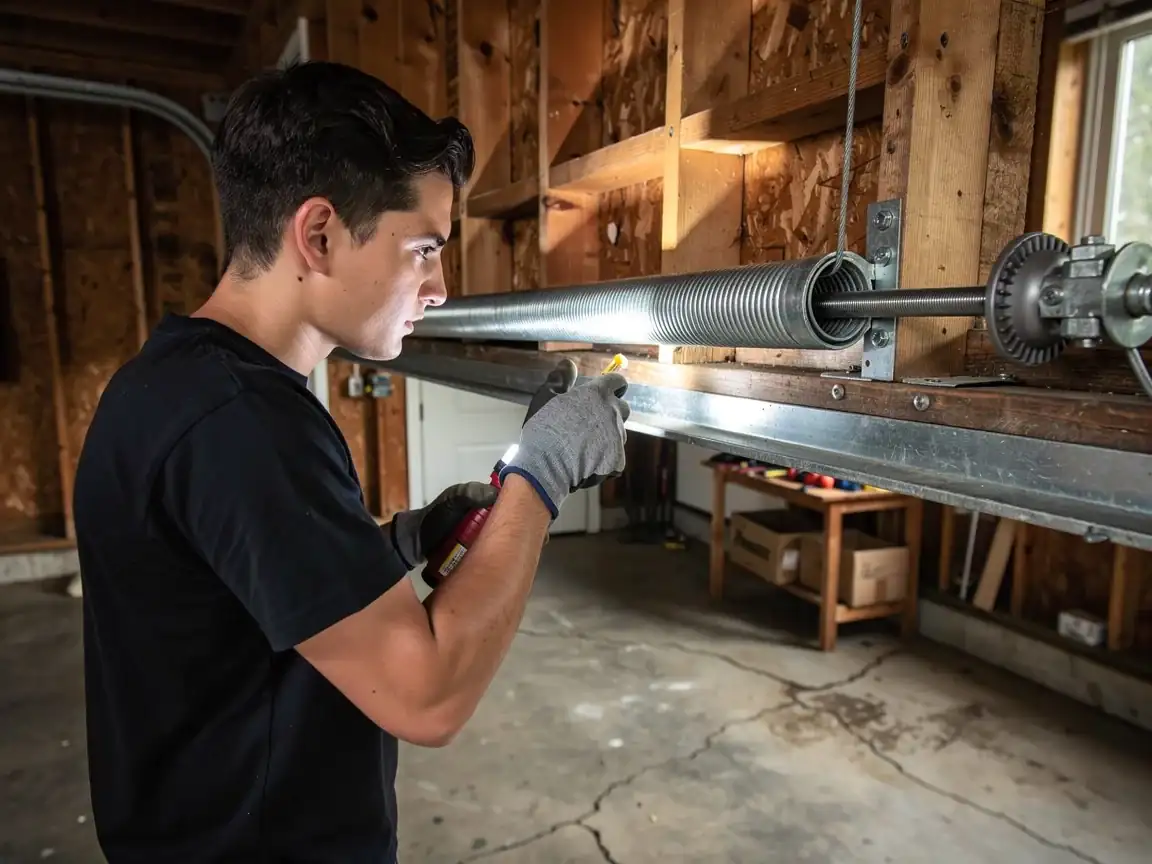
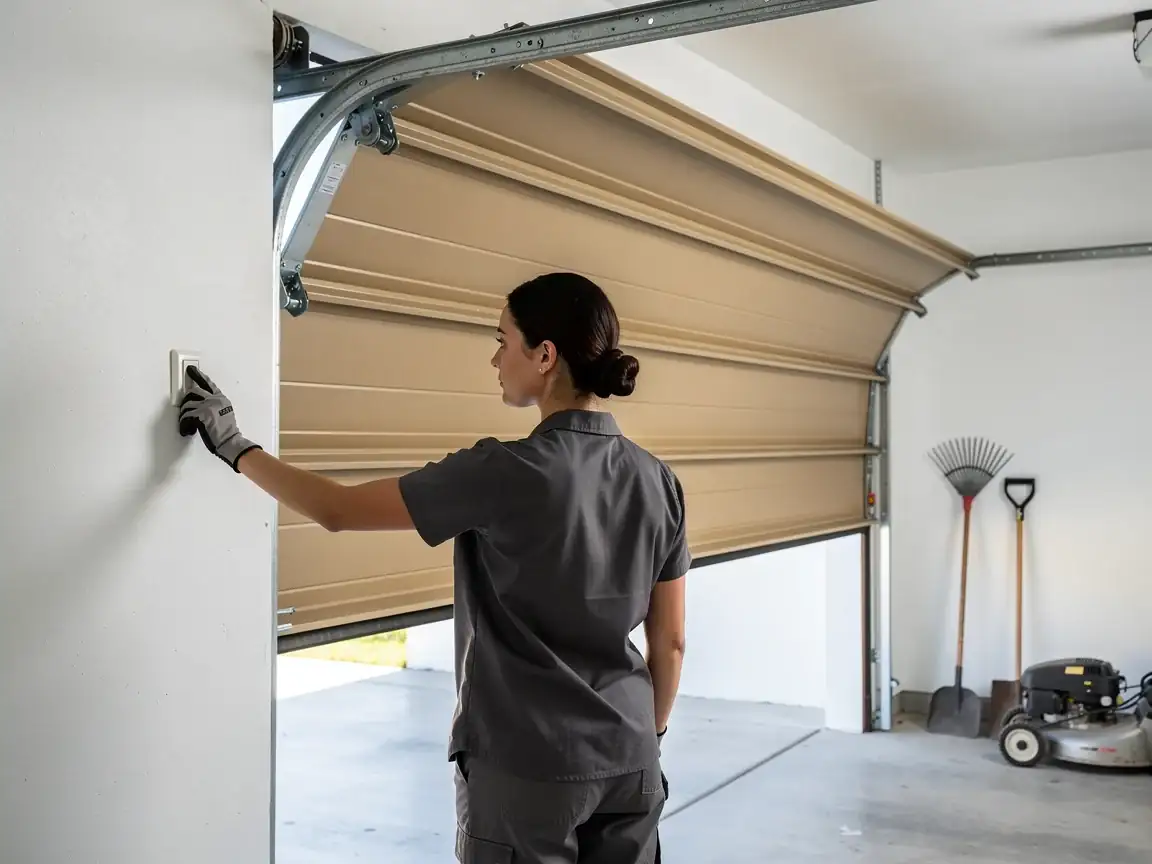
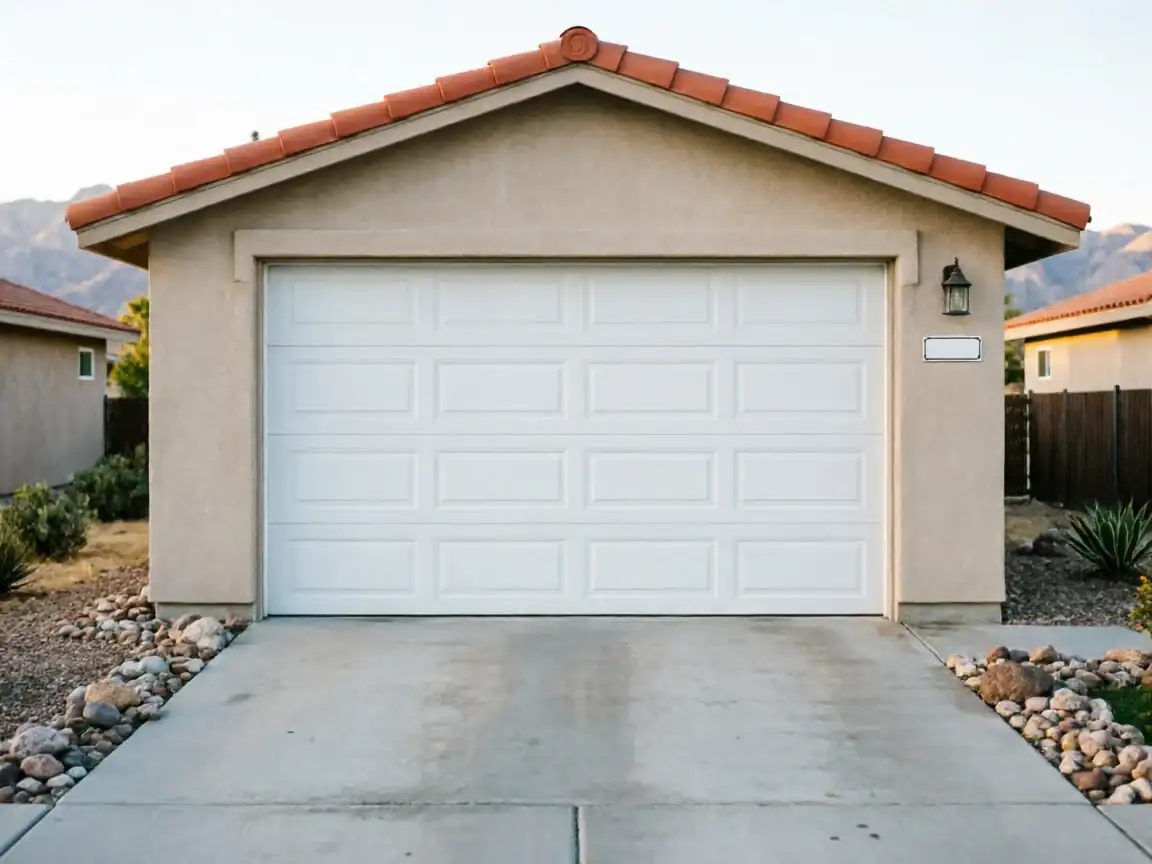
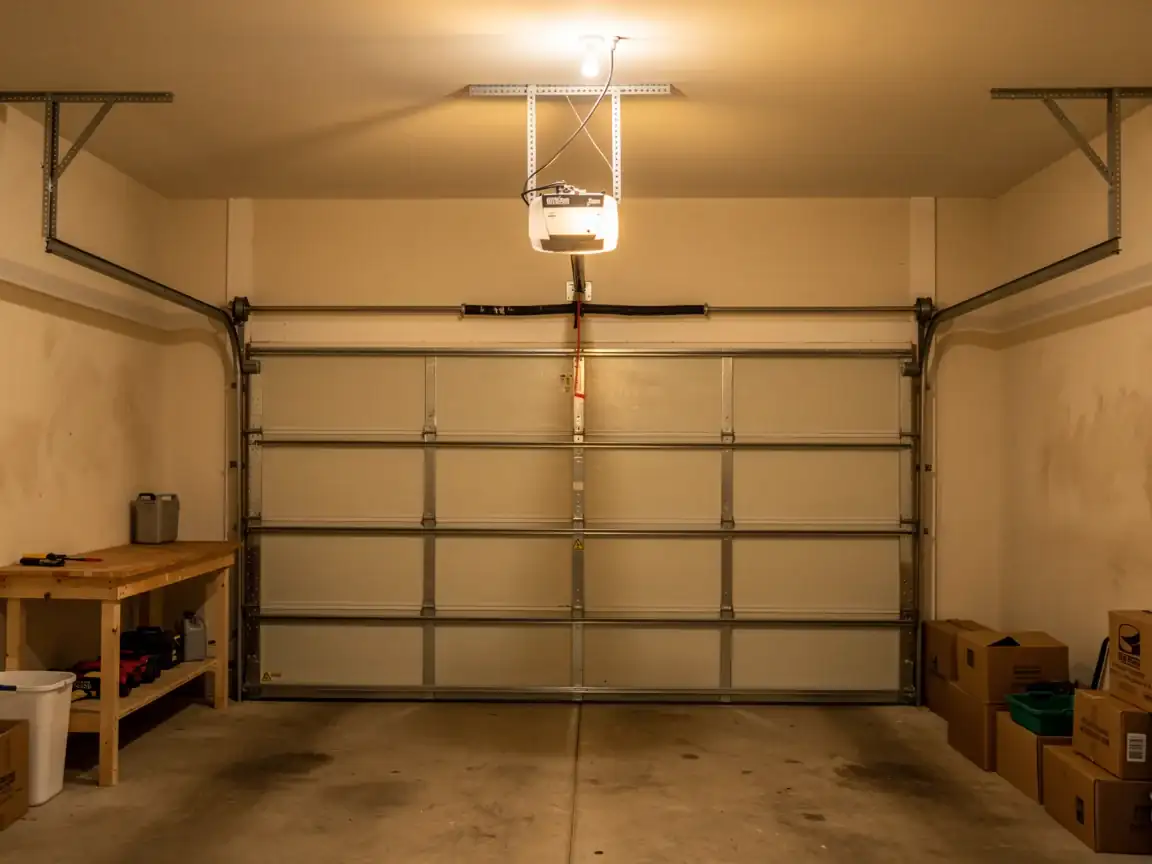
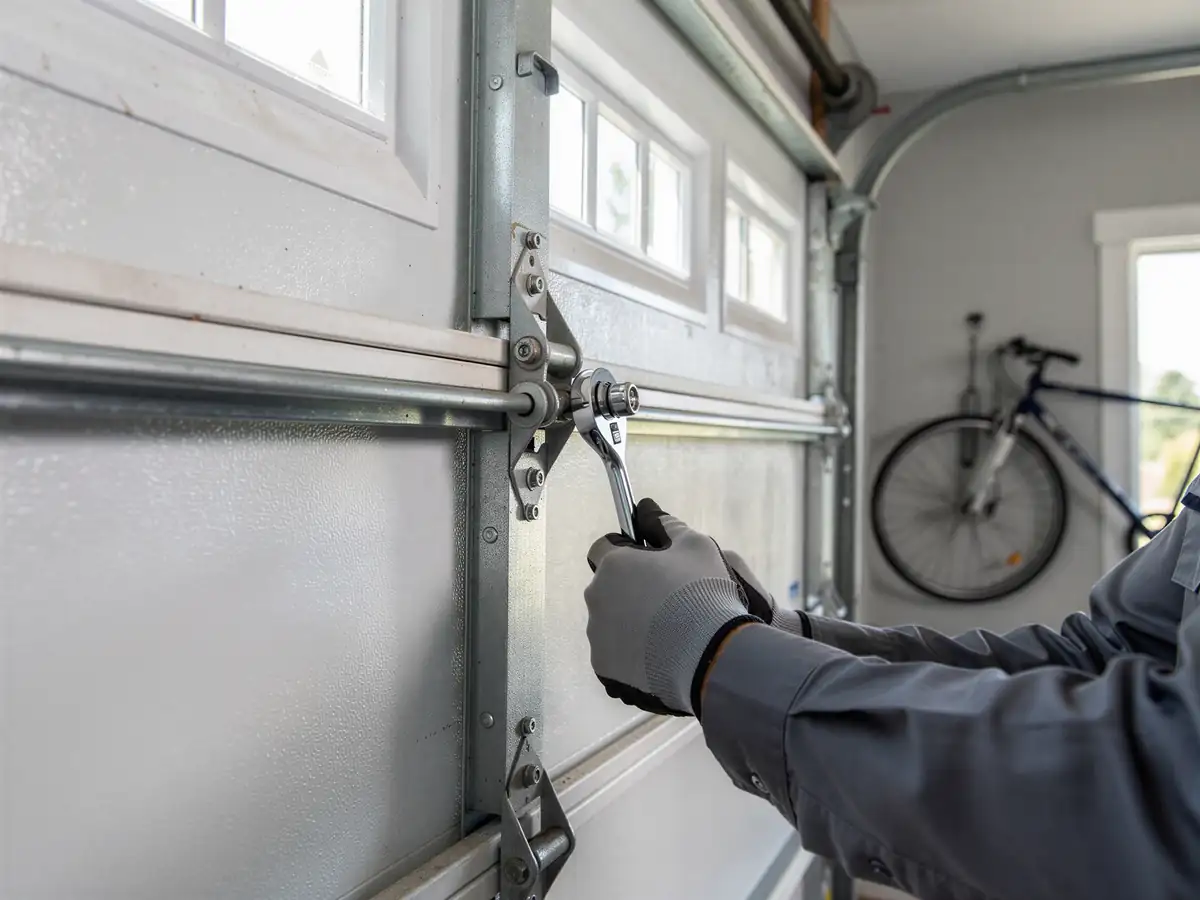
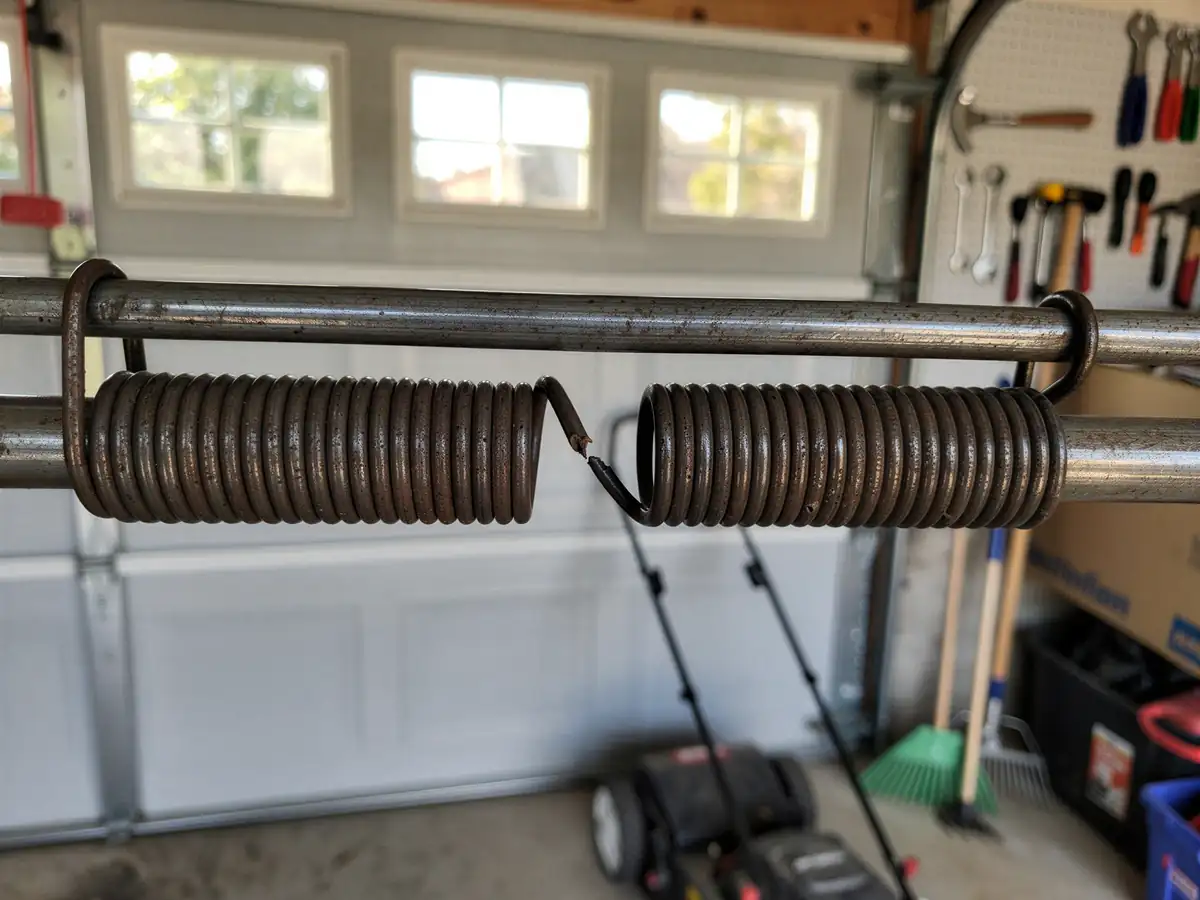
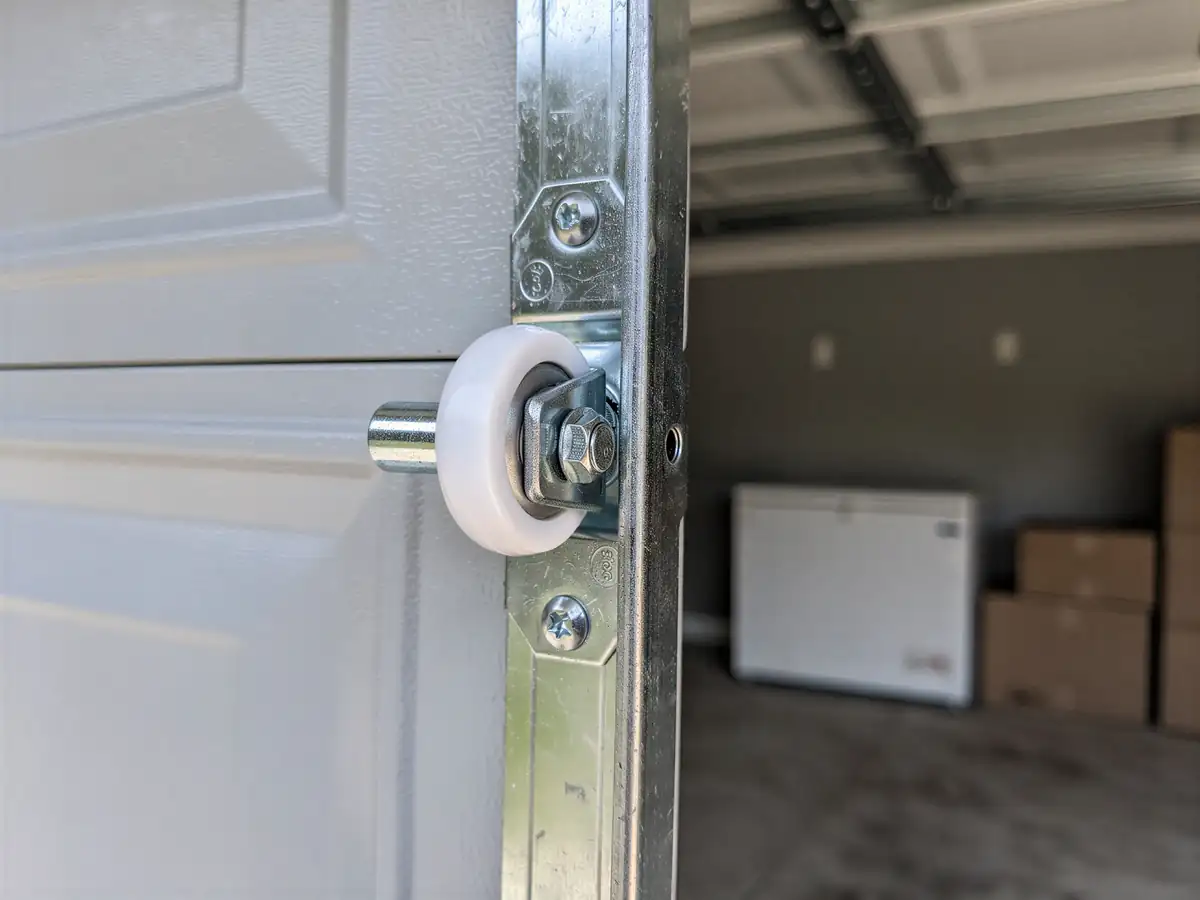
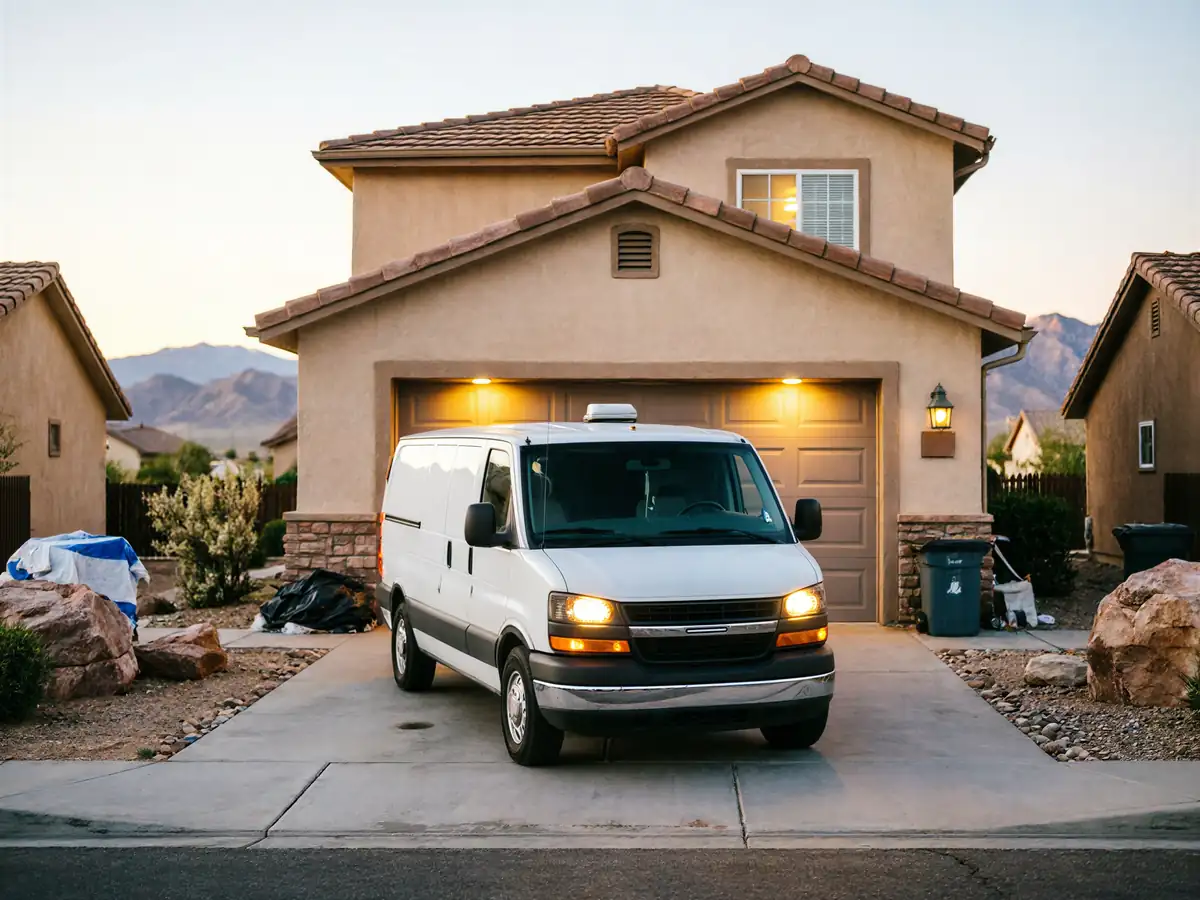
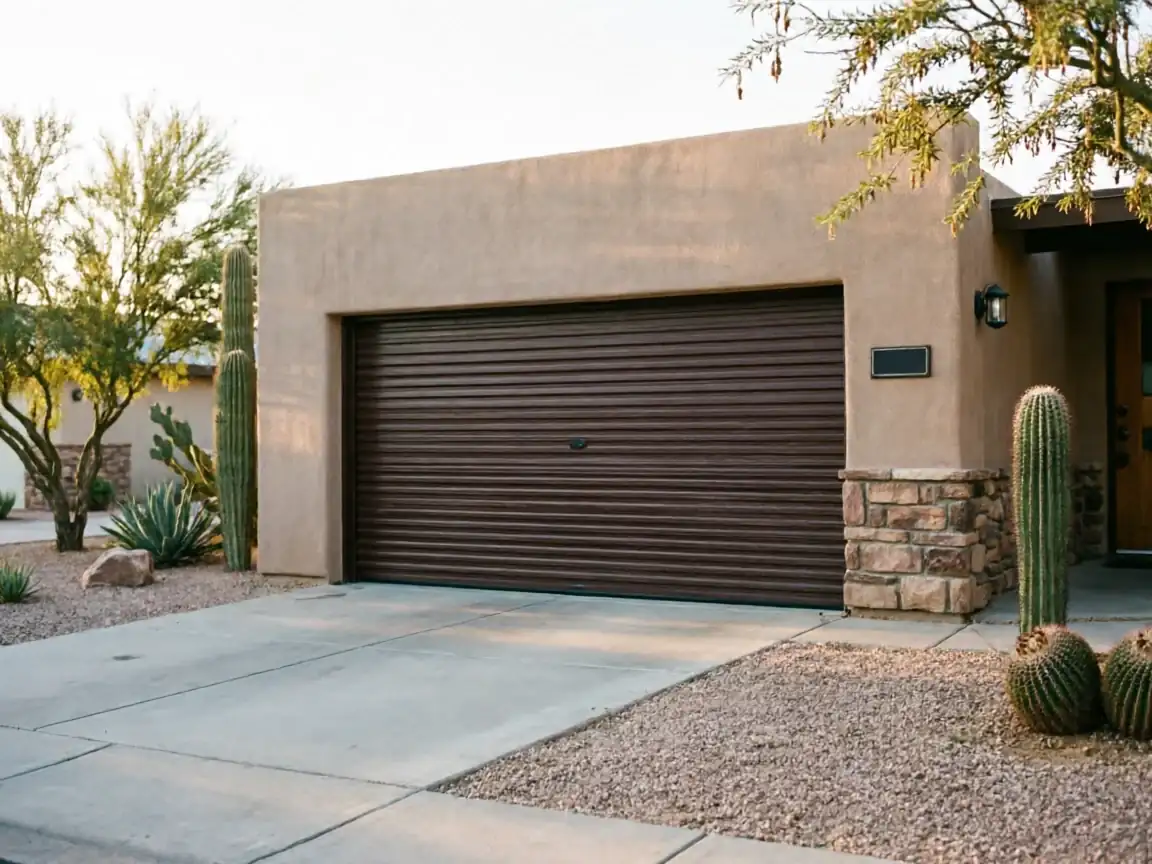
A door built around 1998 is a steel sectional door, usually 16x7 for a two-car garage or 9x7 for a single, hung on roll-formed track with a torsion spring sized for that era's lighter, non-insulated panels. That's the shape of the fault before anything fails: thin steel skin over a frame that wasn't built for insulation, which means it moves more with heat than a newer insulated door would. The valley's severe heat band pushes hard on that setup. Steel expands during the day and contracts overnight, and over two decades that cycle fatigues torsion springs faster than the manufacturer's cycle rating assumes, and it dries out nylon rollers until they crack or flat-spot. Because Coachella's stock clusters tightly around that late-1990s build year rather than spreading across decades the way some neighboring areas do, we see the same failure pattern on a lot of the calls we take here: spring wear, dried-out rollers, and track that's walked slightly out of plumb from years of thermal movement. It's a narrower set of problems than you'd find in a mixed-era neighborhood, which actually makes diagnosis faster once we're on site.
The Cost of This Job
We don't post a flat price here because the job depends on what's actually failed - a spring swap costs less than a full opener replacement, and we won't know which one you need until we look at the door. What we can tell you is the context: median household income across the area is $67,558, and that number holds steady whether you're in Coachella or elsewhere in our coverage, so we price jobs the same way across the territory rather than charging a Coachella premium for the drive. If a door's springs, rollers, and bottom panel are all showing wear at once, which is common once a steel sectional door passes the twenty-year mark, we'll usually walk you through whether a repair now just buys you a second repair next year, or whether replacement is the better money. That's a judgment call we make on site, not over the phone.