How Long You Are Without the Door
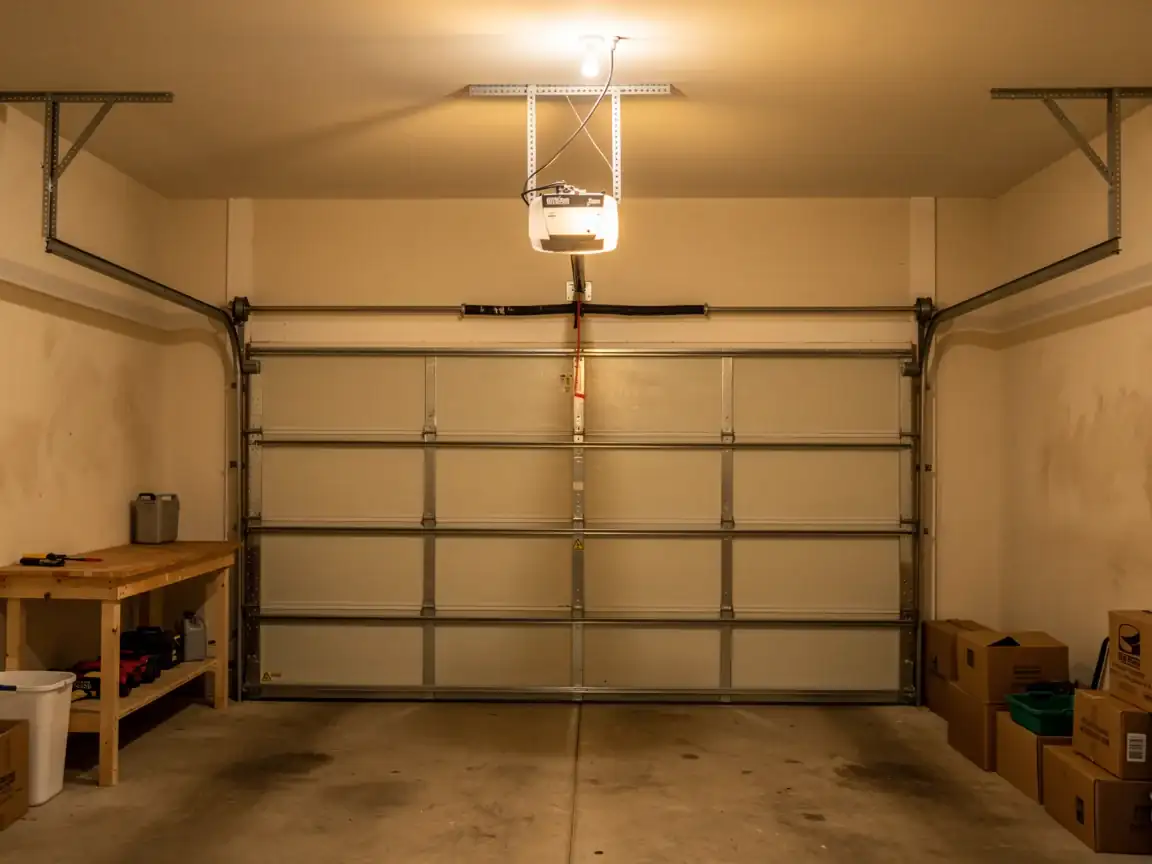
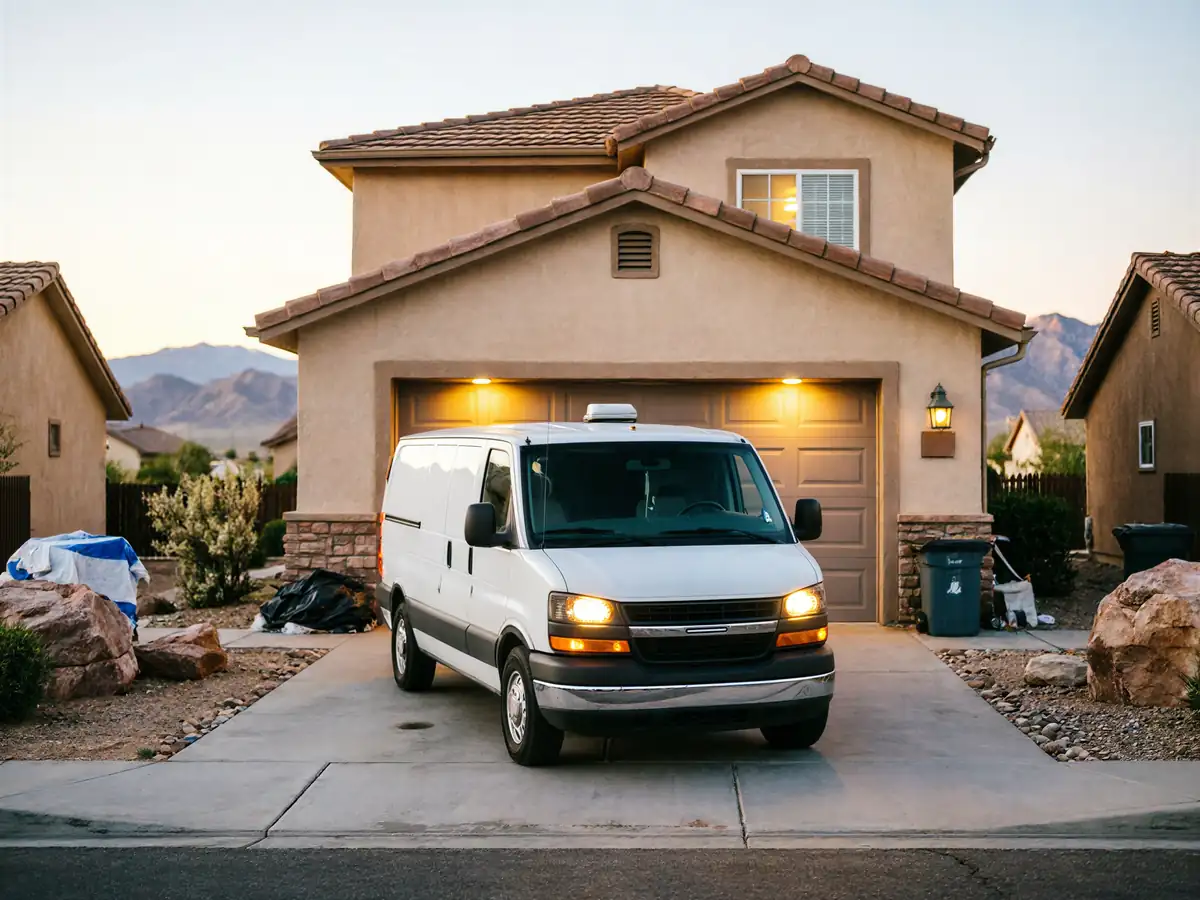
A straight roller swap on a door from this era doesn't usually take long once we're on site - sealed-bearing rollers on 1999-era track don't require the kind of disassembly older doors do. The drive out from Palm Desert is the bigger variable in your day, not the repair itself. If the track needs straightening or replacing alongside the rollers, plan on more time, because that means pulling the door off the track entirely rather than working around it. Either way, the door isn't usable mid-repair - there's no partial-open state while rollers are off one side.
Can You Do This Yourself
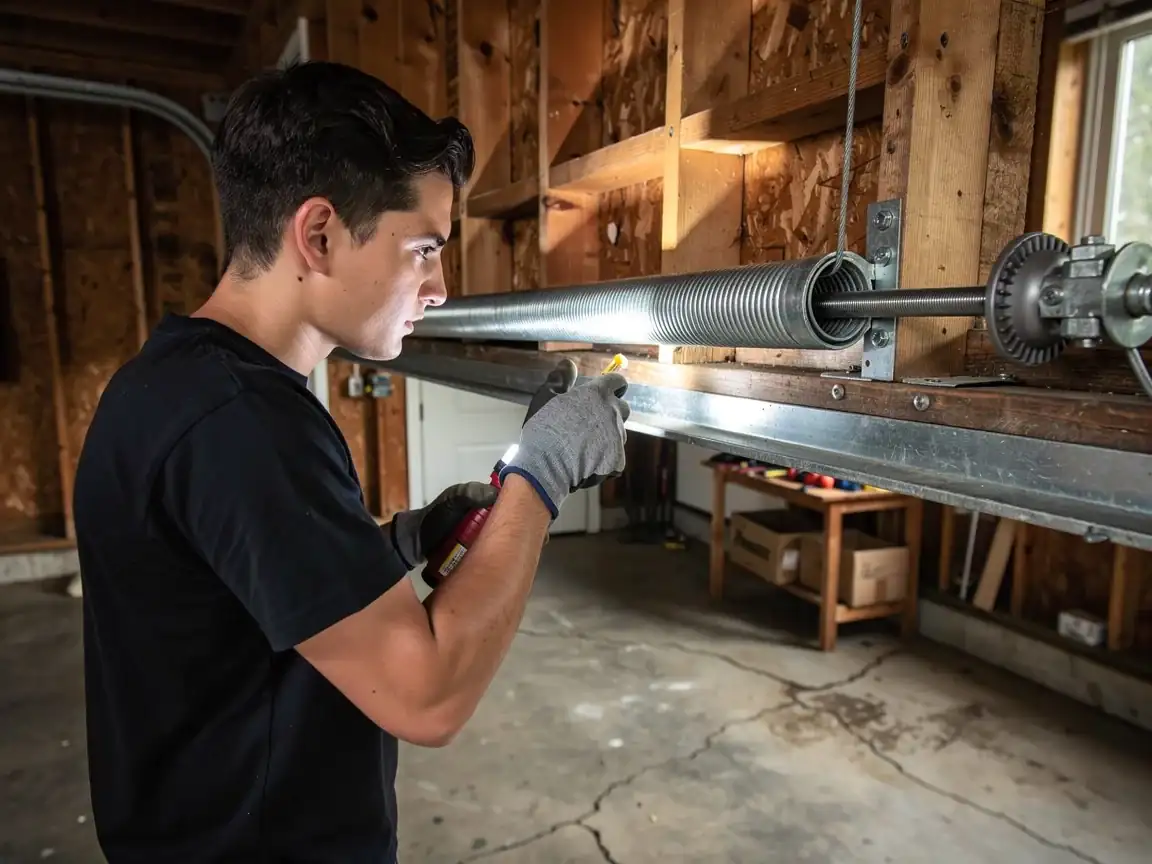
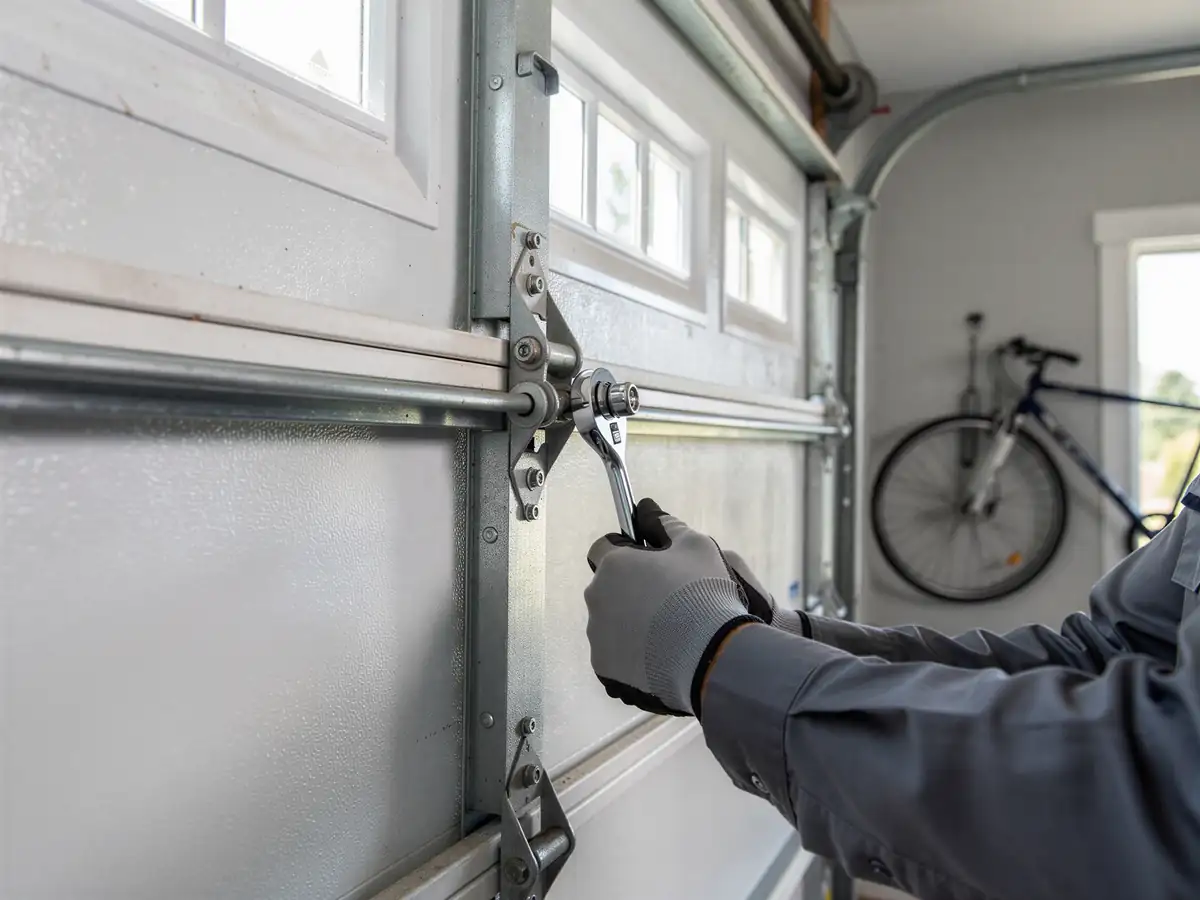
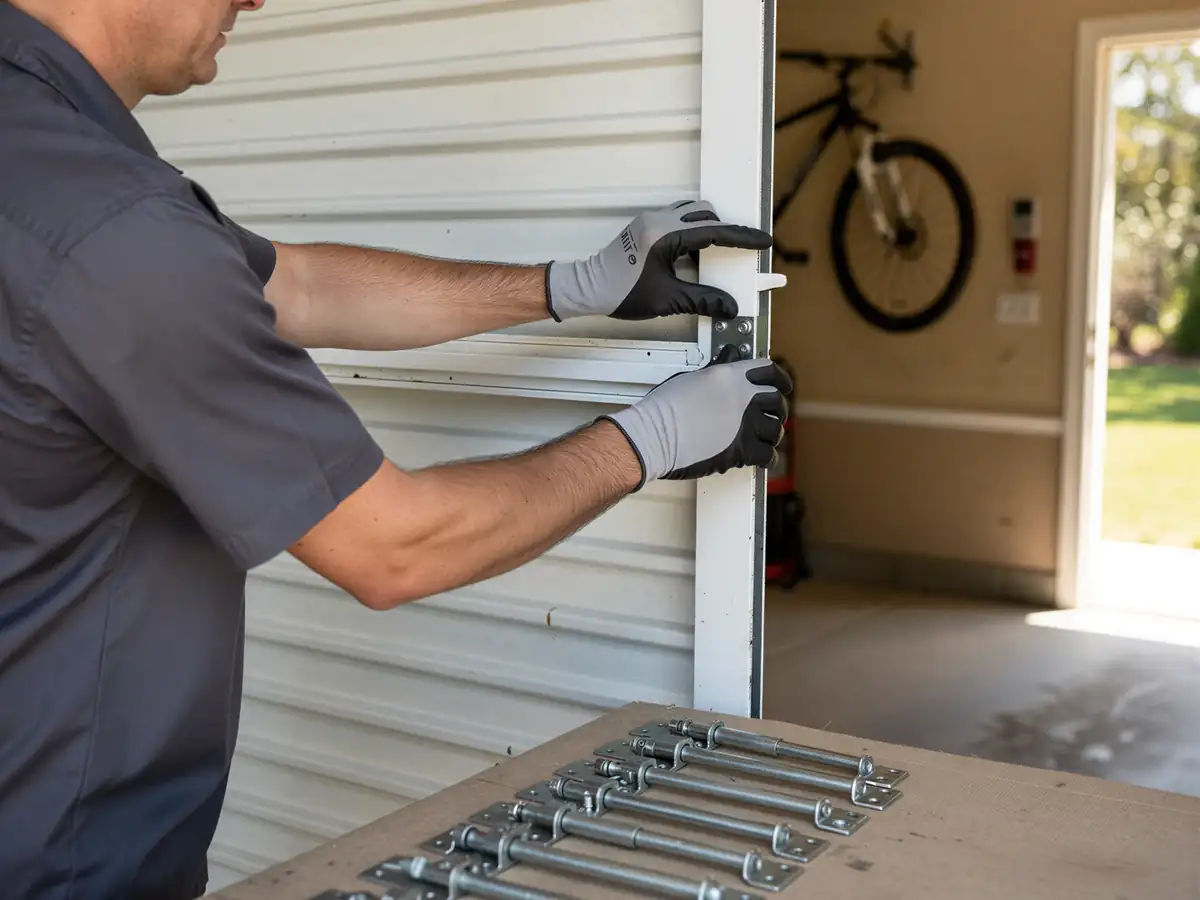
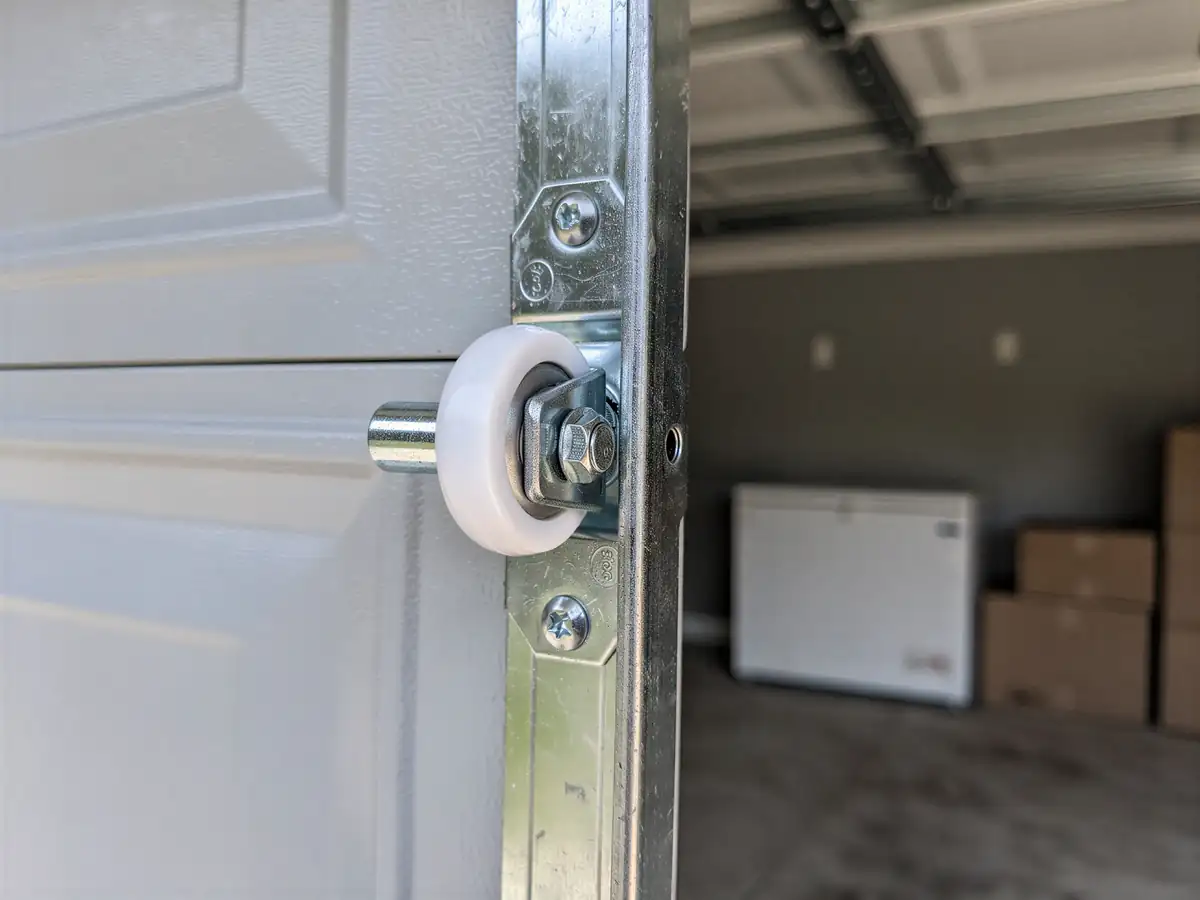
Swapping a single nylon roller on a door this age is within reach for someone comfortable with a socket set and patient hands - the hardware is newer and less corroded than what you'd find on an older door elsewhere in the service area. That said, rollers rarely fail alone. If one roller is worn enough to need replacing, the ones next to it on the same track are usually close behind, and doing one at a time means you're back under the door again in a few months. The bottom rollers sit near the cable and spring system, and that's where we'd rather you called us than worked solo - a slipped cable under tension is not a DIY recovery. If you're swapping a top roller only, away from the spring hardware, that's the lower-risk end of this job.
What Can Go Wrong
A worn roller that's ignored long enough wears a groove into the track, and once that happens you're not buying rollers anymore, you're buying track too. On a door built around 1999, the rollers are usually the newer nylon style rather than old steel, which run quieter but still wear out - nylon just fails later and more predictably than steel did on older doors. The failure mode to watch for is a roller that's cracked rather than worn smooth; a cracked roller can shed pieces inside the track and jam the door mid-cycle, which is a worse call than a routine swap. We don't recommend patching a track that's already grooved - once it's gouged, a new roller riding in it wears again fast, and you're paying for the same labor twice.
Why It Happens Here
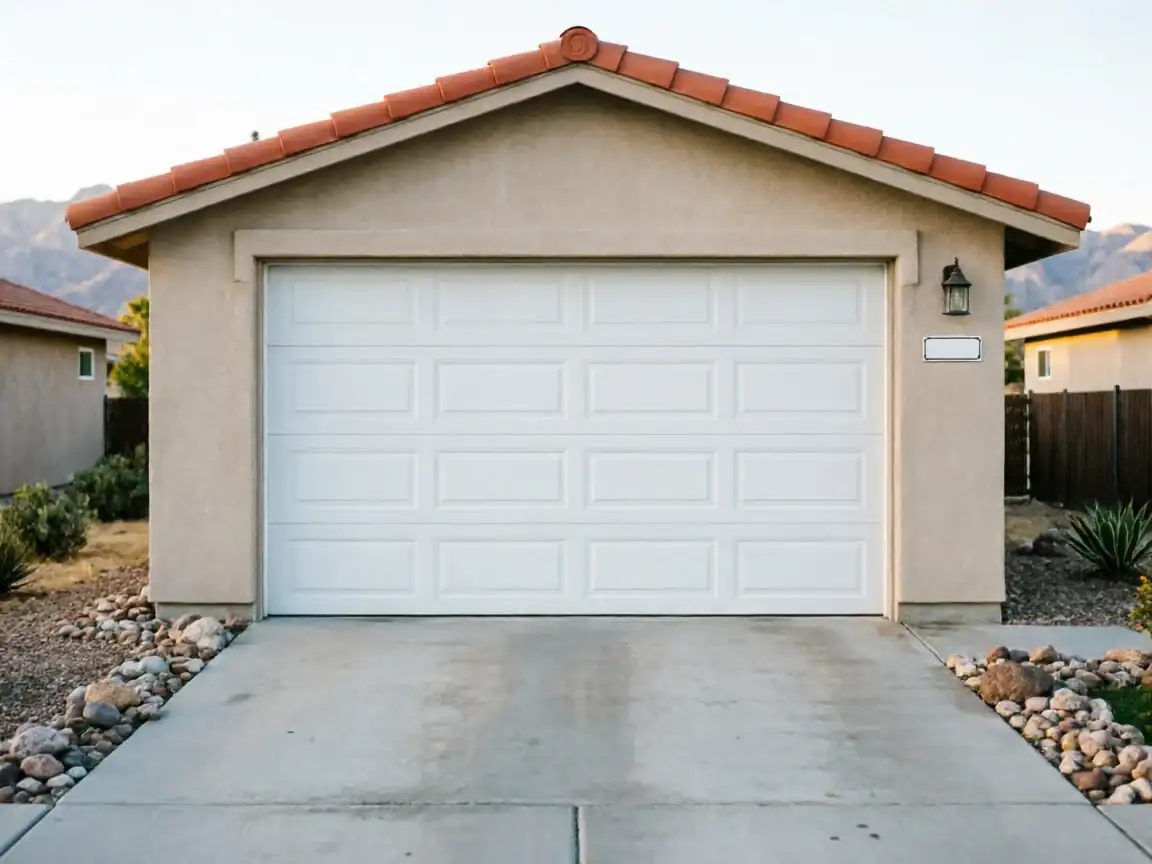
Desert Palms households sit at a median income of $81,954, higher than the wider Palm Desert service area's $67,558, and the housing here runs newer too - median built around 1999 against the area's broader 1977-1999 span. That later build date means most doors here came with factory rollers designed for this climate from the start, rather than being retrofitted later. The service area sits in a severe-heat climate band, and that heat is hard on nylon roller material regardless of install year - repeated expansion and contraction from summer heat shortens roller life even on newer doors. With roughly 3,831 households in Desert Palms, this isn't a large pocket, but the roller wear pattern here tends to be heat fatigue on newer hardware rather than the rust-and-age failures you'd see on an older door elsewhere in the area.