How Long You Are Without the Door
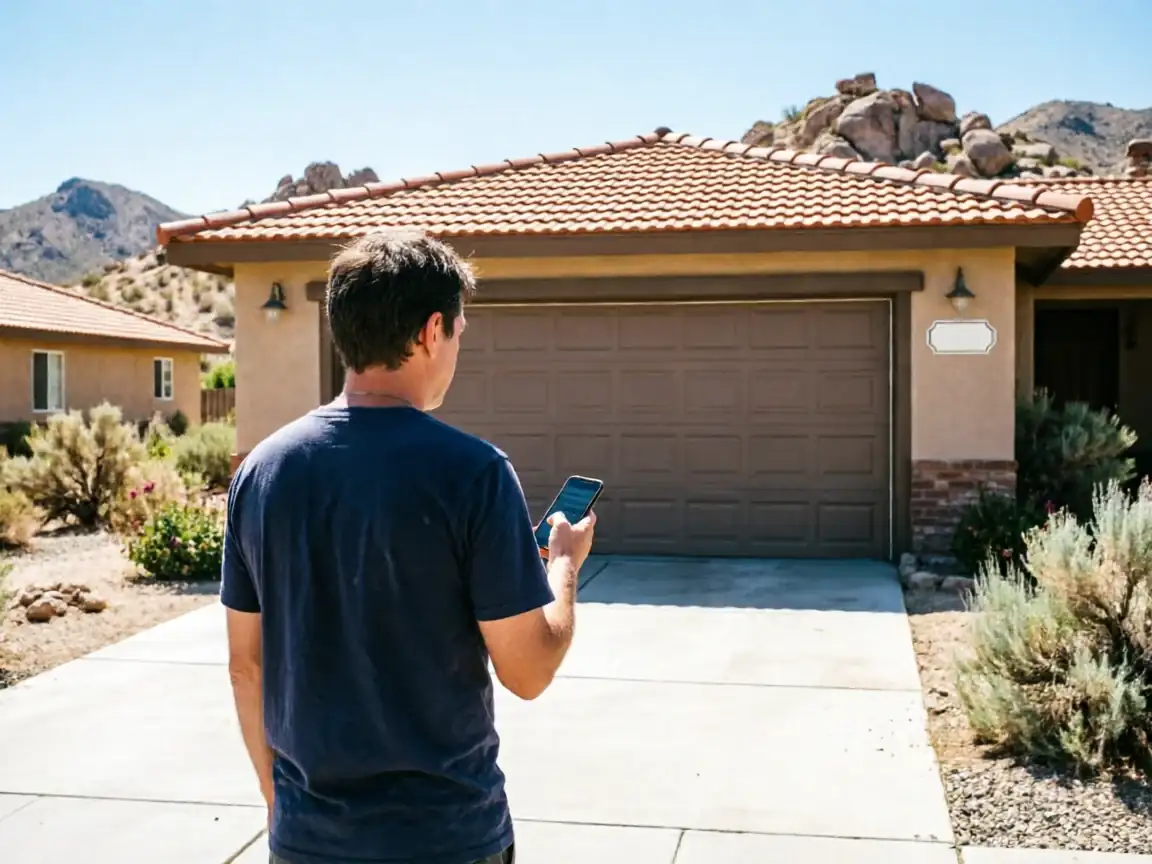
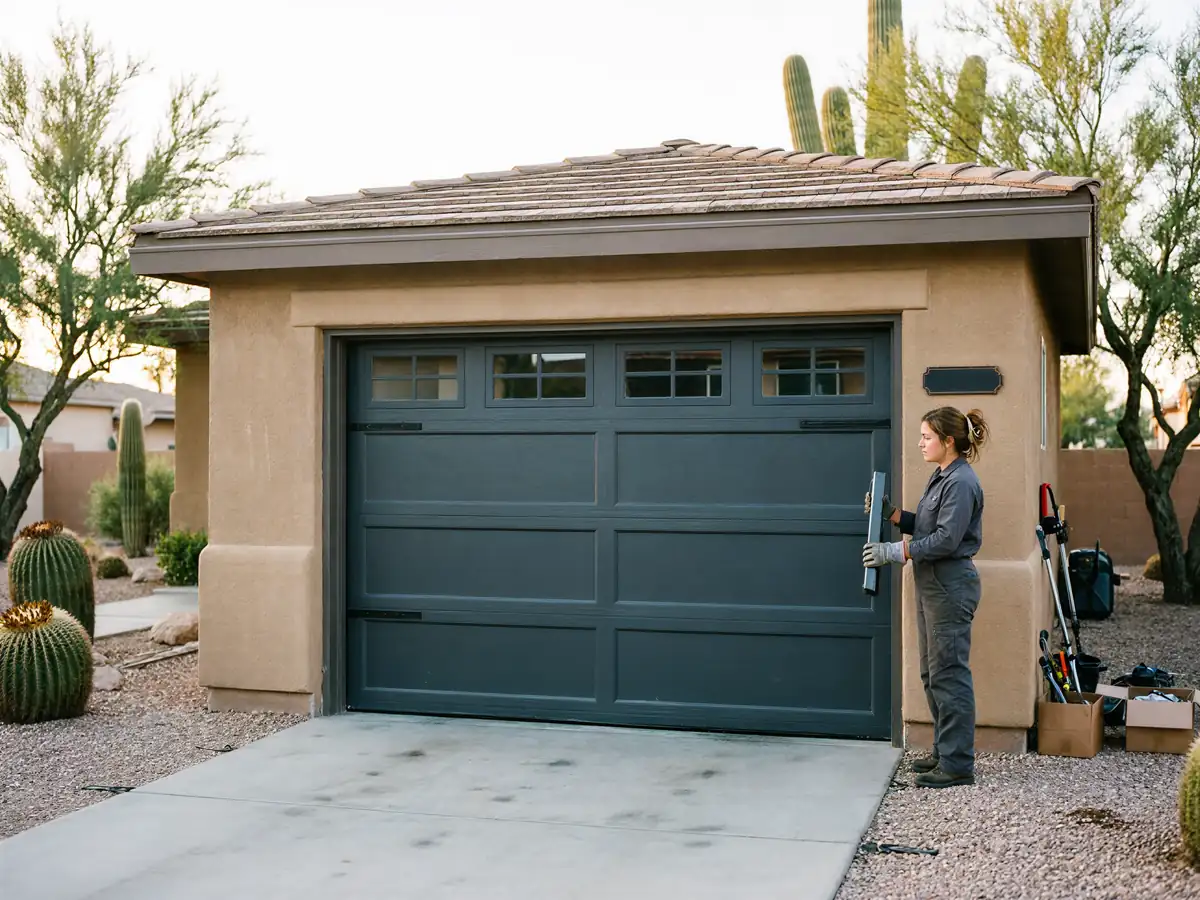
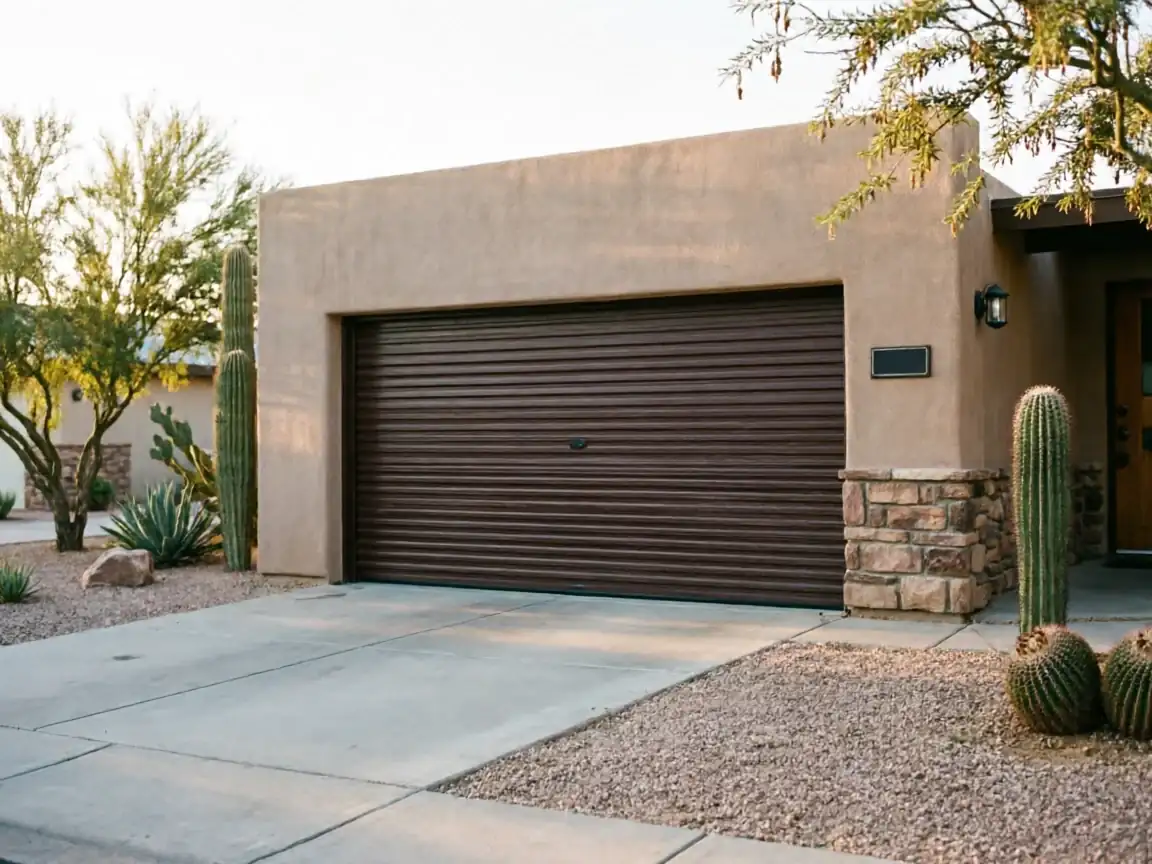
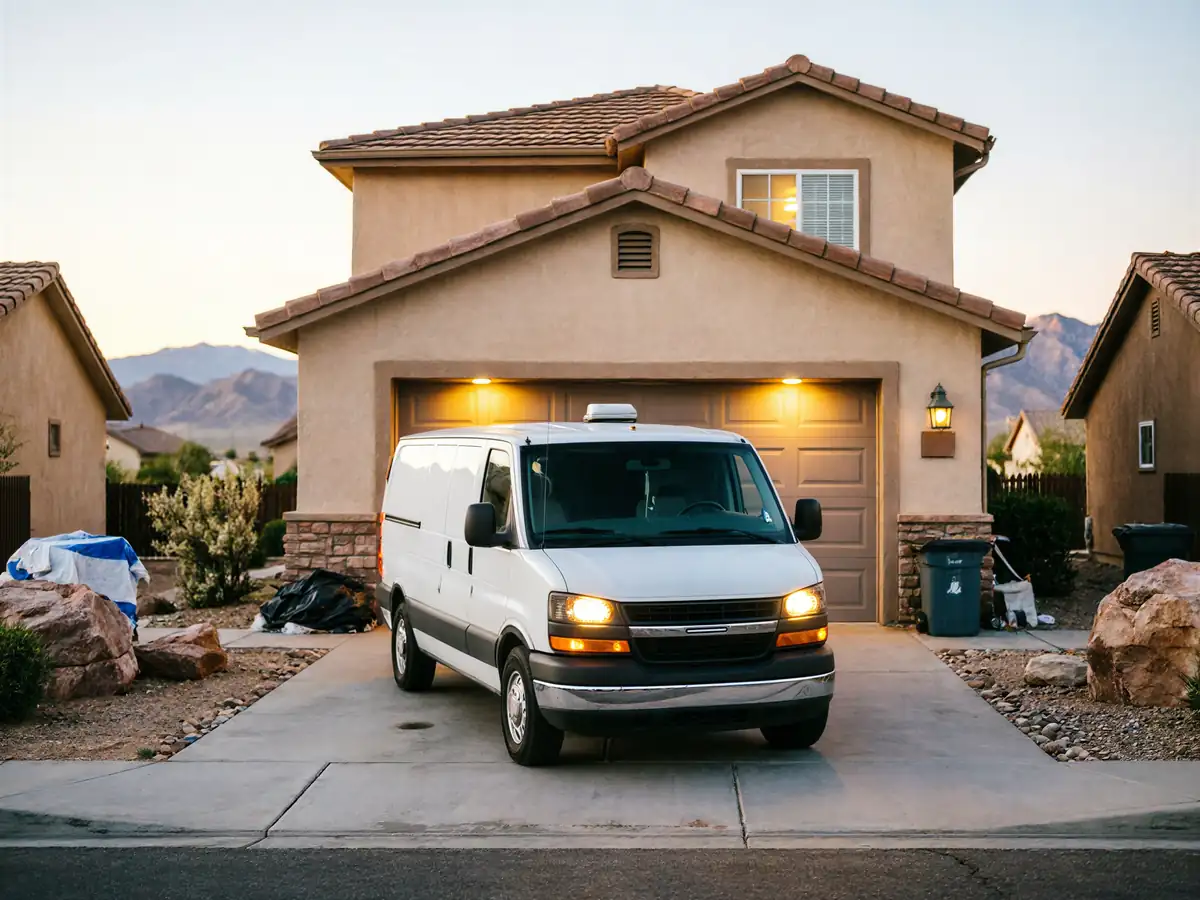
We run out of Palm Desert, about 5 miles from Desert Palms, so there's a short drive built into every call - we don't claim a branch or a crew stationed in town. Once we're on site, how long you're without a working door depends on the fault. A snapped torsion spring on a late-90s steel sectional door is usually a same-visit fix if we're carrying the right spring size. A bent track or a opener board that's fried is more variable - sometimes it's a part we have, sometimes it's one we order. We won't promise a number we can't back up, but the 5-mile trip itself isn't the bottleneck most days.
Can You Do This Yourself
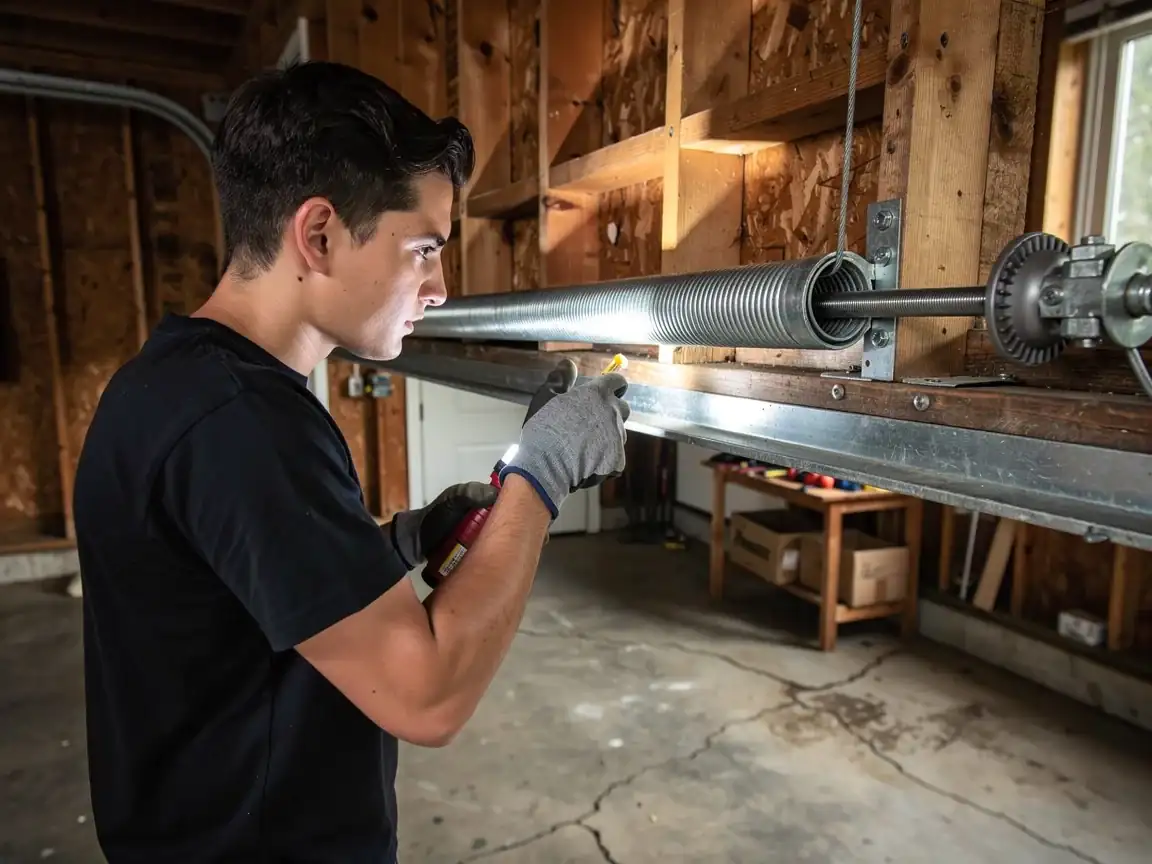
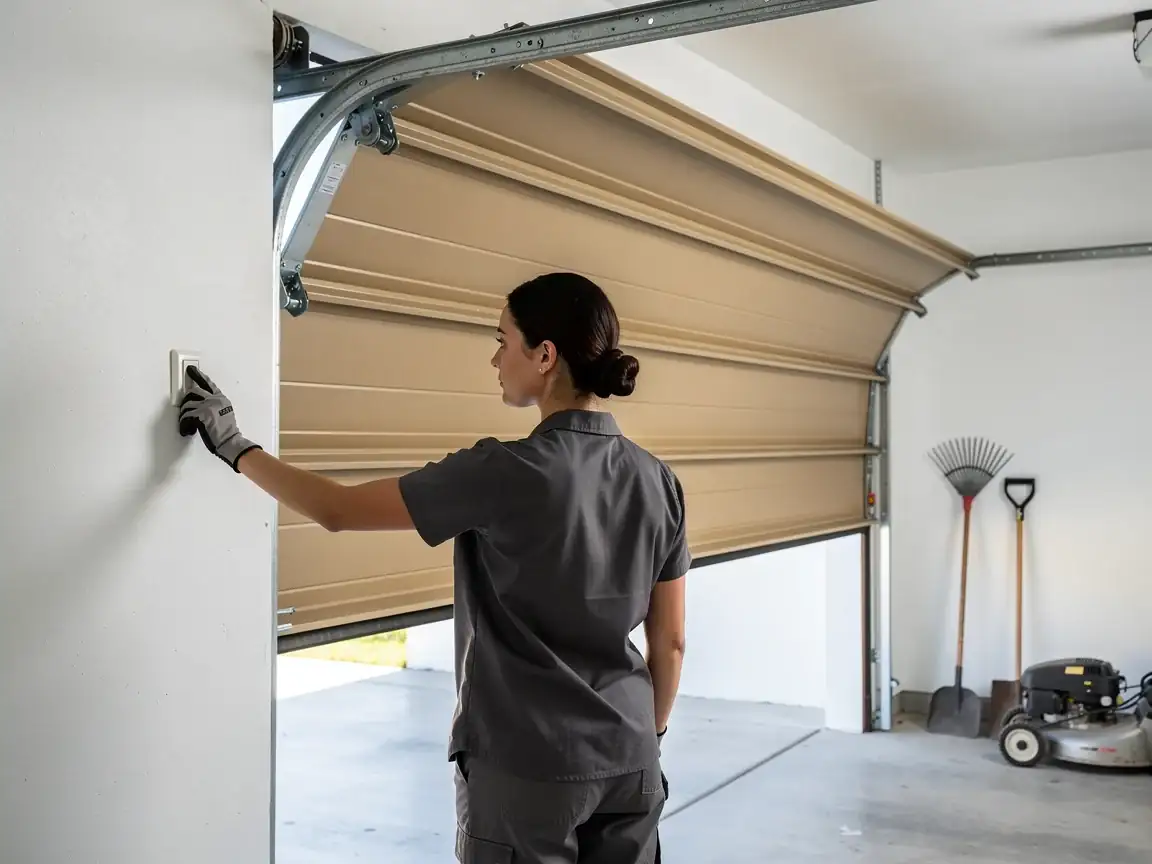
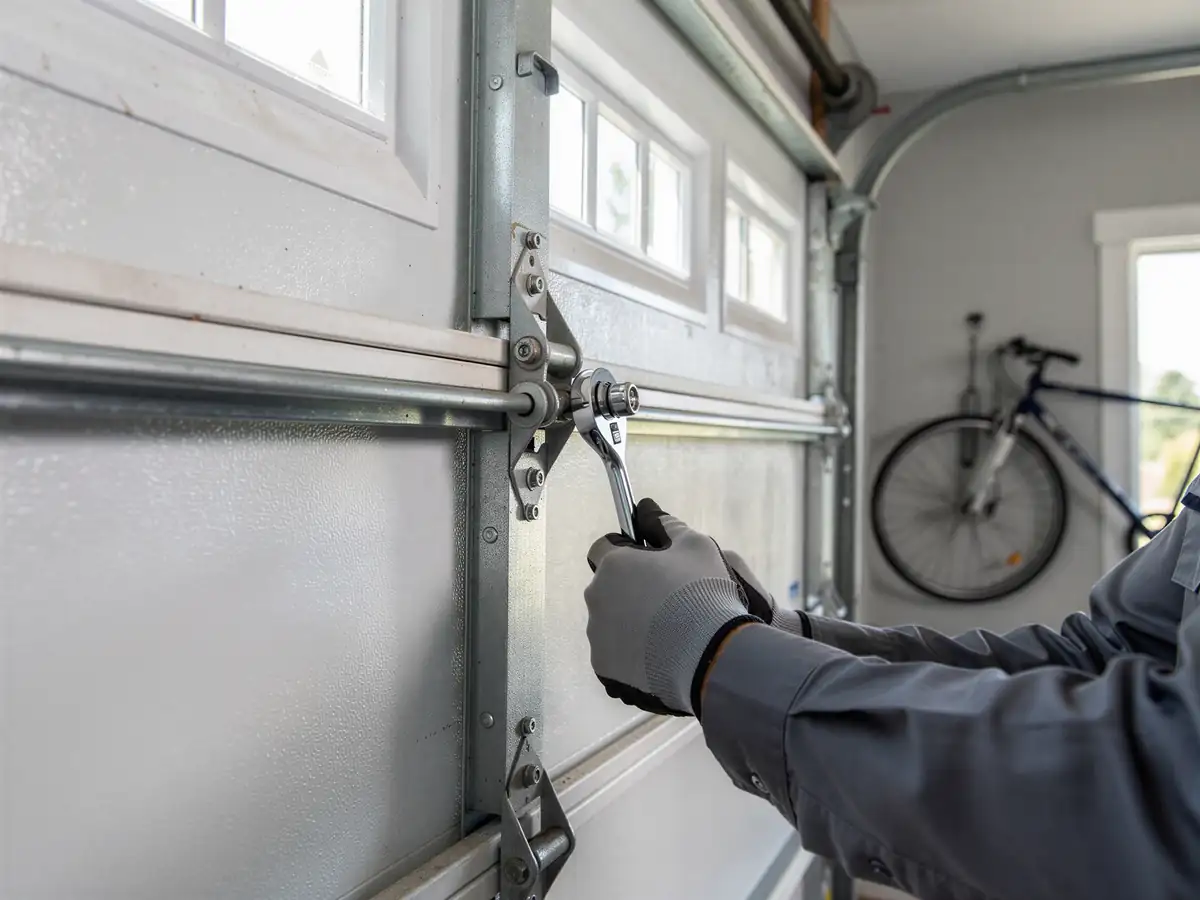
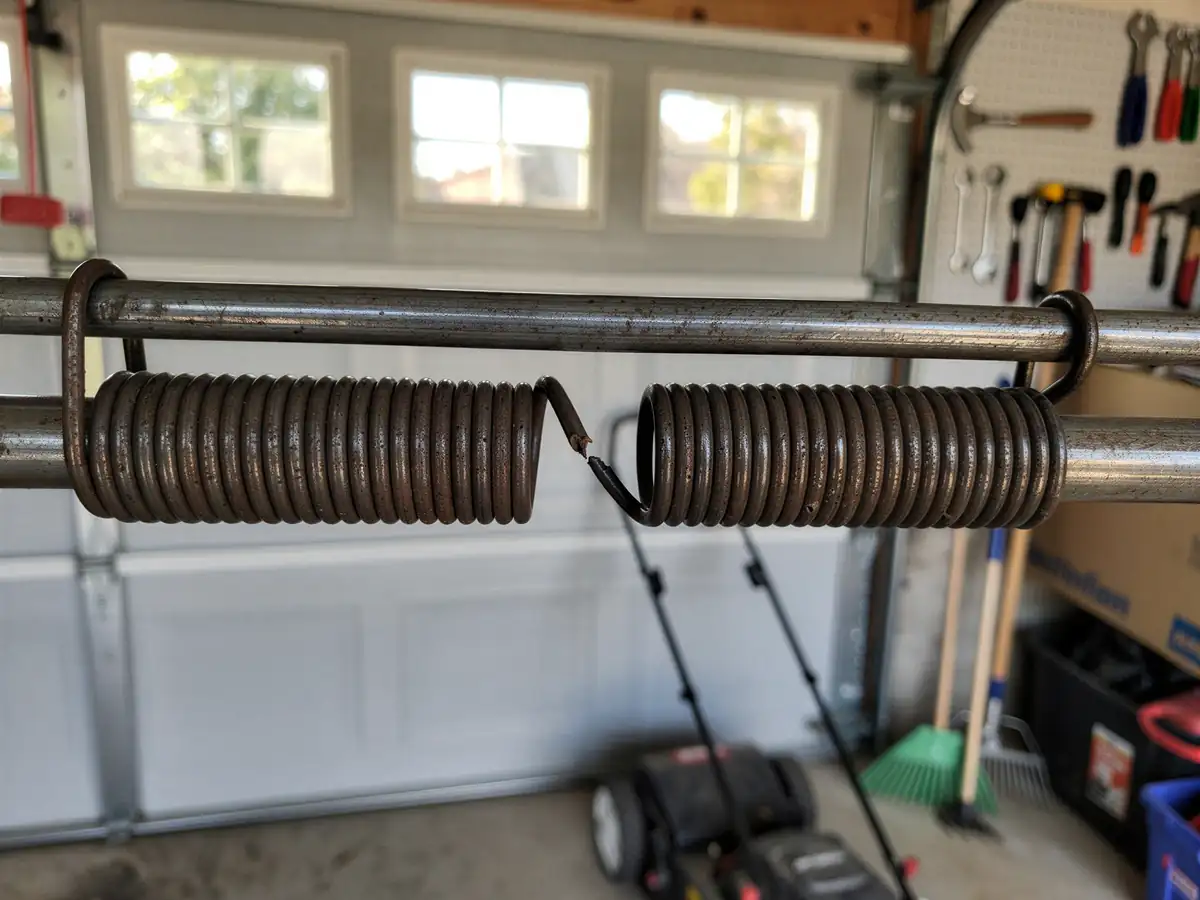
A torsion spring under tension is not a homeowner repair - that's true everywhere, not just here, but it's worth saying plainly because steel sectional doors from the 1999 era use higher-tension springs than older, lighter wood doors, and the margin for a mistake is smaller. If your door won't open and you can see a spring that's visibly separated or coiled oddly, leave it alone and call. What you can safely check yourself: the photo-eye sensors near the floor track, whether the opener is plugged in, and whether the manual release cord has been pulled by accident. Those three things solve more stuck-door calls than people expect, and they cost you nothing to rule out before booking a visit.
What Can Go Wrong
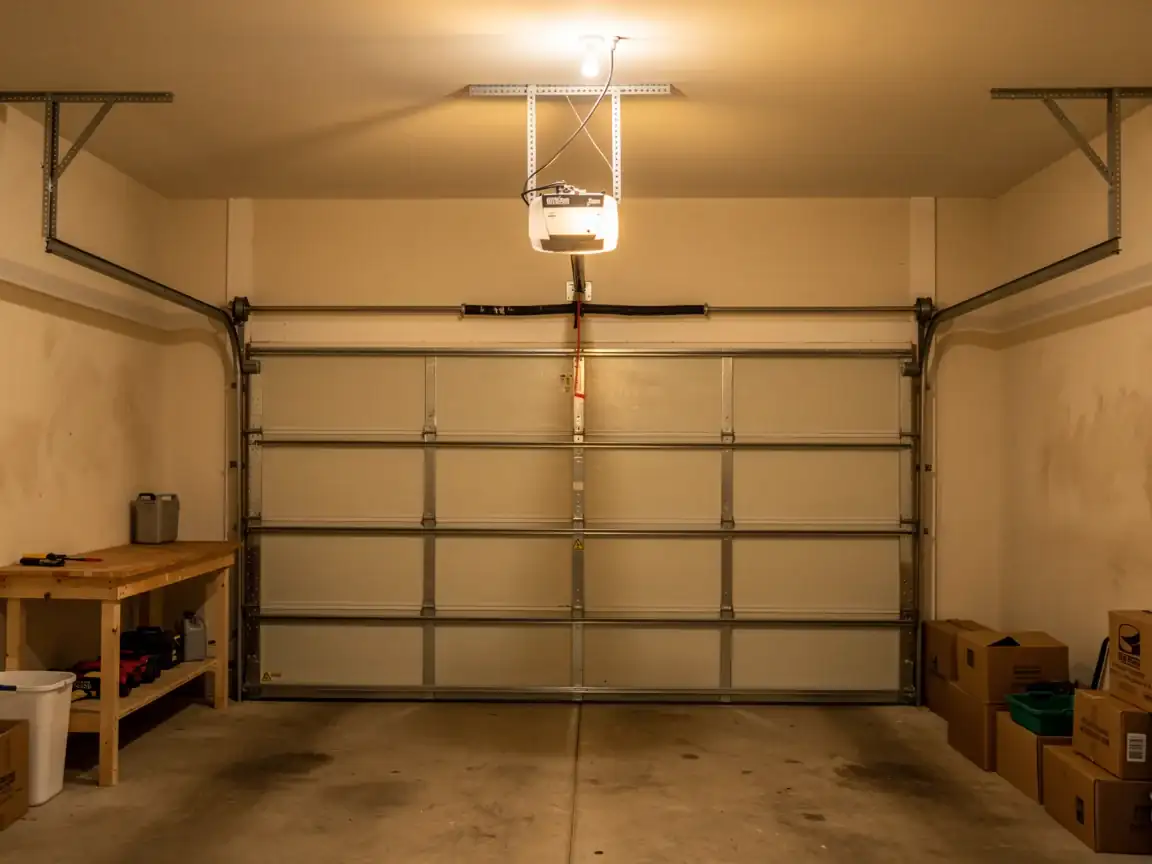
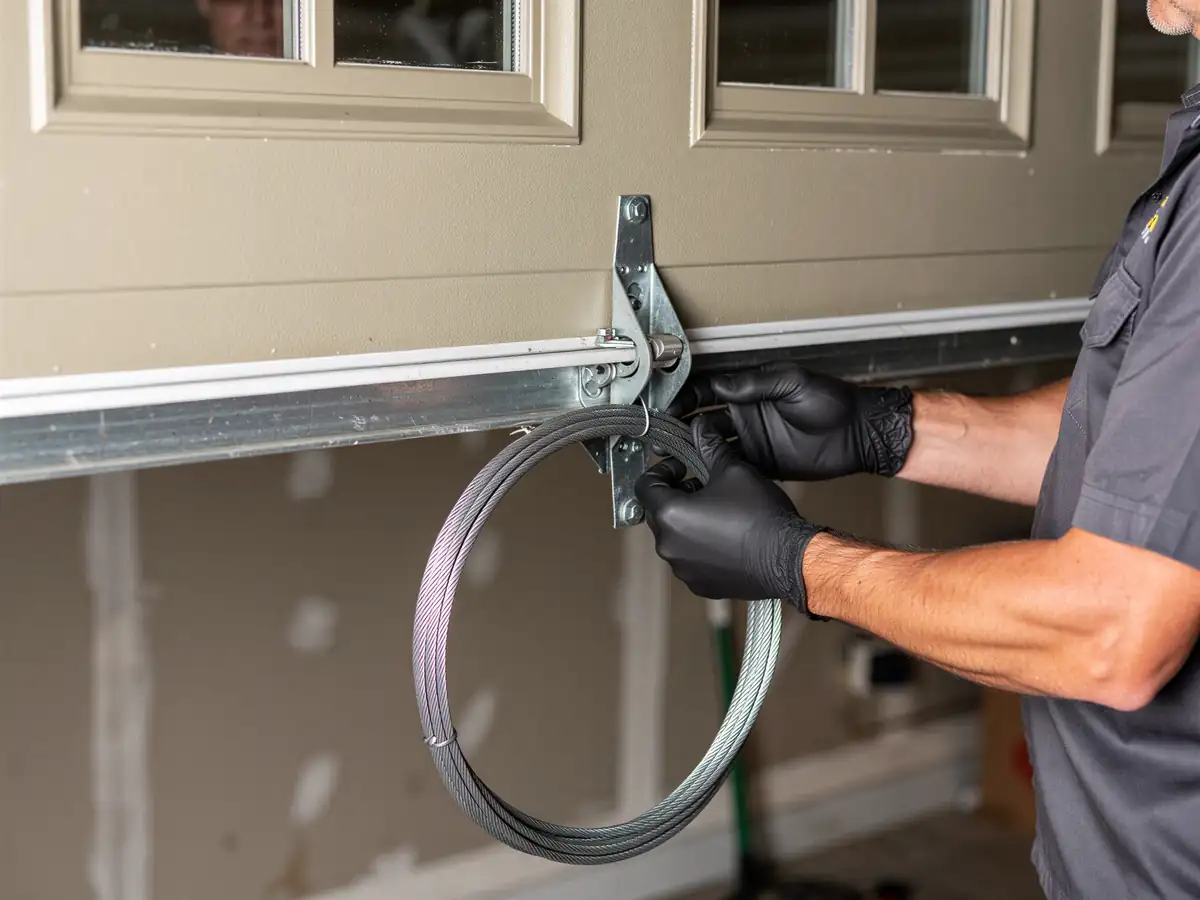
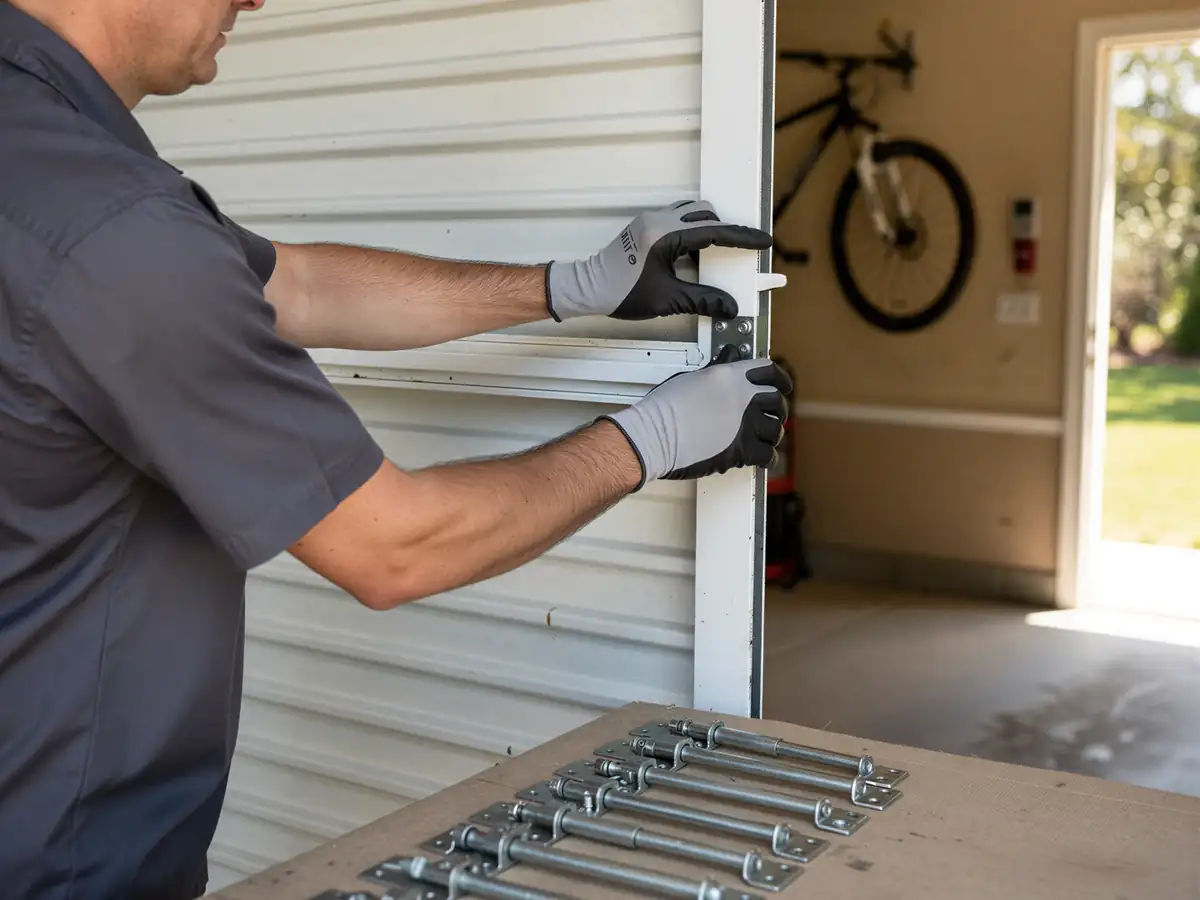
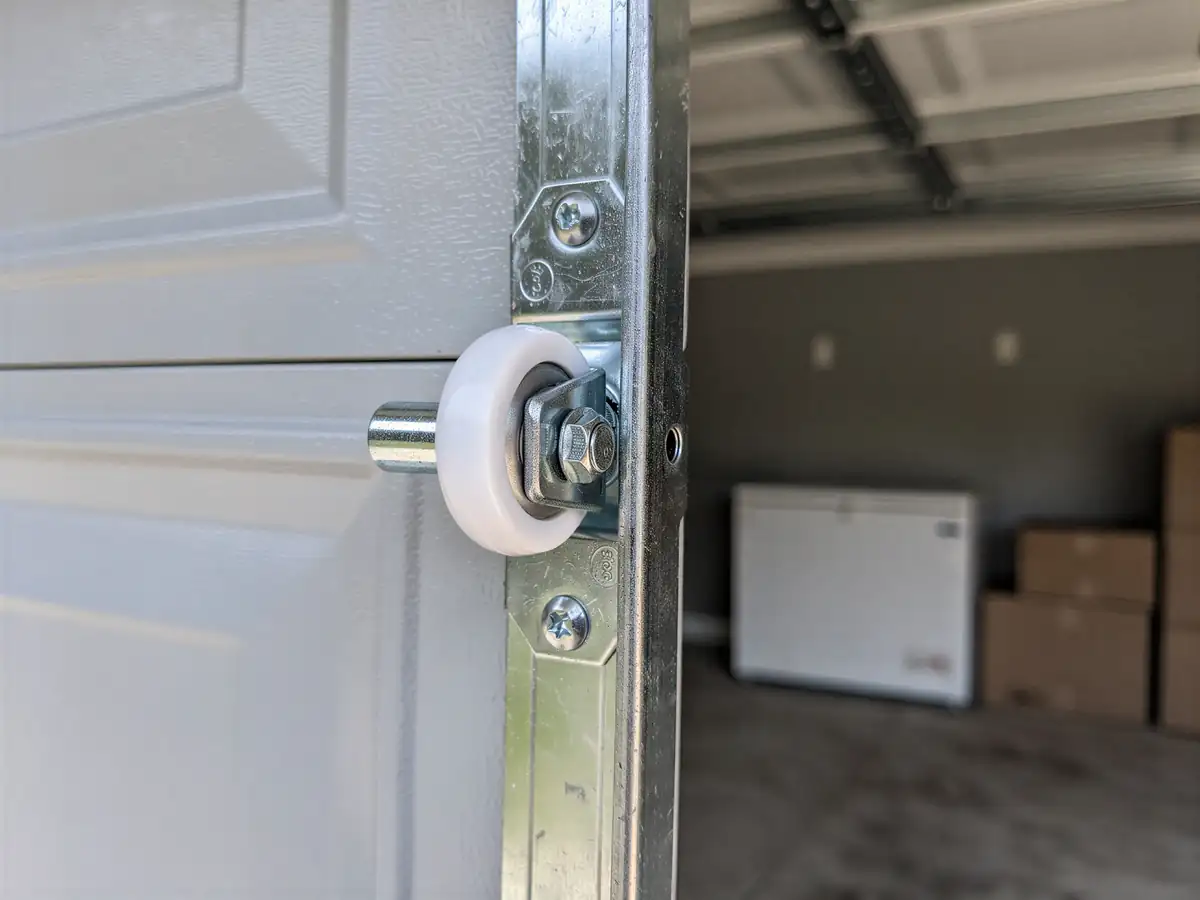
On a steel sectional door from the late 1990s, the usual failure points are the torsion spring, the nylon rollers, and the opener's drive gear. Springs on doors this age are often original or a first replacement, meaning they're approaching or past the number of cycles they're rated for. Rollers on these doors were frequently nylon rather than the older steel-wheel sets, and nylon degrades with heat exposure over the years rather than failing suddenly - you'll usually get noise and binding before a full jam. Cables fraying at the bottom bracket is another one we see on doors in this age range, especially on double-car openings where the cable carries more load per side. None of this is unique to Desert Palms as a town, but it is tied to when the housing stock here went up, which is later than much of the surrounding area.
Why It Happens Here
Desert Palms sits in the same severe-heat climate band as the rest of the service area, and that heat is harder on plastic and nylon components than on the steel and springs themselves. A nylon roller or a plastic idler bearing that would last longer in a milder climate wears faster here, cycle after cycle, through summers that stay hot for months. With about 3,831 households in Desert Palms - a newer-built pocket inside a service area where the broader median income runs $67,558 and homes more typically date to the 1980s and 90s - the doors here are on the newer end of what we see, but newer doesn't mean immune. Heat-driven wear on rollers and seals happens regardless of install year; it just shows up as noise and binding before anything snaps.